After a long day of animal watching, the night safari was interesting but more about event production than the animals from our perspective. It includes a “night show” complete with campy humor, a tram ride (done in a dramatic whisper so as not to bother the nocturnal animals) and expensive food and drinks. But, you aren’t melting in the Singapore sun and it is quite entertaining.
I have been Friends of the Singapore Zoo for many years, if you want it to continue giving us the fun and joy of animals, please visit the Singapore Zoo. Singapore Zoo, 80 Mandai Lake Road (Bus 138 from Ang Mo Kio MRT or 171 from City). Opening hours are 8.30am-6.00pm daily and adult admission is S$28, children is $18. *Park Hooper packages are more worth it. Check them out first before you purchase those tickets. Zoo, Night Safari, Jurong Bird Park or River Safari.
Friday, March 02, 2007
Singapore Zoo and Night Safari
After a long day of animal watching, the night safari was interesting but more about event production than the animals from our perspective. It includes a “night show” complete with campy humor, a tram ride (done in a dramatic whisper so as not to bother the nocturnal animals) and expensive food and drinks. But, you aren’t melting in the Singapore sun and it is quite entertaining.
Friday, February 23, 2007
Zoo: When Animals Attack
The zookeeper was cleaning the crocodile's den when a 1.7 metre (5 ft 7 in) crocodile suddenly charged and bit him, the zoo said on Thursday in a brief statement on the April 10 incident. "When the crocodile bit me, all I could think of was to get my left leg out of the crocodile's mouth," zookeeper Jamaludin Abdul Wahid told The New Paper, an English daily.
On Sunday, a female jaguar escaped from its enclosure before being sedated and captured about an hour later. On Monday, a one metre (3 ft) wild African cat leapt off a stage during a performance and clawed a tourist's foot, causing an infection.
Zoo officials said measures are being taken to ensure the safety of its keepers and visitors.
Tuesday, February 20, 2007
Pools for Our Polar...
Do your part, pls.
I am in favour of Inuka leaving for a temperate zoo.
1303 (32.74%)
I am NOT in favour of Inuka leaving for a temperate zoo.
2642 (63.90%)
I have no opinion on whether Inuka remains in the Singapore Zoo or gets transferred to a temperate zoo.
144 (3.36%)
Total Poll
4089
Thursday, February 01, 2007
GOOD Reviews
2. I love this place! staff are friendly! It is very clean! the animals are very fun! Everyone will enjoy it, its a very relaxing place.
3. A good place to bring the kids. I would like to suggest that you join as a member if you have young kids and go there at least 3 times a year and you could save a lot. You need not stay too long to actually see all the attraction there at one visit but go there again some other time if you are already a member. Many interesting animals for the kids to see.
4. This is the place to go. It is the BEST ZOO IN THE WORLD. The animals are not in cages, but instead they are in huge, spacious areas with a river or ditch seperating them from us. The enclosures are made to be exactly like the animals natural habitats, and they have done an excellent job at it. The animals are happy and the are places in the zoo where you can touch the animals. Like the goats. At the elephant show, pay only $5.00 and you can feed the elephants a basket of fruit.I HIGHLY recommend this zoo to anyone, whether they are an animal lover or not because this zoo has something for everyone.
5. My previous visit to the Singapore Zoo was about 20 years ago. And I must say that they have done a marvelous job of updating this zoo. Lots of trees and shades, so even if you don't take the tram ride, you can still manage to walk around the whole zoo. We did get the all-day tram ride, which I don't think is quite worth it (since there's only 4 stops, and the zoo is small enough to walk all the way around). Good scenery, surrounded by the Seletar Reservoir. Pretty good variety of animals for a somewhat small zoo, especially primates. Good clean stalls for animals. Good walking paths, easy for baby strollers. Location is abit out of the way from downtown city-centre, though easily accessible by transit. We took the MRT from City Hall station to Khatib station (closest MRT station to the zoo, S$1.50 per person), then a taxi to the zoo (S$8 for ride), which took us about 45min from city-centre (which apparently would cost over S$20 for taxi ride). Cost for entrance is S$15 for adults, with S$5 extra for tram ride. Overall good experience, certainly worth the time and money.
6. The Singapore Zoo beats all zoo's hands down. This place is amazing to see and is huge. It took my wife and I about 6.5 hours to walk every inch of this place, I recommend doing the night safari to those who cant take the heat though.I cant think of any animal that they do not have on display, including most birds, reptiles and rodents.If you want to have one of the greatest experiences you can have and have a day to spend, then I suggest you check out the Singapore Zoo.Its easily accessable from Bus and Taxi.
7. Amazing! This place beats out any zoo you've ever seen before because it's set in the natural rainforest. This means all the tropical animals- monkeys, etc- are in their natural habitat. There are no cages separating you. None of the animals are locked up in steel cages. When I was there a monkey came right up to me and I could touch him and play with him. They would cross the path in front of us, or climb the branches above us and surprise us. You feel like you are in the middle of a wild jungle because, well, you are. The more dangerous animals, like lions, are set off by ditches and things so they can't hurt you.
8. The Singapore Zoo is enormous, and it is practically impossible to see absolutely everything in a single visit. The zoo is set alongside a reservoir in some of Singapore's only remaining natural rainforest.You have the choice of walking the park by yourself, or taking one of the trams aruond the park. For the more athletic, I highly recommend walking the park, as there is a lot to see.Since Singapore's climate is so hot and humid, the zoo has small "air conditioning shelters" scattered throughout the park, for visitors to cool down and get a cool drink from a vending machine. It's touches like this that make the Singapore Zoo so worthwhile to visit.If you are planning a visit to the Singapore Zoo with several people, I do not recommend booking with a tour company. It is much cheaper (with several people) to take a taxi to and from the Zoo, and buy your entry ticket at the gate. Also, if you are planning on visiting the (in my opinion, superior) Night Safari next door during your visit to Singapore, you can buy joint Zoo and Night Safari tickets from either place, and save some money. The tickets do not have to be used on the same day.
Saturday, January 13, 2007
I am Proud Of My ZOO
The zoo has not expanded beyond the original 28 hectares. However, 40 hectares of secondary forest were later developed into the Night Safari. The remaining undeveloped land has been kept as wooded land. This and the waters of Upper Seletar Reservoir contribute to the Zoo, giving it a sense of natural, unrestricted space.
The zoo also has a "friends of the zoo" programme, where people can sign up for a yearly pass which grants them special privileges such as:
Free and unlimited entry to Singapore Zoo for whole year
Free Zoo tram rides and parking
A free once every 3 months "Wildlife wonders" magazine
10% discount at some participating retail outlets
Among various attractions that the zoo offers, a highlight is the "Breakfast with an Orangutan" programme which allow visitors to meet and interact closely with the orangutans in the zoo, including the famous primate Ah Meng who is an icon of the Singapore tourism industry. Animal shows, as well as token feedings coupled with live commentaries by keepers, are also the daily staple in the Singapore zoo.
The zoo also offers various modes of transportation within the premises: trams, buggies, and horse carriage rides. Additional modes of transportation which can only be rented include: strollers, motorised wheelchairs and wheelchairs.
Singapore zoo also can facilitate weddings, banquets and private events at the Forest Lodge.
Friday, January 12, 2007
History Of My ZOO
From the beginning, Singapore Zoo followed the modern trend of displaying animals in naturalistic, 'open' exhibits, i.e. with hidden barriers, behind moats and shrubbery etc. It also houses the largest captive colony of orangutans in the world.
The conception of the Singapore Zoo dates from 1969. At the time, the Public Utilities Board (PUB) decided to use some of its land holdings around reservoirs for parks and open recreational facilities. The then Executive Chairman of PUB, Dr Ong Swee Law, set aside 88 hectares of land for the construction of a zoological garden.
In 1970, consultants and staff were hired, and in 1971, the construction of the basic 50 enclosures started. Animals were collected from dealers and donated by sponsors. The Director of the Colombo Zoo in Sri Lanka, Lyn de Alwis, was hired as a special consultant to work out problems inherent in tropical zoos.
On 23 June 1973, the Singapore Zoo opened its gates for the first time with a collection of 270 animals from over 72 species, and a staff of 130. By 1990, 1,600 animals from more than 160 species lived in social groups, housed in 65 landscaped exhibits with boundaries conceived to look as natural as possible.
Wednesday, December 27, 2006
Tuesday, December 26, 2006
Polar Bear Inuka
His mother, Sheba, at 29, is four years over the average 25-year lifespan for polar bears in captivity.
The Zoo has made plans to relocate Inuka to another zoo when his mother dies.
It has to do this, it says, as it will now be focusing more on species from the tropical rainforest in line with its Rainforest Zoo positioning.
This means, it will no longer bring in Arctic animals.
Tuesday's birthday event was also part of a series of conservation and educational activities the zoo has organised from December to end of February next year.
Apart from seeing Inuka and his mother, visitors would learn more about polar bears and the effects of global warming on the Arctic.
Tuesday, November 21, 2006
Enjoy @ Zoo
Sensitive to sunlight? We recommend that you bring sunshades, sunglasses or visors to keep the glare away. Better yet, soothe on some sunblock for added skin protection.
Rain, rain, go away!
The rain sometimes makes an unexpected appearance. Having an umbrella or raincoat handy will ensure you remain dry should this happen. Many parts of the zoo are sheltered though, and you'll still be able to enjoy excellent views of the animals from there.
Mozzie alert?
Although the zoo does take preventive measures to keep the mosquitoes and other creepy crawlies at bay, you might want to consider bringing some insect repellant to make sure they stay away! The zoo is after all situated in a secondary rainforest and many animals treat this as a haven.
Take your time!
There's always something happening at the zoo. Allow at least half a day to enjoy what's available, but a full day would be even better. Make sure you pick up a map as you enter so you won't miss out on the many presentations, token feeding sessions, keeper talks, rides and photography opportunities that happen during the day.
Feet first!
Taking a leisurely stroll is the ideal way to enjoy everything the zoo has to offer. Comfortable footwear will ensure you get to explore the park endlessly minus sore and tired feet.
Tired of walking?
Then hop onto a tram to rest your soles. Or take a break at one of the air-conditioned shelters while you get your wind back. Many of our exhibits also have viewing galleries that allow you to observe the animals comfortably.Wheels galore! We realise long walks might be taxing for little feet. Parents can rent strollers and wagons for their children. Wheelchairs, both motorised and otherwise, are also available.
Stay hydrated!
As the weather in Singapore tends to be hot and humid year-round, do remember to bring enough drinking water, and keep drinking throughout the day. An ample supply is on sale at our numerous F&B outlets if you happen to run out.
Munch time!
Our food outlets serve a variety of cuisines to tickle every tastebud:
KFC and Pizzafari – Great for kids
Jungle Tandoor – Perfect for spice-lovers
Jungle Flavours and Forest Fare – For the undecided, Asian and Western delights are available
Jungle Breakfast – A delightfully unique dining experience with the animals
Remember though, to savour the food for yourselves and not to share with any of the animals. Their diets are well taken care of.Service with a smile If in doubt at any time, do approach any of our guest relations officers, or any of our staff in fact. They will be more than happy to answer any questions you might have. Repeat, please. Remember to visit the zoo often. New and exciting things are always waiting to be discovered.
See you again soon!
Friday, November 10, 2006
Happy birthday Party!
Come face-to-face with the world’s biggest bear
This year-end school holidays, Singapore Zoo has planned a series of fun conservation and educational activities centred on the polar bear, the largest of all bear species and the largest land carnivore. This is also in conjunction with the 16th birthday celebration for Inuka, the Zoo’s captive-bred polar bear, on 26 December.
Enrichment activities, incorporating an enlightening commentary, will be conducted for Sheba and Inuka, our polar bears. Learn more about the plight of the species and discover how the Zoo keeps them busy with innovative toys.Venue: Polar Bear Underwater Viewing ExhibitDate: 18 November – 31 DecemberTime: 10.05am, 1.05pm and 4.45pm daily (additional 3.10pm session on Sundays and public holidays)
I thought they are giving away our beloved polar bears?
Saturday, November 04, 2006
Le Long sell calendar
Singapore Zoo and Night Safari’s 2007 Calendar Available Now
Get Singapore Zoo and Night Safari’s stylish 2007 desk calendar now, and do your part for wildlife conservation. Depletion of natural habitat, illegal animal trade and poaching have made it vital for progressive zoos to adopt conservation programmes. Featured in this calendar are some of the endangered Southeast Asian animals at Singapore Zoo and Night Safari, such as the orang utan, Douc langur, Malayan sun bear, Indian rhino and Asian elephant.Carrying the theme of Singapore Zoo’s tagline “Extinction is Forever. Conserve”, each page features a close-up photograph and conservation bites on an endangered Southeast Asian animal. Proceeds from the sale of the calendars will go to the Wildlife Conservation Singapore Fund.The calendar retails at $8 each and is available at retail outlets at the Zoo and Night Safari, as well as on the Zoo and Night Safari’s online e-store at www.safarizooshop.com
Sunday, October 29, 2006
Cute Girl In Sing!
The family was spotted in Singapore Jurong Bird Park.
Steve Irwin is a fan of the Singapore Zoo.
Friday, October 27, 2006
Singapore Zoo installs braille interpretives for the visually handicapped
The zoo has revamped the park to make it accessible for all - including the physically and visually handicapped.
It has installed braille signs and life-sized replicas of some animals to enhance the experience for the blind.
45-year-old Adeline Krishnan has never seen an otter before, but now, thanks to the revamped facilities at the Singapore Zoo, blind people like Adeline can size up how animals like kangeroos and Malayan tapirs look like.
The zoo has installed braille interpretive signboards, and life-sized models at 10 of its most popular exhibits like the white tiger, rhinoceros, hippopotamus and proboscis monkeys.
"There are a couple of animals here that I've not seen before, especially life-sized crocodiles and these otters and kangeroos. I got a chance to touch them and know what it'll be like if it's a real kangeroo. The 3D diagram is very good because we can actually feel what the animal is actually like in the real form," said Adeline.
"I went to the zoo 6 years ago. Now it's much more friendly because it has the braille, and next to the braille there's a 3D model," said Ang Nam Kok.
"We're able to get some basic information about the animals and maybe if it arouses my interest then probably later, I can go and surf the net and find out more" said Jaafar Sidek, member, Singapore Association of the Visually Handicapped.
To encourage the visually handicapped to return for regular visits, the Zoo has produced a guidebook which contains a braille version of the Zoo map, and introductions to some of the animals here.
The book is available for loan free of charge at the Visitors Centre.
Apart from the hardware, the student volunteer guides are also important in helping to heighten the experience for blind visitors.
There are also special tours available where they can even get to touch rare animal artefacts like a polar bear and a tiger cub.
"We want to make sure that this national park is all-inclusive to everyone and we're progressively adding more and more facilities for everyone. In fact the whole transformation did not cost us a lot of money; we spent less than $10,000 to transform the park," said Fanny Lai, Executive Director, Singapore Zoo and Night Safari.
90 percent of the zoo is already accessible by wheelchair, but it is working with the Disabled People's Association of Singapore to make the zoo a national park that's accessible to all, and enjoyed by everyone.
Tuesday, October 10, 2006
ACRES got their New LAND
CONTACT US CONTACTING ACRESBy post:11 Pasir Ris Farmway 2,Singapore (519326)
By phone:(+65) 65812488By fax:(+65) 65816318Wildlife Crime Hotline:(+65) 97837782
By email:General enquiries: info@acres.org.sg
Volunteer enquiries: volunteer@acres.org.sg
Event enquiries: events@acres.org.sg
But I will always blame them for our loved polar bear!
Saturday, September 30, 2006
They are to be blamed for the out of Polar Bears!
The ACRES is to be blamed! Animal Concerns Research & Education Society.
CAMPAIGNSPOLAR BEARSPolar Bears at Singapore Zoo: ‘What’s a Polar Bear Doing in the Tropics?’Since 2004, Acres has been in discussions with the Singapore Zoo to improve the welfare of the two polar bears held there.
Acres has called for the Singapore Zoo not only to make drastic improvements to the living conditions for the bears, but also to phase out the keeping of polar bears and other Arctic animals on welfare grounds.
Campaign introductionIn 1978, Singapore Zoo acquired polar bears, becoming one of the few zoos in Asia that held this species in captivity at that time.
Today, two polar bears are housed at the Singapore Zoo: Sheba, a female who arrived at the zoo as a two year old cub in 1978, and Inuka, her male offspring born in 1990.
Polar bears are poor candidates for captivity, even in the best of circumstances. The situation is particularly bleak for the polar bears at Singapore Zoo.
The fact that Singapore’s tropical climate is totally unsuitable for polar bears and that they live in very small, barren, open-air enclosure means that the polar bears at Singapore Zoo are subjected to living in a highly stressful environment.
The polar bears have been seen to display both behavioural (abnormal behaviours) and physical (loss of lean muscle mass and fur) signs of distress.
Since April 2004, Acres has been in discussions with the Singapore Zoo regarding the polar bears and has called for the zoo to make every effort possible to improve their living conditions so that the bears can, at the very least, express some of their natural behavioural repertoire. In 2004, Acres presented a report to the zoo containing a number of recommendations to improve the welfare of the bears in the short term.
Longer term, Acres recommended that the zoo move the bears to appropriate accommodation elsewhere since they cannot be released to the wild. However, as Sheba is already old and may not survive the relocation journey, we then recommended that Inuka (the younger bear) is relocated once Sheba passes away.
In late 2005, Acres conducted an ongoing behavioural study of the polar bears to scientifically assess the current situation of the bears.
Key findings of the four month scientific study were: Both bears exhibited signs of severe heat stress. The bears were both seen to be panting for long periods of time (36% of the time for Inuka; 38.7% of the time for Sheba), indicating that they are far too hot. The bears were also seen to be exhibiting other behaviours indicating that they were suffering from heat stress. Both polar bears displayed high levels of inactivity (43% of the time for Inuka; 65% of the time for Sheba). This is recognized as a clear indication of an abnormal animal-environment interaction, almost certainly caused by a sub-optimal environment that does not satisfy the natural, species-specific behavioural needs of the bears. Both bears engaged in high levels of abnormal stereotypic behaviour (65% of active periods for Inuka; 57% of active periods for Sheba).
The bears were at times observed to be constantly pacing or swimming in a stereotypic fashion. The occurrence of stereotypic behaviour is widely recognized as a clear indication of an abnormal animal-environment interaction and a sign of psychological disorder in captive animals.
Acres is also concerned that (as last documented March 2006) the polar bears were still seen to be made to perform unnatural behaviours in the token feeding shows such as ‘waving’, ‘belly dancing’ and ringing a bell, all of which give the public a very misleading impression of wild polar bear behaviour.
In 2006, Acres once again called for the zoo to make improvements to the living conditions and husbandry practices for the bears as a matter of urgency after considering the results of this study. Acres has provided the zoos with a list of recommendations, including lowering temperature inside the enclosure, chilling the pool water, providing more stimulation and enrichment for the bears and ending the display of unnatural behaviours in the feeding show.
Acres once again called for the zoo to commit to relocating Inuka once Sheba passes away.In the long term, Acres called for the Singapore Zoo to phase out the keeping of polar bears in captivity, following the example set by progressive zoos throughout Europe. Acres also called for Singapore Zoo to never import Arctic animals again.
ResultsAcres met up with the Singapore Zoo in June 2006 and presented the results of our scientific study.We are pleased that the Singapore Zoo has agreed to: Eventually relocate Inuka, the male polar bear, to a more suitable facility in a more appropriate climate. Not import any Arctic animals in the future.
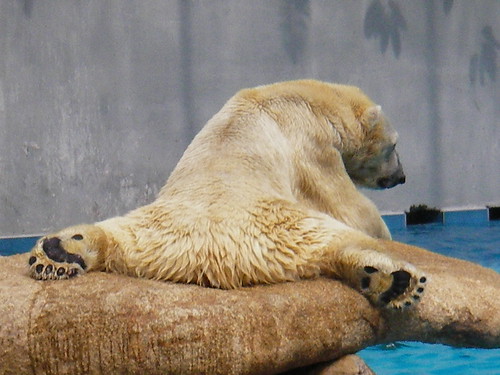
Thursday, September 28, 2006
They need your $$$
The two hectare Acres Wildlife Rescue Centre (AWRC) will provide a much needed safe haven for animals rescued from the illegal wildlife trade.
The AWRC will also serve as an educational facility to create awareness on the detrimental effects of the illegal wildlife trade.
The educational aspect of the AWRC will ultimately move us one step closer towards ending the illegal wildlife trade. We will be taking over the land next month and we need to raise more than a million Singapore dollars to make the AWRC a reality.
We have raised about $7,000 so far and urgently need your help. The AWRC will provide a home for more than 400 animals and you can help make a difference for each of these animal's lives. Please consider making a donation in support of this very important project.
Please forward this email to your family and friends and help spread the word on this critical project which will save hundreds of lives.
More on the ACRES website including how to donate and more about the AWRC On behalf of the animals, thank you for your kind support. Best wishes, Louis Ng (MSc) President and Executive Director Animal Concerns Research and Education Society (Acres)www.acres.org.sg 11 Pasir Ris Farmway 2 Singapore 519326 (O): +65 6581 2488 (F): +65 6581 6318 (HP): +65 9796 8592 Join us on 30th September (Saturday) for our first fundraising event for the Acres Wildlife Rescue Centre (AWRC).
To raise funds for the AWRC, Acres will be holding a vegetarian barbeque along with some fun activities and games. Acres will also be providing more details about the AWRC on the night.
To purchase a ticket ($20), please call Acres at 6581 2488 or email us at info@acres.org.sg All proceeds will go towards the establishment of the rescue centre. Venue: Mutts and Mittens, 11 Pasir Ris Farmway 2 Singapore 519326 (opposite the Pet Hotel) Date: 30th September (Saturday) Time: 6pm until late We look forward to seeing you at the event!
Thursday, September 21, 2006
Animals at Singapore Zoo benefit from enrichment programme
The keepers at the zoo are running a programme to help the animals stay sharp and experience situations that they would in the wild.
Polar bears Sheba and Inuka are residents at Singapore Zoo, but life can get a bit boring in their small enclosure, so keepers have been feeding the bears food in blocks of ice, so they've got to use their wits to break the ice and get at the food. (Both maybe transferred soon)
The idea of the enrichment programme is to stimulate the animals brains.
For the orang utans, the keepers have designed a task for them to get fruit out of a box.
The apes have to push the fruit through a tunnel to the other side before they get their reward.
For the elephants, life is a little different. When the elephants are idle, the keepers say they can begin to show neurotic behaviour like shaking their heads and bodies.
To combat this, the keepers get the elephants to play games, such as knocking a barrel filled with fruit until the fruit comes out, or blowing fruit out of a tree trunk.
The keepers are confident the programme works.
"We can also see the animals display, they move around a lot they seem to be enjoying their environment. But if you think the animal is not enjoying it most of the time the animal sits alone in a corner and they look at bit depressed," said Sam Chellaiyah, curator, Singapore Zoo.
The monkeys have to figure out how to get the fruit from the barrel as part of the programme which has been refined over 30 years.
"In a way we actually try to improve the ideas as we go along. Basically enrichment is trial and error especially for new devices, some devices work and some don't," said Diana Marlena, enrichment officer, Singapore Zoo.
The keepers say the enrichment goes a long way to keeping the animals alert and happy.
Wednesday, September 20, 2006
Farewell Our Friend
The service, broadcast live around Australia as well as across Asia and the United States, brought the nation to a standstill 16 days after Irwin, 44, was killed when the serrated barb from a stingray's tail pierced his heart.
"Please don't grieve for Steve, he's at peace now, but I'd like you to grieve for the animals, for the animals have lost the best friend they ever had, and so have I," Irwin's father Bob told the service.
A koala slumbered in a gum tree next to the stage and Irwin's tearful US-born wife Terri held their young son Robert in her lap as Irwin's family -- all wearing Irwin's trademark khaki shorts and shirts -- said their public goodbye.
"My daddy was my hero, he was always there for me when I needed him," Irwin's eight-year-old daughter Bindi said after walking onto the "Crocoseum" stage to a standing ovation.
"We filmed together, caught crocodiles together and loved being in the bush together. I want to help endangered wildlife just like he did," she said, her finger running over the words as she read her farewell.
Irwin's family and friends held a private funeral at his beloved Australia Zoo 11 days ago, telling stories around a campfire.
His 46 "Crocodile Hunter" documentaries were watched by 200 million people around the world and his death prompted an international outpouring of grief, clogging Web sites while fans piled floral tributes outside his zoo.
'Crikey'
Politicians, actors, champion boxers and football stars were among a crowd of about 5,000 at the "Crocoseum," the centrepiece of the zoo in tropical Queensland state.
Australian folk singer John Williamson led fans and a khaki-clad choir in a rousing rendition of some of Irwin's favorite songs, including the Australian hit "True Blue," in a largely upbeat service.
Taped tributes were played from Irwin's Oscar-winning actor friend Russell Crowe, Hollywood stars Kevin Costner and Cameron Diaz, and US singer Justin Timberlake.
Diaz and talk-show host Larry King said Irwin had an uncanny ability to reach children.
"America just flipped for him, every kid was in love with the idea of being able to be him," Diaz said.
Irwin grew up around wild animals, trapping crocodiles and releasing them in his parent's reptile park that would later become Australia Zoo, but never gained any professional degrees.
University of Queensland animal researcher Professor Craig Franklin said the university was about to award Irwin an adjunct chair for his work with crocodiles when it learned of his death.
"Professor Steve Irwin," Franklin declared.
Prime Minister John Howard was also among the dignitaries at the farewell and praised Irwin's zest for life, telling the crowd Australia had lost a remarkable man.
Crowe said from New York that Irwin's death "was completely unfair."
"We've all lost a friend, we've lost a champion," Crowe said.
In a final tribute, Australia Zoo staff spelled out Irwin's catchphrase "Crikey" in yellow flowers as Irwin's truck was driven from the "Crocoseum" for the last time to end the service.
Tuesday, September 19, 2006
Poor OrangUtans
"The process of the repatriation is not easy...we have to delay the plan because of political uncertainties" in Thailand, Adi Susmiyanto, director of conservation and biodiversity at the Forestry Ministry, told a press conference.
The great apes, which were smuggled to Thailand a few years ago from Kalimantan, the Indonesian part of Borneo Island, had been expected to arrive in Jakarta on Saturday to a gala welcome by first lady Ani Yudhoyono.
"The Indonesian government has lost contact with our partners in the Thai government who were decision-makers," Susmiyanto said.
The Thai military staged a coup Tuesday, ousting Prime Minister Thaksin Shinawatra while he was visiting New York to attend the opening session of the U.N. General Assembly.
Susmiyanto said he hopes the orangutans will be repatriated within two weeks after an interim government is established in Thailand as announced by Thai Army Commander-in-Chief Gen. Sonthi Boonyaratglin, leader of the Council of Administrative Reform that carried out the coup.
The long-haired apes are to be sent to the Nyaru Menteng Rehabilitation Center in Central Kalimantan where they are to receive help in making the transition to life in the wild before actually being released in the jungle.
DNA tests in Thailand confirmed that 48 orangutans at Pratubacahang Center private zoo in Bangkok were members of the Borneo species. The other species is found on Sumatra Island.
Jakarta has donated seven of the 48 orangutans who suffer from hepatitis B to the Thai government for research.
The Thai government was also to give back another five orangutans seized from Chiangmai Night Safari, bringing the number of orangutans to be repatriated to Indonesia to 46.
The population of orangutans on Borneo is declining due to unchecked logging and poaching. The Forestry Ministry estimates the number of orangutans in Kalimantan at 35,000.
In July, Indonesia got back two orangutans that had been smuggled to Vietnam and six from Malaysia. Talks with Malaysia are now under way on five other smuggled orangutans and one with Saudi Arabia.
According to the Jakarta-based international nongovernmental organization Borneo Orangutan Survival Foundation, over the last three years a total of 94 orangutans have been confiscated in Thailand, of which 41 have disappeared or died.
The foundation has posted a story on its website alleging that the five orangutans in Chiangmai have been exploited as photo props, making direct contact with hundreds of visitors daily and being exposed to disease and extreme stress.
Susmiyanto said the orangutans are usually smuggled when they are still babies, taken from their mothers who are killed. They are carried in wooden fishing boats, mostly to Cambodia, Malaysia, the Philippines, Saudi Arabia and Vietnam.
Wednesday, September 06, 2006
No more animals from the Arctic: S'pore Zoo
The Singapore Zoo will no longer import animals from the Arctic, following concerns raised by an animal welfare group about the zoo's resident polar bears, Sheba and her son Inuku.
In a media statement on Wednesday, the Animal Research and Education Society (Acres) said it has raised "serious welfare concerns" over the two bears after a four-month undercover operation. The findings were presented to the zoo in June.
In the investigation, Acres found that the bears exhibited severe signs of heat stress, were highly inactive and displayed "abnormal stereotypic" manners in their swimming or pacing during their active periods.
The last two behaviours are psychological indicators that the bears are not coping well with their environment, it said. "There is no doubt that polar bears are poor candidates for captivity. They are extremely wide-ranging, highly intelligent, cold weather carnivores, so they are extremely problematic when housed in captivity," said Acres.
In response to queries, the Singapore Zoo confirmed that it will not bring in anymore Arctic animals. This is because it aims to be a "rainforest zoo", focusing on tropical rainforest animals. It also reiterated that the bears are housed in good conditions, citing the birth of Inuka - the first polar bear born in the tropics - as evidence.
However, as part of an "animal exchange programme", the 16-year-old Inuka will soon be heading for cooler climates.
Then, the zoo's executive director Fanny Lai said that this animal exchange was part of efforts to "contribute to the worldwide captive gene pool and help propagate the species".