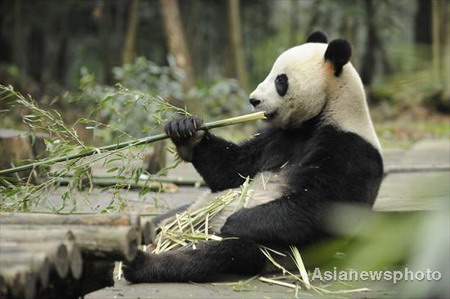
I have been Friends of the Singapore Zoo for many years, if you want it to continue giving us the fun and joy of animals, please visit the Singapore Zoo. Singapore Zoo, 80 Mandai Lake Road (Bus 138 from Ang Mo Kio MRT or 171 from City). Opening hours are 8.30am-6.00pm daily and adult admission is S$28, children is $18. *Park Hooper packages are more worth it. Check them out first before you purchase those tickets. Zoo, Night Safari, Jurong Bird Park or River Safari.
Sunday, February 14, 2010
Wednesday, December 16, 2009
For a better future. Please stop those Finger pointings!
Politicians are gathered to talk about our future, climate cahnge and environmental issues.
Environment ministers are holding talks at the UN climate conference in Copenhagen amid threats of large-scale protests by environmental groups.
Activists, angered by logistical issues and a lack of progress on a deal, have vowed to disrupt proceedings.
The White House said President Barack Obama, who will join world leaders in Copenhagen later in the week, is confident of reaching a deal.
Talks are deadlocked over emission cuts and financial aid for poorer countries.
For the last two mornings, thousands of campaigners have queued for hours to gain access to the conference venue - many unsuccessfully.
Now, with ministers and their aides joining the conference, the organisers have slashed the number of other delegates allowed in.
A spokeswoman from the Climate Justice Action group says demonstrations amounting to "mass civil disobedience" are planned for Wednesday.
The groups says some 15,000 delegates have been effectively "locked out" of the summit by being refused accreditation or experiencing long delays in their applications.
UK Prime Minister Gordon Brown, who is already in Copenhagen, told reporters on Tuesday that it was a critical moment.
"This is a very important moment for the world," Mr Brown said.
"It is possible that we will not get an agreement and it is also true that there are many issues to be sorted out. But I am determined... to do everything I can to bring the world together."
Stumbling blocks
The high-level phase of the talks began on Tuesday, with environment ministers and negotiators from 193 countries struggling to make progress on core issues.
"There is no understatement that with your signatures you will write our future," Britain's Prince Charles told the gathering.
More than 120 leaders will formally join the talks on Thursday, aiming to seal an accord by Friday.
Just days before a climate deal is due to be completed, there is clearly still an immense amount of negotiating left to do, says the BBC's environment correspondent Richard Black from Copenhagen.
Unresolved issues include:
the size of emissions cuts by developed nations
how finance should be raised and disbursed, and
most fundamentally, whether a deal here should aim to keep the global temperature rise to 2C or just 1.5C
However, the White House said President Obama, who is due to join the summit on Friday, is confident of securing a deal.
"The president believes that we can get... an operational agreement that makes sense in Copenhagen, over the next few days," spokesman Robert Gibbs told a briefing.
However the American negotiator at the conference said he did not expect to offer any further cuts in US carbon emissions.
Developing countries have accused industrialised nations of going back on their commitment to fight climate change.
Extinction of the Human race!
Environment ministers are holding talks at the UN climate conference in Copenhagen amid threats of large-scale protests by environmental groups.
Activists, angered by logistical issues and a lack of progress on a deal, have vowed to disrupt proceedings.
The White House said President Barack Obama, who will join world leaders in Copenhagen later in the week, is confident of reaching a deal.
Talks are deadlocked over emission cuts and financial aid for poorer countries.
For the last two mornings, thousands of campaigners have queued for hours to gain access to the conference venue - many unsuccessfully.
Now, with ministers and their aides joining the conference, the organisers have slashed the number of other delegates allowed in.
A spokeswoman from the Climate Justice Action group says demonstrations amounting to "mass civil disobedience" are planned for Wednesday.
The groups says some 15,000 delegates have been effectively "locked out" of the summit by being refused accreditation or experiencing long delays in their applications.
UK Prime Minister Gordon Brown, who is already in Copenhagen, told reporters on Tuesday that it was a critical moment.
"This is a very important moment for the world," Mr Brown said.
"It is possible that we will not get an agreement and it is also true that there are many issues to be sorted out. But I am determined... to do everything I can to bring the world together."
Stumbling blocks
The high-level phase of the talks began on Tuesday, with environment ministers and negotiators from 193 countries struggling to make progress on core issues.
"There is no understatement that with your signatures you will write our future," Britain's Prince Charles told the gathering.
More than 120 leaders will formally join the talks on Thursday, aiming to seal an accord by Friday.
Just days before a climate deal is due to be completed, there is clearly still an immense amount of negotiating left to do, says the BBC's environment correspondent Richard Black from Copenhagen.
Unresolved issues include:
the size of emissions cuts by developed nations
how finance should be raised and disbursed, and
most fundamentally, whether a deal here should aim to keep the global temperature rise to 2C or just 1.5C
However, the White House said President Obama, who is due to join the summit on Friday, is confident of securing a deal.
"The president believes that we can get... an operational agreement that makes sense in Copenhagen, over the next few days," spokesman Robert Gibbs told a briefing.
However the American negotiator at the conference said he did not expect to offer any further cuts in US carbon emissions.
Developing countries have accused industrialised nations of going back on their commitment to fight climate change.
Extinction of the Human race!
Tuesday, December 15, 2009
Time to Start fucking U Animals!
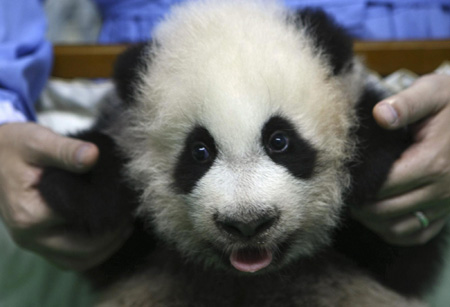
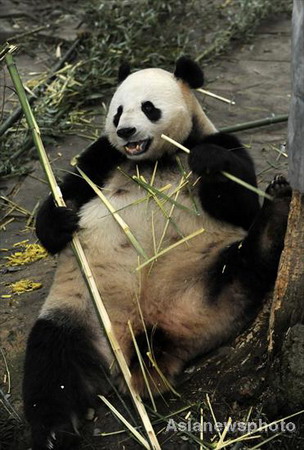
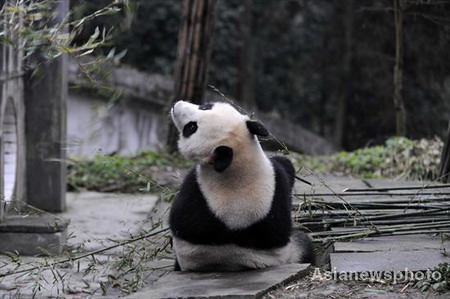
Australian and Chinese officials urged two bamboo-munching giant pandas on Sunday to consider reproducing during their 10-year residency Down Under. Wang Wang and Funi, on loan from China, arrived at the Adelaide Zoo in Australia two weeks ago but were officially welcomed Sunday by leaders at the opening ceremony of their 8 million Australian dollar ($7.25 million) enclosure. Their exhibit opened to the public on Monday. "Look after yourselves, keep healthy and active, eat your greens and maybe, when the time is right, think about starting a family," Governor General Quentin Bryce said in a speech directed at Funi and Wang Wang, who were sprawled against nearby boulders, chewing bamboo shoots. "There are not enough of you in this world." Chinese Ambassador Zhang Junsai said he was already thinking of Australian names for a possible panda cub. "Wang Wang and Funi carry the friendship and greetings from the Chinese people," he told the gathering, explaining that Funi means "Lucky Girl" and Wang Wang means "Net Net." "Who can rule out the possibility that the lucky girl will fall into the net of love and later have a lovely baby?" Zhang said. "This would be a great achievement of the joint Australia-China conservation program." The pandas, 3 and 4 years old, are the only giant pandas in the southern hemisphere. Chinese President Hu Jintao offered the pandas as a goodwill gesture during a 2007 visit to Australia.
Monday, December 14, 2009
I will be Back!

Gov. Arnold Schwarzenegger plans to carry California's climate change story to a conference in Copenhagen this week, a move that will burnish his international image as a leader in the war on global warming.
He'll also take an entourage of 20 administration officials to Denmark. Three nonprofit organizations are picking up the tab.
Administration officials say the trip and a speech Schwarzenegger will deliver on Tuesday at the United Nations conference will underscore how he has fought a political guerrilla war to cut greenhouse gas emissions – often against naysayers in his own Republican Party – as a state executive acting on what is usually considered a national or international issue.
Sunday, December 13, 2009
Zoo Deaths
The Calgary Zoo has announced it will commission what it is calling an "independent review" of all of its animal care practices and policies.
The statement comes just days after CTV News broke the story of the death of an animal at the zoo.
That animal, a South American capybara, died December 5th in what is described as an unfortunate incident involving human error.
After an investigation, an employee of the zoo was reassigned and suspended for two days.
The death is the latest in a number of animal deaths at the zoo over the past few years, including dozens of stingrays and a baby elephant.
Critics have demanded a review.
On Saturday afternoon, the zoo's president, Dr. Clement Lanthier, issued the following statement:
"Good afternoon, thank you for joining us today. While we always love to see people at the Zoo on a weekend, we normally would have waited for a weekday to invite you here. But what I have to tell you today is, I believe, a matter of urgency and importance to both the Calgary Zoo and the citizens of our community.
For the past two years, the Zoo has been the target of a great deal of criticism, some of it deserved but much of it not, for the quality of our operation. As President and CEO, I have always subscribed to the notion that even a world-class organization can become better if it is prepared to accept and act upon constructive criticism. We are no exception to that rule. Sadly, however, much of what I have seen and heard over the past two years has been far from constructive.
As gratifying as it is to know that we enjoy tremendous support from our community, I worry that some of our critics do not want to see this Zoo improved--they want to see it closed. That is not what Calgary wants, nor, of course, what our 200 employees, 600 volunteers, 80,000 members and 1.2 million visitors every year want. No matter how unsubstantiated or unfair, criticism can raise doubt in people's minds, particularly if there is no objective, independent way to verify the accuracy of that criticism.
It is for this reason that I am announcing today my immediate intention to commission a comprehensive, independent review of all of our animal care practices and policies. On Monday morning I will be contacting the Presidents of the Association of Zoos and Aquariums, in Washington, D.C., and of the Canadian Association of Zoos and Aquariums in Ottawa. For those of you who are not familiar with these organizations, they are the accrediting bodies that set the standards of care for zoos and aquariums in Canada, the United States and other Western Hemisphere countries. The AZA also provides leadership, guidance and training to professionals in more than 200 institutions that include the largest and most highly regarded facilities on this continent, such as the San Diego Zoo, Bronx Zoo and Disney's Animal Kingdom.
I will be asking the two organizations to appoint a joint panel of highly qualified individuals--completely independent of the Calgary Zoo--to conduct a thorough review of all aspects of animal care at our institution, including staff experience, training, veterinary care, policy and procedure and any other facet of our animal care operation they believe to be relevant to their enquiry.
My objectives in this process are threefold:
To commission an expert assessment of the quality of our animal care that will provide an authoritative, unbiased and knowledgeable perspective on the standards we have in place and whether any improvements can be made.
To maintain the strong support we have enjoyed from our community and to reassure Calgarians that they can continue to have confidence in the institution they hold dear.
To recognize the incredible work done by so many of our staff and volunteers which has been the target of much unfair criticism.
When this review is complete, a summary of its findings and all of the recommendations arising from it will be made available to Calgarians. We have never taken the support of our community for granted and do not intend to now. The animal deaths we have witnessed over the past couple of years--most recently the unfortunate incident involving one of our capybara--have been cited by our critics as examples of something being "wrong" at the Zoo. To continue their support for this institution, our community needs answers--not more accusations, allegations and irresponsible criticism, but documented facts that will give them good reason to maintain their confidence in us. The review I am announcing today will provide those facts.
Let me conclude by saying that as President and CEO, I am not prepared to stand by and watch self-proclaimed experts undermine the treasured relationship we have with the literally millions of people who have visited, contributed to, volunteered for, worked on behalf of and developed a strong and enduring affection for a Zoo that is one of this community's most valuable assets. By linking together a series of unrelated incidents in an effort to establish some kind of pattern, many of these critics have attempted to further their own agenda of manipulating public opinion and diverting attention away from the vitally important work that zoos, including the Calgary Zoo, do to protect animals and their habitats-- something for which these critics can claim absolutely no credit.
This institution has stood as a point of pride in our city and our country, gaining national and international stature for its work in conservation, research and education. As its President and CEO, I have a duty to uphold its values, implement change where change is warranted and, above all, ensure that it continues to play an important part in the lives of people who truly love, enjoy and respect life on earth."
The statement comes just days after CTV News broke the story of the death of an animal at the zoo.
That animal, a South American capybara, died December 5th in what is described as an unfortunate incident involving human error.
After an investigation, an employee of the zoo was reassigned and suspended for two days.
The death is the latest in a number of animal deaths at the zoo over the past few years, including dozens of stingrays and a baby elephant.
Critics have demanded a review.
On Saturday afternoon, the zoo's president, Dr. Clement Lanthier, issued the following statement:
"Good afternoon, thank you for joining us today. While we always love to see people at the Zoo on a weekend, we normally would have waited for a weekday to invite you here. But what I have to tell you today is, I believe, a matter of urgency and importance to both the Calgary Zoo and the citizens of our community.
For the past two years, the Zoo has been the target of a great deal of criticism, some of it deserved but much of it not, for the quality of our operation. As President and CEO, I have always subscribed to the notion that even a world-class organization can become better if it is prepared to accept and act upon constructive criticism. We are no exception to that rule. Sadly, however, much of what I have seen and heard over the past two years has been far from constructive.
As gratifying as it is to know that we enjoy tremendous support from our community, I worry that some of our critics do not want to see this Zoo improved--they want to see it closed. That is not what Calgary wants, nor, of course, what our 200 employees, 600 volunteers, 80,000 members and 1.2 million visitors every year want. No matter how unsubstantiated or unfair, criticism can raise doubt in people's minds, particularly if there is no objective, independent way to verify the accuracy of that criticism.
It is for this reason that I am announcing today my immediate intention to commission a comprehensive, independent review of all of our animal care practices and policies. On Monday morning I will be contacting the Presidents of the Association of Zoos and Aquariums, in Washington, D.C., and of the Canadian Association of Zoos and Aquariums in Ottawa. For those of you who are not familiar with these organizations, they are the accrediting bodies that set the standards of care for zoos and aquariums in Canada, the United States and other Western Hemisphere countries. The AZA also provides leadership, guidance and training to professionals in more than 200 institutions that include the largest and most highly regarded facilities on this continent, such as the San Diego Zoo, Bronx Zoo and Disney's Animal Kingdom.
I will be asking the two organizations to appoint a joint panel of highly qualified individuals--completely independent of the Calgary Zoo--to conduct a thorough review of all aspects of animal care at our institution, including staff experience, training, veterinary care, policy and procedure and any other facet of our animal care operation they believe to be relevant to their enquiry.
My objectives in this process are threefold:
To commission an expert assessment of the quality of our animal care that will provide an authoritative, unbiased and knowledgeable perspective on the standards we have in place and whether any improvements can be made.
To maintain the strong support we have enjoyed from our community and to reassure Calgarians that they can continue to have confidence in the institution they hold dear.
To recognize the incredible work done by so many of our staff and volunteers which has been the target of much unfair criticism.
When this review is complete, a summary of its findings and all of the recommendations arising from it will be made available to Calgarians. We have never taken the support of our community for granted and do not intend to now. The animal deaths we have witnessed over the past couple of years--most recently the unfortunate incident involving one of our capybara--have been cited by our critics as examples of something being "wrong" at the Zoo. To continue their support for this institution, our community needs answers--not more accusations, allegations and irresponsible criticism, but documented facts that will give them good reason to maintain their confidence in us. The review I am announcing today will provide those facts.
Let me conclude by saying that as President and CEO, I am not prepared to stand by and watch self-proclaimed experts undermine the treasured relationship we have with the literally millions of people who have visited, contributed to, volunteered for, worked on behalf of and developed a strong and enduring affection for a Zoo that is one of this community's most valuable assets. By linking together a series of unrelated incidents in an effort to establish some kind of pattern, many of these critics have attempted to further their own agenda of manipulating public opinion and diverting attention away from the vitally important work that zoos, including the Calgary Zoo, do to protect animals and their habitats-- something for which these critics can claim absolutely no credit.
This institution has stood as a point of pride in our city and our country, gaining national and international stature for its work in conservation, research and education. As its President and CEO, I have a duty to uphold its values, implement change where change is warranted and, above all, ensure that it continues to play an important part in the lives of people who truly love, enjoy and respect life on earth."
Monday, December 07, 2009
Its all about sperm and egg

Beloved National Zoo panda going to China
Under agreement, cubs born at the zoo must be sent to China for breeding
A young giant panda who became a major draw after his birth at Washington's National Zoo will leave for China early next year for breeding.
Zoo officials announced Friday that Tai Shan (pronounced "ty shawn") will be leaving the Smithsonian Institution park as soon as January or February.
Panda mother Mei Xiang (may-SHONG) and father Tian Tian (tee-YEN tee-YEN) are on a 10-year, $10 million loan to the zoo until December 2010.
Stop prostituting US!
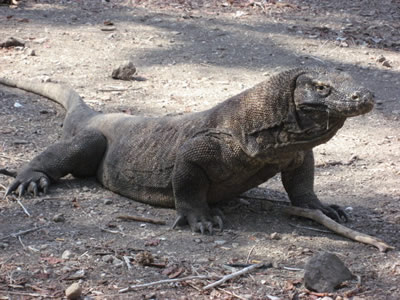
Singapore Zoo breeds rare Komodo dragon

Singapore Zoo has successfully bred the highly-endangered Komodo dragon, officials said Monday, reporting that the rare baby reptile was in good health.
The 40-centimetre (16-inch) hatchling is the first Komodo dragon born in an Asian zoo outside Indonesia, the native home of the world's largest lizard species, a spokeswoman told AFP.
In a press statement, assistant director of zoology Biswajit Guha said the hatching of the Komodo dragon, whose gender has not been confirmed, "is one of the most significant moments" for the zoo, one of Singapore's top attractions.
The breeding of Komodo dragons in captivity "is fraught with difficulties due to incompatible pairings, dearth of experience in egg incubation and over-representation of males in zoos," he said.
The reptiles are considered one of Indonesia's national treasures. Komodos can grow up to three metres (10 feet) in length and weigh up to 140 kilograms (310 pounds).
They are listed as "vulnerable" in the International Union for Conservation of Nature's Red List of Threatened Species.
Only 3,000 of the poisonous lizards, native to Komodo and a few other islands in eastern Indonesia, remain in the wild, according to another campaign group, The Nature Conservancy, which does field work in the area.
The reptiles live on a diet of large mammals, reptiles and birds, but have been known to attack humans.
An Indonesian fisherman was mauled to death by a Komodo dragon in March after he ventured into a remote island sanctuary.
Wednesday, December 02, 2009
They Pledged to cut our Carburns

SINGAPORE'S leaders have thrown their political weight behind the upcoming climate change negotiations in Copenhagen by pledging to cut the city-state's carbon emissions growth by 16 per cent below 'business as usual' levels by 2020.
Announcing this on Wednesday, Senior Minister S Jayakumar said that this was on condition of a global deal on climate change being reached at the Copenhagen talks, which begin on Monday.
As a low-lying island, Singapore is highly vulnerable to the effects of climate change and a rise in sea-level can have serious consequences for us, said Mr Jayakumar. 'So despite the fact that Singapore contributes to only 0.2 per cent of global carbon emissions, it will play its part,' he said.
The voluntary actions to acheive this target will be through a combination of regulatory and fiscal measures, he said. Details will be announced at a later date.
National Development Minister Mah Bow Tan, who was also at the briefing, said the 16 per cent figure was a 'stretched target' derived from some of the targets in the Sustainable Singapore Blueprint launched in April. The blueprint was a national plan on how Singapore could further reduce its carbon emissions.
Minister for the Environment and Water Resources Yaacob Ibrahim added that even though Singapore is in a disadvantaged position, with little alternative forms of energy available, it wanted to show leadership by committing to this target, to help reach a global deal by the end of the Copenhagen negotiations.
Sunday, November 29, 2009
PM Lee doing His bit to stop World's climate change
Singapore Prime Minister Lee Hsien Loong on Friday urged members to actively engage in the issue of climate change at the Commonwealth Heads of Government Meeting (CHOGM) in Trinidad and Tobago.
The Commonwealth gathering is the last international meeting before the Copenhagen summit next month.
Reflecting the urgency in talks, UN Secretary General Ban Ki-Moon, French President Nicolas Sarkozy and Denmark's Prime Minister Lars Lokke Rasmussen have all made their way to Trinidad.
The Commonwealth Summit is on the back of a post-crisis landscape and at a time when world leaders are struggling to reach a global consensus on climate change.
Britain's Queen Elizabeth II opened the meeting, and said the Commonwealth has an opportunity to shape world response to the challenge.
"The Commonwealth has an opportunity to lead once more. The threat to our environment is not a new concern, but it is now a global challenge which will continue to affect the security and stability of millions for years to come," said the Queen, who is also Commonwealth Head.
"Many of those affected are among the most vulnerable, and many of the people least well able to withstand the adverse effects of Climate Change live in the Commonwealth."
Speaking at the leaders' retreat, PM Lee said countries should do what is practical and sensible, keeping in mind the costs, trade-offs and political realities.
He added Singapore will do its part but developed countries will have to take the lead because they are major emitters of carbon.
Island states, he noted, are particularly worried about rising sea levels.
Mr Lee said developing nations must too share in this effort as their populations are equally, if not more vulnerable.
The Commonwealth includes countries such as Australia, Canada, India, South Africa and Britain - important members of the Group of 20 (G20).
Analysts will look to statements from the Commonwealth as an indicator of what the more influential G20 may reach on climate change.
The 53-member Commonwealth is a diverse group, and includes some of the world's richest and poorest countries, accounting for one-third of the world's population and one-fifth of global trade.
PM Lee is set to attend next month's UN meeting on climate change in Copenhagen.
Leaders will try to agree on a pact to reduce carbon emissions during the Copenhagen meet.
Whether that will take the form of a legal treaty or a mere political declaration remains to be seen, but what leaders want is a significant agreement to reduce the ill effects of climate change.
The Commonwealth gathering is the last international meeting before the Copenhagen summit next month.
Reflecting the urgency in talks, UN Secretary General Ban Ki-Moon, French President Nicolas Sarkozy and Denmark's Prime Minister Lars Lokke Rasmussen have all made their way to Trinidad.
The Commonwealth Summit is on the back of a post-crisis landscape and at a time when world leaders are struggling to reach a global consensus on climate change.
Britain's Queen Elizabeth II opened the meeting, and said the Commonwealth has an opportunity to shape world response to the challenge.
"The Commonwealth has an opportunity to lead once more. The threat to our environment is not a new concern, but it is now a global challenge which will continue to affect the security and stability of millions for years to come," said the Queen, who is also Commonwealth Head.
"Many of those affected are among the most vulnerable, and many of the people least well able to withstand the adverse effects of Climate Change live in the Commonwealth."
Speaking at the leaders' retreat, PM Lee said countries should do what is practical and sensible, keeping in mind the costs, trade-offs and political realities.
He added Singapore will do its part but developed countries will have to take the lead because they are major emitters of carbon.
Island states, he noted, are particularly worried about rising sea levels.
Mr Lee said developing nations must too share in this effort as their populations are equally, if not more vulnerable.
The Commonwealth includes countries such as Australia, Canada, India, South Africa and Britain - important members of the Group of 20 (G20).
Analysts will look to statements from the Commonwealth as an indicator of what the more influential G20 may reach on climate change.
The 53-member Commonwealth is a diverse group, and includes some of the world's richest and poorest countries, accounting for one-third of the world's population and one-fifth of global trade.
PM Lee is set to attend next month's UN meeting on climate change in Copenhagen.
Leaders will try to agree on a pact to reduce carbon emissions during the Copenhagen meet.
Whether that will take the form of a legal treaty or a mere political declaration remains to be seen, but what leaders want is a significant agreement to reduce the ill effects of climate change.
Thursday, November 26, 2009
Sunday, November 22, 2009
Plans for River Safari - started in Feb 2009
http://www.wrs.com.sg/images/NR-River-Safari-11-Feb-09.pdf
NEWS RELEASE WILDLIFE RESERVES SINGAPORE BUILDS RIVER SAFARI, ASIA’S FIRST RIVER-THEMED ANIMAL ATTRACTION - S$140 million project scheduled for completion in 2011 Singapore, February 11, 2009, Wildlife Reserves Singapore (WRS) plans to build a river-themed animal attraction that will contribute to Singapore?s tourism landscape and enhance the range of excellent nature-themed attractions in Singapore. Located within the 89-hectare compound of the Singapore Zoo and Night Safari premises, this attraction will be Asia?s first river-themed park. Comprising boat rides, displays of freshwater habitats and other highlights, it will offer a close-up multi-sensory experience for the young and old. The project is expected to inject S$140 million into Singapore?s economy. Construction will begin in 2009, and the park is targeted for completion in 2011. The new park is estimated to attract at least 750,000 visitors annually.
Strong message of conservation Says Ms Fanny Lai, Group CEO, Wildlife Reserves Singapore, “The aim of River Safari is to create a greater awareness of freshwater habitat conservation. Freshwater habitats are ecosystems that depend on water flow for their environmental health, and can include caves, swamps, floodplains, rivers and lakes. The term „wetlands' is often used to describe these rich habitats, which carry the most species per unit. However, their biodiversity is disappearing at a faster rate than the forest and marine biomes, with a reported 50% decline in the freshwater species population index in 30 years since 1970. The River Safari attraction will educate visitors on the conservation of fresh water habitats, and also introduce them to the ecosystem?s interesting water wildlife. It will also complement our current collection at our other three parks. “We started working on this idea about two years ago and we believe this is an opportune time to embark on this project.” Built with Environmental Sensitivity As the attraction is located within its current 89 hectare compound, the new development will have minimal impact on the Mandai Nature Reserve area. WRS team had earlier consulted the various government bodies such as NParks and PUB on the environmental viability of the project. For example, it carried out a survey to identify the trees that will be affected by the development. Instead of felling the trees, it is carefully preparing the process of relocating them. In addition to this, WRS plans to plant more than 30,000 new trees in this attraction. Some of the current animal exhibits will be relocated to make way for this attraction. WRS will also acquire new species of animals to reside in the various habitats through animal exchange programmes with other zoological institutions.
Wildlife Reserves Singapore (WRS) is the parent company of the award-winning attractions – Jurong BirdPark, Night Safari and Singapore Zoo. WRS strives to be a world-class leisure attraction, providing excellent exhibits of animals (and birds) presented in their natural environment for the purpose of conservation, education and recreation. Last year (2008), Jurong BirdPark served 900,000 visitors, the Night Safari, more than 1.1 million visitors and Singapore Zoo welcomed more than 1.5 million visitors. WRS parks have been conferred the Best Leisure Attraction Experience Award at the Singapore Tourism Awards 18 times. The record achievement affirms WRS parks? status as Singapore?s premier leisure venues. In the areas of conservation and research, WRS parks have undertaken multiple projects through collaborations with various organisations and institution on pangolins, frogs, and proboscis monkeys. In 2008, conservation efforts undertaken include animal exchange of endangered species with zoos overseas. All WRS parks are designated wildlife rescue centres by the governing authority.
ISSUED ON BEHALF OF: Wildlife Reserves Singapore BY: Citigate Dewe Rogerson, i.MAGE Pte Ltd 1 Raffles Place #26-02 OUB Centre SINGAPORE 048616 CONTACT: Ms Yu Poh Leng / Ms Eileen Bakri at telephone DURING OFFICE HOURS: 6534-5122 (Office) AFTER OFFICE HOURS: 9667-5837 / 9781-0737 (Mobile)
EMAIL: pohleng.yu@citigatedrimage.com /
eileen.bakri@citigatedrimage.com February 11, 2009
So they already knew the Pandas are coming!
NEWS RELEASE WILDLIFE RESERVES SINGAPORE BUILDS RIVER SAFARI, ASIA’S FIRST RIVER-THEMED ANIMAL ATTRACTION - S$140 million project scheduled for completion in 2011 Singapore, February 11, 2009, Wildlife Reserves Singapore (WRS) plans to build a river-themed animal attraction that will contribute to Singapore?s tourism landscape and enhance the range of excellent nature-themed attractions in Singapore. Located within the 89-hectare compound of the Singapore Zoo and Night Safari premises, this attraction will be Asia?s first river-themed park. Comprising boat rides, displays of freshwater habitats and other highlights, it will offer a close-up multi-sensory experience for the young and old. The project is expected to inject S$140 million into Singapore?s economy. Construction will begin in 2009, and the park is targeted for completion in 2011. The new park is estimated to attract at least 750,000 visitors annually.
Strong message of conservation Says Ms Fanny Lai, Group CEO, Wildlife Reserves Singapore, “The aim of River Safari is to create a greater awareness of freshwater habitat conservation. Freshwater habitats are ecosystems that depend on water flow for their environmental health, and can include caves, swamps, floodplains, rivers and lakes. The term „wetlands' is often used to describe these rich habitats, which carry the most species per unit. However, their biodiversity is disappearing at a faster rate than the forest and marine biomes, with a reported 50% decline in the freshwater species population index in 30 years since 1970. The River Safari attraction will educate visitors on the conservation of fresh water habitats, and also introduce them to the ecosystem?s interesting water wildlife. It will also complement our current collection at our other three parks. “We started working on this idea about two years ago and we believe this is an opportune time to embark on this project.” Built with Environmental Sensitivity As the attraction is located within its current 89 hectare compound, the new development will have minimal impact on the Mandai Nature Reserve area. WRS team had earlier consulted the various government bodies such as NParks and PUB on the environmental viability of the project. For example, it carried out a survey to identify the trees that will be affected by the development. Instead of felling the trees, it is carefully preparing the process of relocating them. In addition to this, WRS plans to plant more than 30,000 new trees in this attraction. Some of the current animal exhibits will be relocated to make way for this attraction. WRS will also acquire new species of animals to reside in the various habitats through animal exchange programmes with other zoological institutions.
Wildlife Reserves Singapore (WRS) is the parent company of the award-winning attractions – Jurong BirdPark, Night Safari and Singapore Zoo. WRS strives to be a world-class leisure attraction, providing excellent exhibits of animals (and birds) presented in their natural environment for the purpose of conservation, education and recreation. Last year (2008), Jurong BirdPark served 900,000 visitors, the Night Safari, more than 1.1 million visitors and Singapore Zoo welcomed more than 1.5 million visitors. WRS parks have been conferred the Best Leisure Attraction Experience Award at the Singapore Tourism Awards 18 times. The record achievement affirms WRS parks? status as Singapore?s premier leisure venues. In the areas of conservation and research, WRS parks have undertaken multiple projects through collaborations with various organisations and institution on pangolins, frogs, and proboscis monkeys. In 2008, conservation efforts undertaken include animal exchange of endangered species with zoos overseas. All WRS parks are designated wildlife rescue centres by the governing authority.
ISSUED ON BEHALF OF: Wildlife Reserves Singapore BY: Citigate Dewe Rogerson, i.MAGE Pte Ltd 1 Raffles Place #26-02 OUB Centre SINGAPORE 048616 CONTACT: Ms Yu Poh Leng / Ms Eileen Bakri at telephone DURING OFFICE HOURS: 6534-5122 (Office) AFTER OFFICE HOURS: 9667-5837 / 9781-0737 (Mobile)
EMAIL: pohleng.yu@citigatedrimage.com /
eileen.bakri@citigatedrimage.com February 11, 2009
So they already knew the Pandas are coming!
Saturday, November 21, 2009
Nature - We Must!
I came across this blog, asking us whether preserving our nature is necessary...
http://blog.simplyjean.com/2007/11/21/is-nature-important-in-singapore/
Is nature important in Singapore?
Singapore November 21st, 2007
I came across this article in the Prime News section and it mentioned about worries of development work in Mandai affecting the nature reserve and it set me thinking – how important are forests to Singapore? Does Singapore bother about whether we lose our nature?
No doubt Singapore is boasted as a Green City, with trees and shrubs to help provide a nice environment and to turn the overwhelming concrete jungles of Shenton Way into a seemingly nicer place to live in, but when it comes to preserving nature, how well does the government/statutory boards consider it?
I was following the concerns that the Nature Society had put forth to the Minister of State for Trade and Industry and his reply hinted of higher costs, which he probably felt could be circumvented by asking the developer to be sensitive to the environment.
I wonder what constitutes that “sensitivity to the environment”, or does it matter at all?
http://blog.simplyjean.com/2007/11/21/is-nature-important-in-singapore/
Is nature important in Singapore?
Singapore November 21st, 2007
I came across this article in the Prime News section and it mentioned about worries of development work in Mandai affecting the nature reserve and it set me thinking – how important are forests to Singapore? Does Singapore bother about whether we lose our nature?
No doubt Singapore is boasted as a Green City, with trees and shrubs to help provide a nice environment and to turn the overwhelming concrete jungles of Shenton Way into a seemingly nicer place to live in, but when it comes to preserving nature, how well does the government/statutory boards consider it?
I was following the concerns that the Nature Society had put forth to the Minister of State for Trade and Industry and his reply hinted of higher costs, which he probably felt could be circumvented by asking the developer to be sensitive to the environment.
I wonder what constitutes that “sensitivity to the environment”, or does it matter at all?
Thursday, November 19, 2009
Monday, November 16, 2009
Wildlife Reserves Singapore
Wildlife Reserves Singapore (WRS) is the parent company of award-winning attractions Jurong Bird Park, Night Safari and Singapore Zoo. WRS parks strive to be world-class leisure attractions, providing excellent exhibits of animals and birds presented in their natural environment for the purpose of conservation, education and recreation. In 2008, Jurong Bird Park served 900,000 visitors, the Night Safari, more than 1.1 million visitors and Singapore Zoo welcomed more than 1.6 million visitors.
WRS parks have been conferred the Best Leisure Attraction Experience Award at the Singapore Tourism Awards 18 times. The record achievement affirms WRS parks’ status as Singapore’s premier leisure venues.
In the areas of conservation and research, WRS parks have undertaken multiple projects, which focus on species such as the oriental pied hornbill, pangolin and orang utan, through collaborations with various organisations and institutions. Recent conservation efforts include hosting a regional Asian pangolin conservation workshop. All WRS parks are designated wildlife rescue centres by the governing authority.
WRS parks have been conferred the Best Leisure Attraction Experience Award at the Singapore Tourism Awards 18 times. The record achievement affirms WRS parks’ status as Singapore’s premier leisure venues.
In the areas of conservation and research, WRS parks have undertaken multiple projects, which focus on species such as the oriental pied hornbill, pangolin and orang utan, through collaborations with various organisations and institutions. Recent conservation efforts include hosting a regional Asian pangolin conservation workshop. All WRS parks are designated wildlife rescue centres by the governing authority.
Friday, November 13, 2009
Panda mania hits Singapore

Climb the Great Wall, wander the grounds of the Forbidden City, partake in Peking duck and watch the marching guards in Tian'anmen Square these are some of the things I have done in Beijing that allow me to tell others I have seen it all after more than two years in the capital.
Well, except maybe for the giant pandas at the Beijing Zoo.
My fellow Singaporean colleague tells me the bears are the best attraction there, a view that is endorsed by the visitors from home and abroad that I hear swarm the site on any holiday.
It is hard not to like the pandas here in China. They are one of the country's most successful envoys and never fail to capture the hearts of young and old - from being stuffed toys in souvenir shops along hutong alleyways or as the mascot for the World Wildlife Fund.
So it is only understandable that the press here have gone gaga over the news that China is sending two giant pandas to the city-state.
President Hu Jintao, who is on a state visit to Singapore before attending key events of the APEC forum there this week, announced that the two animals will arrive in their host country in 2011.
The pandas, a 1-year-old female and 2-year-old male, come from the Wolong nature reserve in Sichuan province and are expected to be in Singapore for a decade.
The announcement of their stay could not have come at a better time.
President Hu said "China and Singapore enjoy geographical proximity, friendly sentiments and a shared language" and that Sino-Singapore relations will reach "a new high", while Singapore's President SR Nathan said the two countries are at "the cusp of a new chapter" as they celebrate the 20th anniversary of diplomatic relations next year.
Singapore is a key partner of China, with bilateral trade reaching $52.4 billion last year, up more than 10 percent from the previous year.
So it is fitting that the island republic now joins a handful of other countries to receive the bears through the latest instance of "panda diplomacy", in which the pandas have proven to be crowd-pullers wherever they go.
Once the animals are in Singapore, authorities said they will also be part of research on breeding as well as a conservation program to raise awareness of endangered species. Less than 2,000 pandas are said to be left in the world, with less than 300 of these in captivity in Wolong and abroad.
Experts from China are also expected to help trainers in Singapore handle the furry visitors, while select bamboo - the staple diet of pandas - will be planted and a special enclosure set up to house the bears.
All these preparations are in line with the high expectations of many Singaporeans who have embraced panda mania.
Singapore student Jean Lim said she is very excited about the pandas' arrival, even though that is still more than a year away.
"It'll be great to have pandas here I won't have to rush to places like Beijing or Sichuan to see them," said Lim, 20. "The wait will be worthwhile."
Thursday, November 12, 2009
Pandas for Singapore

HERE is the first glimpse of the pair of fuzzy darlings that are headed our way in the second half of 2011.
The two-year-old male and one-year-old female giant pandas are currently in China's panda reserve in Wolong in Sichuan province. They each have a twin sibling, which Wildlife Reserves Singapore (WRS) hopes will enhance their chance of reproducing when they get here.
The pandas will make their public debut in 2012 when WRS' new $140 million river themed animal attraction, the River Safari, opens. WRS is building a special enclosure for them, which will be full climate controlled with air-conditioning set at 18 to 22 deg C and humidity level set at 50 to 60 per cent all year round.
The cute envoys for Singapore were announced by Chinese President Hu Jintao at an Istana state banquet on Wednesday night to mark 20 years of China-Singapore relations. They will be here as part of a 10-year reseach and conservation collaboration between WRS and China Wildlife Conservation Association.
WRS will also start a breeding programme of the endangered species. There are some 1,600 pandas left in the wild and another 200 up in captivity left in the world.
Singapore will be the seventh country to receive a pair of pandas from China, after Austria, Australia, Japan, Spain, Thailand and the United States. Taiwan also received a pair last year as a sign of warming relations between the two straits.
The bears will be named when they arrive in Singapore.
APEC 2009
S'pore rolling out red carpet for very special guests
IF YOU are impressed with preparations for visiting dignitaries this week, then you will be floored by the red carpet being rolled out for two very special VIPs - Very Important Pandas.
The pandas do not hit town until late 2011. But much work has to be done ahead of their arrival in Singapore, as part of a 10-year collaboration with the China Wildlife Conservation Association.
Their staple diet - bamboo - has to be planted, the posh climate-controlled enclosure built and the keepers trained. A team of experts from China will come over to provide guidance.
The aim is help conserve the endangered species, raise awareness, and to start a breeding and research programme.
A key step will be taken today when Prime Minister Lee Hsien Loong and Chinese President Hu Jintao witness the signing of a Memorandum of Understanding for the project.
Ms Fanny Lai, chief executive of Wildlife Reserves Singapore, said the pandas will be the star attractions in the new US$140 million (S$194 million) River Safari facility that will open in 2012. 'We are very excited about this,' she said. 'It is the dream of every zoo in the world to be able to work with the giant pandas.'
The one-year-old female and two-year-old male have been bred in captivity at the Wolong panda reserve in China's Sichuan province. They will undergo one month of quarantine in Singapore and will need another five months to acclimatise to their new surroundings before they make their public debut in 2012.
Home will be a spacious 1,600 sq m enclosure. It will simulate the four seasons the pandas are used to, with air-conditioning set at between 18 deg C and 22 deg C and humidity at 50 per cent to 60 per cent. The park is also planting different species of bamboo to meet their dietary requirement of about 20kg of the grass a day.
The pandas will be named after they arrive, but Ms Lai said they have yet to work out how it will be done. She added that while the programme was for 10 years, it could be extended. She declined to say how much it will cost to maintain the pandas, but it takes about $1 million a year to upkeep an animal exhibit zone in the Singapore Zoo. CapitaLand has signed on as a corporate sponsor for an undisclosed sum.
Cuddly pandas are a huge draw for any zoo, but their presence in Singapore has a serious side for Ms Lai - initiating a successful breeding programme.
There are about 1,800 pandas in the world, including 268 in captivity. The 30 that are in zoos outside China have produced 12 babies, and Ms Lai hopes Singapore can add to the number. The bears coming here have twin siblings, which will increase their chances of reproduction.
Giant pandas, which are found only in China, are threatened by loss of habitat, poaching and a low birth rate. Females in the wild normally have a cub once every two to three years. Any offspring will be returned to China, which considers pandas a national treasure.
It is not the first time that Singapore has hosted pandas. In 1990, a pair, An-An and Xin-Xing, were here for 100 days. In 1988, Jiao Jiao the performing panda visited with the Shanghai Acrobatic Troupe.
IF YOU are impressed with preparations for visiting dignitaries this week, then you will be floored by the red carpet being rolled out for two very special VIPs - Very Important Pandas.
The pandas do not hit town until late 2011. But much work has to be done ahead of their arrival in Singapore, as part of a 10-year collaboration with the China Wildlife Conservation Association.
Their staple diet - bamboo - has to be planted, the posh climate-controlled enclosure built and the keepers trained. A team of experts from China will come over to provide guidance.
The aim is help conserve the endangered species, raise awareness, and to start a breeding and research programme.
A key step will be taken today when Prime Minister Lee Hsien Loong and Chinese President Hu Jintao witness the signing of a Memorandum of Understanding for the project.
Ms Fanny Lai, chief executive of Wildlife Reserves Singapore, said the pandas will be the star attractions in the new US$140 million (S$194 million) River Safari facility that will open in 2012. 'We are very excited about this,' she said. 'It is the dream of every zoo in the world to be able to work with the giant pandas.'
The one-year-old female and two-year-old male have been bred in captivity at the Wolong panda reserve in China's Sichuan province. They will undergo one month of quarantine in Singapore and will need another five months to acclimatise to their new surroundings before they make their public debut in 2012.
Home will be a spacious 1,600 sq m enclosure. It will simulate the four seasons the pandas are used to, with air-conditioning set at between 18 deg C and 22 deg C and humidity at 50 per cent to 60 per cent. The park is also planting different species of bamboo to meet their dietary requirement of about 20kg of the grass a day.
The pandas will be named after they arrive, but Ms Lai said they have yet to work out how it will be done. She added that while the programme was for 10 years, it could be extended. She declined to say how much it will cost to maintain the pandas, but it takes about $1 million a year to upkeep an animal exhibit zone in the Singapore Zoo. CapitaLand has signed on as a corporate sponsor for an undisclosed sum.
Cuddly pandas are a huge draw for any zoo, but their presence in Singapore has a serious side for Ms Lai - initiating a successful breeding programme.
There are about 1,800 pandas in the world, including 268 in captivity. The 30 that are in zoos outside China have produced 12 babies, and Ms Lai hopes Singapore can add to the number. The bears coming here have twin siblings, which will increase their chances of reproduction.
Giant pandas, which are found only in China, are threatened by loss of habitat, poaching and a low birth rate. Females in the wild normally have a cub once every two to three years. Any offspring will be returned to China, which considers pandas a national treasure.
It is not the first time that Singapore has hosted pandas. In 1990, a pair, An-An and Xin-Xing, were here for 100 days. In 1988, Jiao Jiao the performing panda visited with the Shanghai Acrobatic Troupe.
Wednesday, November 11, 2009
Singapore Zoo - Panda deal
MINISTRY OF FOREIGN AFFAIRS
SINGAPORE
11 NOVEMBER 2009
Wildlife Reserves Singapore (WRS) Press Release
Singapore, November 11, 2009 - Wildlife Reserves Singapore (WRS), parent company of Jurong Bird Park, Night Safari and Singapore Zoo will receive a pair of male and female Giant Pandas from China Wildlife Conservation Association (CWCA) as part of a joint collaboration to promote giant panda conservation, raise public awareness of conservation and implement a giant panda breeding research programme. The pandas are symbolic of the close relationship between Singapore and China as the Republic celebrates the 20th Anniversary of friendly Sino-Singapore relations. This was announced by President Hu Jintao following a meeting with President S R Nathan earlier this evening.
The two pandas, which are scheduled to arrive in Singapore in the second half of 2011, will have a new home at the River Safari, the fourth and latest nature park by WRS. Preliminary work for River Safari has begun and construction is due to be completed by mid-2011. Visitors will be able to see the pandas when River Safari opens its doors in early 2012.
Both WRS and CWCA will ink their commitment to the conservation collaboration through an Agreement with the objective of knowledge exchange on reproductive science and education on wildlife in China.
The partnership will be sealed at a signing ceremony on November 12 in the presence of President Hu Jintao and Prime Minister Lee Hsien Loong, signaling high-level support from both governments.
"We are pleased that the pandas mark the strong and continuing friendship between the two countries. The strong support from both our governments will give us great impetus to work with our Chinese counterpart in global nature and wildlife conservation, and to learn, adopt and implement best practices. This collaboration will also boost greater interest in the areas of conservation, especially for the giant pandas," said Ms Claire Chiang, WRS' Chairman.
To support this conservation effort, CapitaLand Limited, one of Asia's largest real estate companies with a strong presence in China for 15 years, has pledged a conservation donation to support the 10-year collaborative programme.
Mr Liew Mun Leong, President and CEO of CapitaLand Group, said: "Over the last 15 years, CapitaLand has actively participated in China's urbanisation. Today, we have an extensive presence with a portfolio worth over S$20 billion (on a when-completed basis) comprising about 100 projects spanning 40 cities across China. This conservation donation is yet another testament of CapitaLand's long-term commitment to China. This collaborative effort will raise cultural exchange and understanding between the two countries and further strengthen the strong relationship between Singapore and China."
Husbandry and Veterinary Care
"With WRS' Wildlife Healthcare and Research Centre established since 2006, we have the necessary infrastructure in place - latest technology in veterinary equipment and animal management team with extensive field experience - to care for the giant pandas. Through close collaboration with the CWCA, we will be even better positioned to achieve our objectives of promoting giant panda conservation and raise public awareness of conservation. Along with all Singaporeans, we eagerly await the arrival of the pandas," said Ms Fanny Lai, WRS' Group CEO.
WRS has identified a team of zookeepers and veterinarians to look after the husbandry needs and veterinary care of the pandas. During the next two years, zookeepers will receive training on the husbandry, nutrition and housing of pandas. A researcher on the team will monitor as well as study the husbandry, nutrition, behaviour and reproduction of the pandas.
In addition, a team of panda experts from China will come to Singapore to provide training as well as expert guidance on creating the ideal environment for the pandas.
Caring for pandas is not new to WRS. In 1990 one of WRS' parks, Singapore Zoo, welcomed and cared for two giant pandas "An-An" and "Xin-Xing" for 100 days.
Exhibit, Housing and Conservation Education
In line with the needs of the pandas, their new home at the River Safari will be designed and constructed to meet the World Association of Zoos and Aquariums (WAZA) standards.
As a strong proponent of conservation education, WRS will be looking at enriching visitors' experience with panda conservation interpretives, educational programmes and behind-the-scenes experience on panda care.
River Safari
River Safari will be located along Mandai Lake Road, adjacent to Night Safari and Singapore Zoo. The new attraction will be Asia's first river-themed animal park comprising of boat rides, display of freshwater habitats and other highlights offering close-up multi-sensory experience for the young and old, with the aim to create greater awareness of freshwater habitat conservation. The development will be built with environmental sensitivity and minimal impact on the Mandai Nature Reserve area.
CONTACT: Ms Eileen Bakri / Mrs Elaine Lim
DURING OFFICE HOURS: 6534-5122 (Office)
AFTER OFFICE HOURS: 9781-0737 / 9751-2122 (Mobile)
EMAIL: eileen.bakri@citigatedrimage.com /
elaine.lim@citigatedrimage.com
November 11, 2009
WRS FACTSHEET - GIANT PANDAS
Introduction
Wildlife Reserves Singapore will be the custodian of a pair of Giant Pandas from China. Scheduled to arrive in Singapore in second half of 2011 the pair of male and female pandas, currently two years old and one year old respectively, mark two decades of friendly relations between Singapore and China and their collaboration to promote giant panda conservation through a joint collaborative research programme.
Habitat/ Exhibit
The two giant pandas will be housed at Wildlife Reserves Singapore's River Safari. The exhibit will be constructed according to the World Association of Zoos and Aquariums standards. It will be fully air-conditioned and the humidity level kept low. The giant pandas will be housed in a 1600 m2 climate-controlled enclosure, off-exhibit holding area, exercise yard and cubbing den. The entire habitat will be air-conditioned with temperature set between 18 to 220C and humidity controlled at 50 to 60% all year round. The ambient conditions will be adjusted to simulate the four seasons similar to their natural habitat
Diet
The Giant Panda's diet consists mainly of bamboo, vegetables and special foliovore biscuits. It is estimated that a panda's daily intake is about 20kg of bamboo browse per day. In preparation of the pandas' arrival, Wildlife Reserves Singapore plans to cultivate six different bamboo species in its parks.
Conservation
According to the IUCN Red List of Threatened Species, the Giant Panda is endangered. The contraction of panda population is the result of logging and trees being removed to make way for farming. Conservation efforts include restoring panda habitats such as creating forest reserves and captive breeding programmes.
Husbandry
A team of four dedicated and experienced staff have been identified to care for the pandas. In addition, four staff from China's panda team will be in Singapore - two staff at a time for six months over the one year duration for the training and to see to the establishment of the ideal habitat for the pandas in their new home in Singapore. The pandas will be well cared for by an excellent team of veterinarians, zookeepers, and researchers in line with World Association of Zoos and Aquariums standards and recommendations.
SINGAPORE
11 NOVEMBER 2009
Wildlife Reserves Singapore (WRS) Press Release
Singapore, November 11, 2009 - Wildlife Reserves Singapore (WRS), parent company of Jurong Bird Park, Night Safari and Singapore Zoo will receive a pair of male and female Giant Pandas from China Wildlife Conservation Association (CWCA) as part of a joint collaboration to promote giant panda conservation, raise public awareness of conservation and implement a giant panda breeding research programme. The pandas are symbolic of the close relationship between Singapore and China as the Republic celebrates the 20th Anniversary of friendly Sino-Singapore relations. This was announced by President Hu Jintao following a meeting with President S R Nathan earlier this evening.
The two pandas, which are scheduled to arrive in Singapore in the second half of 2011, will have a new home at the River Safari, the fourth and latest nature park by WRS. Preliminary work for River Safari has begun and construction is due to be completed by mid-2011. Visitors will be able to see the pandas when River Safari opens its doors in early 2012.
Both WRS and CWCA will ink their commitment to the conservation collaboration through an Agreement with the objective of knowledge exchange on reproductive science and education on wildlife in China.
The partnership will be sealed at a signing ceremony on November 12 in the presence of President Hu Jintao and Prime Minister Lee Hsien Loong, signaling high-level support from both governments.
"We are pleased that the pandas mark the strong and continuing friendship between the two countries. The strong support from both our governments will give us great impetus to work with our Chinese counterpart in global nature and wildlife conservation, and to learn, adopt and implement best practices. This collaboration will also boost greater interest in the areas of conservation, especially for the giant pandas," said Ms Claire Chiang, WRS' Chairman.
To support this conservation effort, CapitaLand Limited, one of Asia's largest real estate companies with a strong presence in China for 15 years, has pledged a conservation donation to support the 10-year collaborative programme.
Mr Liew Mun Leong, President and CEO of CapitaLand Group, said: "Over the last 15 years, CapitaLand has actively participated in China's urbanisation. Today, we have an extensive presence with a portfolio worth over S$20 billion (on a when-completed basis) comprising about 100 projects spanning 40 cities across China. This conservation donation is yet another testament of CapitaLand's long-term commitment to China. This collaborative effort will raise cultural exchange and understanding between the two countries and further strengthen the strong relationship between Singapore and China."
Husbandry and Veterinary Care
"With WRS' Wildlife Healthcare and Research Centre established since 2006, we have the necessary infrastructure in place - latest technology in veterinary equipment and animal management team with extensive field experience - to care for the giant pandas. Through close collaboration with the CWCA, we will be even better positioned to achieve our objectives of promoting giant panda conservation and raise public awareness of conservation. Along with all Singaporeans, we eagerly await the arrival of the pandas," said Ms Fanny Lai, WRS' Group CEO.
WRS has identified a team of zookeepers and veterinarians to look after the husbandry needs and veterinary care of the pandas. During the next two years, zookeepers will receive training on the husbandry, nutrition and housing of pandas. A researcher on the team will monitor as well as study the husbandry, nutrition, behaviour and reproduction of the pandas.
In addition, a team of panda experts from China will come to Singapore to provide training as well as expert guidance on creating the ideal environment for the pandas.
Caring for pandas is not new to WRS. In 1990 one of WRS' parks, Singapore Zoo, welcomed and cared for two giant pandas "An-An" and "Xin-Xing" for 100 days.
Exhibit, Housing and Conservation Education
In line with the needs of the pandas, their new home at the River Safari will be designed and constructed to meet the World Association of Zoos and Aquariums (WAZA) standards.
As a strong proponent of conservation education, WRS will be looking at enriching visitors' experience with panda conservation interpretives, educational programmes and behind-the-scenes experience on panda care.
River Safari
River Safari will be located along Mandai Lake Road, adjacent to Night Safari and Singapore Zoo. The new attraction will be Asia's first river-themed animal park comprising of boat rides, display of freshwater habitats and other highlights offering close-up multi-sensory experience for the young and old, with the aim to create greater awareness of freshwater habitat conservation. The development will be built with environmental sensitivity and minimal impact on the Mandai Nature Reserve area.
CONTACT: Ms Eileen Bakri / Mrs Elaine Lim
DURING OFFICE HOURS: 6534-5122 (Office)
AFTER OFFICE HOURS: 9781-0737 / 9751-2122 (Mobile)
EMAIL: eileen.bakri@citigatedrimage.com /
elaine.lim@citigatedrimage.com
November 11, 2009
WRS FACTSHEET - GIANT PANDAS
Introduction
Wildlife Reserves Singapore will be the custodian of a pair of Giant Pandas from China. Scheduled to arrive in Singapore in second half of 2011 the pair of male and female pandas, currently two years old and one year old respectively, mark two decades of friendly relations between Singapore and China and their collaboration to promote giant panda conservation through a joint collaborative research programme.
Habitat/ Exhibit
The two giant pandas will be housed at Wildlife Reserves Singapore's River Safari. The exhibit will be constructed according to the World Association of Zoos and Aquariums standards. It will be fully air-conditioned and the humidity level kept low. The giant pandas will be housed in a 1600 m2 climate-controlled enclosure, off-exhibit holding area, exercise yard and cubbing den. The entire habitat will be air-conditioned with temperature set between 18 to 220C and humidity controlled at 50 to 60% all year round. The ambient conditions will be adjusted to simulate the four seasons similar to their natural habitat
Diet
The Giant Panda's diet consists mainly of bamboo, vegetables and special foliovore biscuits. It is estimated that a panda's daily intake is about 20kg of bamboo browse per day. In preparation of the pandas' arrival, Wildlife Reserves Singapore plans to cultivate six different bamboo species in its parks.
Conservation
According to the IUCN Red List of Threatened Species, the Giant Panda is endangered. The contraction of panda population is the result of logging and trees being removed to make way for farming. Conservation efforts include restoring panda habitats such as creating forest reserves and captive breeding programmes.
Husbandry
A team of four dedicated and experienced staff have been identified to care for the pandas. In addition, four staff from China's panda team will be in Singapore - two staff at a time for six months over the one year duration for the training and to see to the establishment of the ideal habitat for the pandas in their new home in Singapore. The pandas will be well cared for by an excellent team of veterinarians, zookeepers, and researchers in line with World Association of Zoos and Aquariums standards and recommendations.
Saturday, November 07, 2009
APEC guest to visit Singapore Zoo
Singapore has been ready for the APEC Leaders' Week meetings, which are to be kicked off Sunday with the opening of the Concluding Senior Officials' Meeting.
Around 10,000 delegates, media persons and visitors, including 21 leaders and 63 ministers from the 21 APEC member economies, are arriving in the country. The city's hotels are hustling and bustling for welcoming guests from around the Asia-Pacific regions, with some providing a welcome drink -- a specially concocted APEC cocktail -- to new arrivals.
Those staying at The Fairmont Singapore and Swissotel The Stamford, two designated hotels by the APEC organizing committee, were expected to receive special welcome amenities like APEC souvenirs and a range of gifts and services.
Trainings in service and languages for employees were also provided by hotels to cater to the needs of visitors from around the world.
Local restaurants, already renowned for its fusion meals, came in with new ideas. An APEC-themed menu at O'Leary's, which is a restaurant at the city's iconic attraction Singapore Flyer, included an "Obama burger" in recognition of the U.S. President Barack Obama who will be in town for the Summit.
APEC delegates could also have the chance to taste the country's signature cocktail -- the Singapore Sling, all in celebration of the grouping's 20th anniversary.
The streets of Orchard Road, the main shopping area, and the Marina Bay area, where main tourist attractions were located, lit up for eight weeks as of Saturday, in time for visiting APEC delegates.
Singapore's PM Lee Hsien Loong called on the Singaporeans to become hospitable hosts for the event.
"Whether you are a taxi driver, whether you a staff in a hotel, whether you are asked for directions in the street, or whether you are just going about your business and inconvenienced because the APEC convoy has zoomed by and (caused) a traffic jam, please do your part and show them what Singapore can do," he said at an earlier press conference.
About 1,700 volunteers were chosen out of some 3,000 applicants and would be assigned to cover a wide range of duties, including receiving delegates at the airport and tending to the information booths located at various hotels.
Around 10,000 delegates, media persons and visitors, including 21 leaders and 63 ministers from the 21 APEC member economies, are arriving in the country. The city's hotels are hustling and bustling for welcoming guests from around the Asia-Pacific regions, with some providing a welcome drink -- a specially concocted APEC cocktail -- to new arrivals.
Those staying at The Fairmont Singapore and Swissotel The Stamford, two designated hotels by the APEC organizing committee, were expected to receive special welcome amenities like APEC souvenirs and a range of gifts and services.
Trainings in service and languages for employees were also provided by hotels to cater to the needs of visitors from around the world.
Local restaurants, already renowned for its fusion meals, came in with new ideas. An APEC-themed menu at O'Leary's, which is a restaurant at the city's iconic attraction Singapore Flyer, included an "Obama burger" in recognition of the U.S. President Barack Obama who will be in town for the Summit.
APEC delegates could also have the chance to taste the country's signature cocktail -- the Singapore Sling, all in celebration of the grouping's 20th anniversary.
The streets of Orchard Road, the main shopping area, and the Marina Bay area, where main tourist attractions were located, lit up for eight weeks as of Saturday, in time for visiting APEC delegates.
Singapore's PM Lee Hsien Loong called on the Singaporeans to become hospitable hosts for the event.
"Whether you are a taxi driver, whether you a staff in a hotel, whether you are asked for directions in the street, or whether you are just going about your business and inconvenienced because the APEC convoy has zoomed by and (caused) a traffic jam, please do your part and show them what Singapore can do," he said at an earlier press conference.
About 1,700 volunteers were chosen out of some 3,000 applicants and would be assigned to cover a wide range of duties, including receiving delegates at the airport and tending to the information booths located at various hotels.
Sunday, November 01, 2009
I am a Loud person?

Ms Fanny Lai
Wildlife Reserves Singapore
Ms Fanny Lai is the Group Chief Executive Officer of Wildlife Reserves Singapore (WRS) which comprises Jurong BirdPark, Night Safari and Singapore Zoo. Passionate about wildlife conservation, she volunteered as a docent at Singapore Zoo, prior to joining Singapore Zoological Gardens in 2004. A strong advocate that more people can be inspired to take individual responsibility in wildlife conservation, she has spearheaded a strategic plan for the parks to play a greater role in public education, conservation and research.
Fanny is a member of World Zoo and Aquarium Association (WAZA) and South East Asia Zoo Associations (SEAZA) as well as Council member of Attractions of Singapore Association (ASA). In 2008, she is the first recipient to be awarded Marketing Institute's “Marketer of the Year” Award for her marketing execution that has brought many winnings and successes for Wildlife Reserves Singapore.
She holds an Executive MBA from the University of Chicago Graduate School of Business.
Subscribe to:
Posts (Atom)