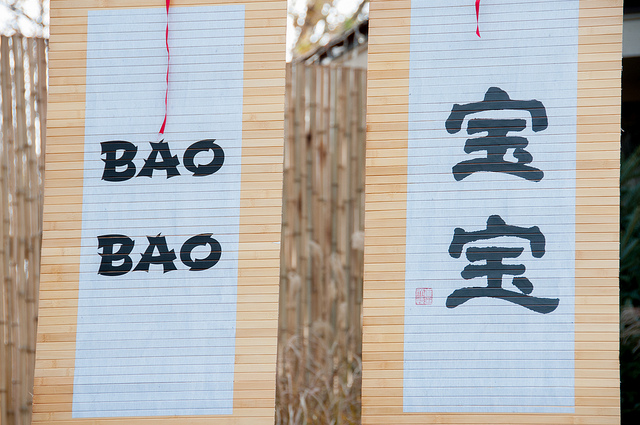
The National Zoo is preparing panda cub Bao Bao (bow-bow) for her public debut this month.
Bao Bao had a tryout Monday in front of the media. She spent the morning climbing on rocks and following her mother, Mei Xiang (may-shong), around the indoor exhibit.
Curators say Bao Bao has turned out to be a calm and relaxed panda cub, more subdued than older brother Tai Shan (ty-shawn).
Bao Bao goes on display Jan. 18. Curators say she may be visible inside or outside, depending on the day. Zoo members will have an early preview starting Saturday.
Bao Bao is receiving the best medical care anywhere in the world, according to handlers at the Smithsonian's National Zoo in Washington, DC after being born at the facility in August last year.
The panda cub was weighed on Tuesday morning, tipping the scales at just over 1st 2oz (17 pounds).
Panda handlers are currently giving Bao Bao human contact and some tactile stimulation in order for her to get used to encounters with humans.
"Her personality is really laid back. As you can see she doesn't seem to mind the interaction with us," explained biologist Laurie Thompson, from the Giant Panda Programme.
Bao Bao will make her public debut on January 18.
I have been Friends of the Singapore Zoo for many years, if you want it to continue giving us the fun and joy of animals, please visit the Singapore Zoo. Singapore Zoo, 80 Mandai Lake Road (Bus 138 from Ang Mo Kio MRT or 171 from City). Opening hours are 8.30am-6.00pm daily and adult admission is S$28, children is $18. *Park Hooper packages are more worth it. Check them out first before you purchase those tickets. Zoo, Night Safari, Jurong Bird Park or River Safari.
Saturday, January 11, 2014
Thursday, January 09, 2014
Man detained in China after dead tiger found in car
A dead Siberian tiger wrapped in a plastic bag lying in a SUV car in Wenzhou, east China's Zhejiang province.
POLICE in China have detained a man over the death of a rare Siberian tiger discovered in the back of an SUV.
Pictures showing officers pulling the black-streaked tiger, wrapped in a plastic bag, out of a white vehicle went viral on China's Internet after they were posted online.
Police in the eastern city of Wenzhou are holding a suspect identified as a former chef in connection with the tiger's death, the local Youth Times newspaper said.
The tiger was seized by police after they spotted the bag and found its shape suspicious, the report said.
Trade in Siberian tigers, also known as Amur tigers, is outlawed under the Convention on International Trade in Endangered Species.
Hundreds of the animals, known scientifically as Panthera tigris altaica, once roamed the lush pine and oak forests of northeastern China.
As recently as the 1970s China and Russia each had about 150 Siberian tigers, but now only around 20 are estimated still to survive in the wild in China.
Conservationists cite increased logging as well as poaching of the species for use in traditional Chinese medicine as among reasons for the dramatic fall in their numbers.
The body of the seized tiger is being stored in a local zoo, the report said, adding that experts judged it to be a male between five and six years old but had not yet determined the cause of its death.
The 31-year-old suspect, from Jiangxi province, was caught when two police officers spotted him and another man clumsily trying to move a long object in a plastic woven bag into a white SUV along the Jiangbin East Road on Wednesday morning.
Local police said the suspect is a former chef, according to Hangzhou-based newspaper Youth Times.
Suspicious about the cargo, the two officers, who happened to drive by the area, pulled over and ordered the two men to open the bag for inspection. The object turned out to be a dead tiger.
Police arrested the ex-chef, while the other suspect fled from the scene and is still at large.
Initial examinations by forestry department specialists found that the adult tiger, weighing about 150kg, was a male Siberian tiger aged between five and six years old. Traces of blood were seen near its mouth, though there were no other apparent wounds on the animal’s body.
A local zookeeper told the press that the tiger was unlikely to have come from the wild or the circus, as circus tigers usually have their canine teeth or “fangs” removed.
Investigators will conduct further examinations on the big cat to determine if it was implanted with a computer chip that would help them match it to a zoo.
It is a criminal offence to trade tigers, particularly Siberian tigers, which are protected under the multilateral agreement Cites, or Convention on International Trade in Endangered Species of Wild Fauna and Flora.
It is estimated that only 20 or so wild Siberian tigers are left in China.
Wednesday, January 08, 2014
Zoo doctors unsure about panda birth
Veterinarians started to have doubts yesterday about whether Chiang Mai Zoo will welcome a second panda baby after Lin Hui began to appear anxious, had a rise in appetite and others signs that led them to question if she will really give birth. Head veterinarian Boripat Siriaroonrat told a press conference that his team would perform another ultrasound and progesterone test to confirm her pregnancy later yesterday, while also checking her stress hormone level.
'Acting differently'
Since Lin Hui was acting differently than the team had expected, they could not be positive that she would give birth to a cub.
In cases abroad, sometimes a giant panda whose ultrasound test showed an embryo might not give birth and sometimes a giant panda with twin embryos might only have one cub.
There were many variations in Lin Hui's case, so her behaviour pattern didn't indicate a pregnancy failure. She was still lactating. "There is a 50:50 chance Lin Hui will give birth," he said.
The zoo last month reported that Lin Hui was expecting after undergoing a series of artificial inseminations in September and that a new media 'darling' was due this week, so the zoo put the mother on a close watch and prepared a delivery room and cub-care room.
'Acting differently'
Since Lin Hui was acting differently than the team had expected, they could not be positive that she would give birth to a cub.
In cases abroad, sometimes a giant panda whose ultrasound test showed an embryo might not give birth and sometimes a giant panda with twin embryos might only have one cub.
There were many variations in Lin Hui's case, so her behaviour pattern didn't indicate a pregnancy failure. She was still lactating. "There is a 50:50 chance Lin Hui will give birth," he said.
The zoo last month reported that Lin Hui was expecting after undergoing a series of artificial inseminations in September and that a new media 'darling' was due this week, so the zoo put the mother on a close watch and prepared a delivery room and cub-care room.
Sunday, January 05, 2014
Giant panda cub Yuan Zai unveiled in Taiwan’s Taipei zoo
Six-month-old Yuan Zai, the island's first giant panda cub, was unveiled to the media on Saturday and then to the public on Monday.
She climbed around her cage before retiring for a nap with her mother, much to the delight of visitors.
Her parents Tuan Tuan and Yuan Yuan, whose names together mean "reunion" in Chinese, were given to Taiwan by China in December 2008.
Taipei zoo expects 19,000 visitors daily to see its newest attraction.
The BBC's Cindy Sui says many visitors took time off from school and work to see the panda cub, which currently sleeps for about 20 hours each day.
Director of Taipei Zoo Jin Shih-chien said Yuan Zai was generally active for about 20 minutes at a time, and advised visitors to be patient if they found her asleep.
Taipei zoo staff had to separate tiny Yuan Zai from her mother a few days after her birth in July.
She was raised in an incubator after a slight injury in her leg.
The pandas have become star attractions at Taipei zoo, as well as a symbol of warming ties between China and Taiwan, and panda mania has swept the island since Yuan Zai was born.
Sunday, December 01, 2013
Tourists get to enjoy Greenery, Animals, Birds & Aquatic Life in Singapore
Singapore is a tiny country, she doesn't have large areas for Nature. Yet tourist from all over the world arrive to enjoy our Gardens,Birds, Zoo animals and Marine life.
Amazing isn't it!
Gardens by the Bay
www.gardensbythebay.com.sg
Singapore Zoo
www.zoo.com.sg
River Safari
www.riversafari.com.sg
Jurong Bird Park
www.birdpark.com.sg
Marine Life Park
http://www.rwsentosa.com/language/en-US/Homepage/Attractions/MarineLifePark
Sentosa Underwater World
www.underwaterworld.com.sg
Amazing isn't it!
Gardens by the Bay
www.gardensbythebay.com.sg
Singapore Zoo
www.zoo.com.sg
River Safari
www.riversafari.com.sg
Jurong Bird Park
www.birdpark.com.sg
Marine Life Park
http://www.rwsentosa.com/language/en-US/Homepage/Attractions/MarineLifePark
Sentosa Underwater World
www.underwaterworld.com.sg
Visit Singapore, its Yours!
Wednesday, November 20, 2013
NTUC Member has its Privileges
Offer Date: Now till 31 Dec 2013
Up to 30% OFF admission*
Come explore the best rainforest zoo in the world, where over 2,800 animals and an exciting ecological adventure awaits you! Stroll along the shaded boardwalks and observe our animals as they frolic amidst lush surroundings that mimic their habitat in the wild!
*30% OFF admission is applicable on weekdays only, 10% OFF admission on weekends and Public Holidays
Friday, November 15, 2013
Kidzranger Tour
If you have children aged between 5 and 12 years old who love animals, this hands-on programme is an excellent experience. Our Kidzranger Tour turns children into zookeepers for a stint. They’ll get their own Kidzranger vest, and a pin-on button that gives them special access to areas in the Rainforest Kidzworld that are otherwise only open to our zookeepers. It’s a fun-filled and educational experience that is sure to bring out the sparkle in every child’s eyes.
Tour highlights:
- Mingle with the horses, ponies and falabellas and learn how to tell them apart.
- Find out about the animals’ quirky habits that may surprise you.
- Try your hand at grooming a falabella and rabbit.
- Feed our hungry goats.
- Experience what it’s like to be a zookeeper.
- Learn what it takes to be a responsible pet owner.
Venue Timing Duration Price
Rainforest 10.30am & 3.00pm 45 minutes $15.00(Child 5 - 12 years old)
Kidzworld
To register for the Kidzranger Tour,
Call (65) 6269 3411 or
Email wilddiscoverer@wrs.com.sg
Sunday, November 10, 2013
Cry of the Tiger
Just skin and bones, Melani the Sumatran Tigress teeters towards death and then somehow stumbles back to life. She’s become a tragic and disturbing example of what can happen to a majestic animal in the supposed care of humans.
Melani should have been safe. Unlike tigers in a jungle habitat trying to survive the threats of poachers, development and environmental destruction, she was in a zoo. But the Surabaya Zoo has proved to be no sanctuary.
A few years ago Melani and three other Sumatran Tigers were fed meat tainted with formaldehyde. Only Melani survived – and then only just. Her organs were so damaged she was unable to absorb requisite nutrients from her food and couldn’t maintain necessary condition. Until recently this skeletal creature was doomed to crawl around a small dark enclosure critics say resembled a dungeon.
Now, finally, she’s getting expert care elsewhere, it’s still no sure bet she’ll survive. If she doesn’t then you can scratch another Sumatran Tiger off the estimated population of between just 300 and 400.
“She’s a creature that’s been neglected and abused inside a zoo that is deemed to care for her. To see an animal struggle through this sort of thing you know she wants to live. It’s her will that’s keeping her alive.” SYBELLE FOXCROFT Conservationist, Cee4Life
The Surabaya Zoo still drags in plenty of visitors, but it doesn’t appear that much of the money generated by ticket sales and other zoo enterprises goes to caring for animals. Local families who come here for an affordable day out appear oblivious to the startling poor condition of many of the animals and their enclosures.
Those who do know about animal welfare say Surabaya Zoo is a disgrace and grow frustrated and increasingly angry that the City Government responsible for it is not working to solve the problem.
Indonesia Correspondent George Roberts investigates how a facility once thought to be among South East Asia’s finest zoos has become a squalid hell-hole for its inhabitants. Beyond Surabaya he explores why Indonesia appears to put such a low priority on its majestic and important creatures that are being pressed ever closer toward extinction.
Foreign Correspondent on how a facility once thought to be among Southeast Asia's finest zoos has become a squalid hell-hole for its inhabitants.
In bustling Surabaya on the Indonesian island of Java, this is a hot ticket, particularly at the weekend. It’ll cost you a dollar fifty to step inside the Surabaya Zoo and join the crowd. And every week 10,000 people wander through what was once considered one of the best zoos in South East Asia.
It’s a relatively affordable day out for local families who appear to enjoy themselves but seem oblivious to the condition of the residents and their enclosures. These days Surabaya Zoo is more of a house of horrors than a wildlife wonderland.
TONY SUMAMPAU: “Around Indonesia I think Surabaya Zoo is one of the zoos that never been approved as a zoo because the facility and the condition of the animal is not good at all”.
SYBELLE FOXCROFT: “I reckon right now it should be quarantined. I think it should be closed. They need to step in now and they need to quarantine that place right now. It’s a disease carrying death zoo”.
ROBERTS: Sri Penta has the unenviable task of trying to care for the zoo’s residents as best she can and as this sunny, energetic curator shows us around, it’s clear that the job in front of her is overwhelming.
SRI PENTA: “The animals died suddenly. The cause varies – the number of animals in the cage… too many males within a group… the health factor… the poor environmental conditions in the cages… these are probably some of the factors that caused the death of the animals”.
ROBERTS: Everywhere you look there are stark and confronting examples of animals in squalid, cramped conditions. Australian camels appear sick and emaciated. Australian pelicans are crammed in wing to wing. Some animals appear to be begging to be let out.
SRI PENTA: “Well, we’re close to the animals on a daily basis – and when there are so many deaths within the last 3 months, of course, we felt very disappointed. We feel a sense of loss”.
ROBERTS: About 50 animals have died in just three months including this adult orang-utan on the day we arrived. Beyond these walls Indonesia’s orang-utans in Borneo and Sumatra are endangered. This baby male orang-utan may survive. His parents rejected him so he’s being kept away from the zoo’s other diseased apes. It’s extraordinary that they’ve escaped human threats in the wild, but here in a place they should be safe and healthy, they’re anything but.
TONY SUMAMPAU: “Most of all because of the holding facility they’ve got is very poor. The humidity is very high and they are very dark inside and it’s easily transmit diseases one to the others and the second thing is, the exhibit is very old, mostly left over by Dutch maybe 50 years or 70 years ago”.
ROBERTS: Tony Sumampau is one of Indonesia’s most respected animal experts and he’s particularly concerned about some vitally important residents – Surabaya Zoo’s Sumatran tigers.
TONY SUMAMPAU: “They have no room for exercise, for these three tigers in Surabaya Zoo. They have no sunlight when they are growing so until now they don’t have any facility for them to exercise, to climb the tree, to going up, jump up and jump down and things like that – that makes their muscle becoming weaker and weaker every day and the food is not very good as well”.
ROBERTS: The appalling condition of the zoo’s Sumatran tiger population is perhaps the most difficult to comprehend. These magnificent creatures should be the pride of Indonesia, the dominant predator among the country’s exotic species. But populations have been devastated by development and poaching. Here at the zoo though, the picture is no more positive for this critically endangered animal.
SYBELLE FOXCROFT: [Cec4life, wildlife charity] “In regard to diseases that are inside that Zoo, there’s tuberculosis, there’s hepatitis... and the animals are also dying of pneumonia”.
ROBERTS: There are thought to be only about three to four hundred Sumatran Tigers left in the wild. In here, 15 share their cramped quarters with others like this Bengal Tiger.
Sri Penta has seen the best and worst of this place in her 20 years here. Now though it’s so bad she’s risking her job showing us the conditions the tigers are still kept in.
“Why is it not good for the tigers?”
SRI PENTA: “It is not good because the cage is too small, their resting pen is too small, and humid, as you can see the floor can’t dry, it’s humid and the sun can’t get inside. So health-wise it’s not good, it’s not healthy, and in the future it will have an impact on the health of the animals”.
SYBELLE FOXCROFT: “They’re going to die. I have no doubt that they’ll die. It is absolutely atrocious what they’re doing in this zoo”.
ROBERTS: The dire plight of Surabaya’s tigers has enraged animal conservationists around the world. Australian Sybelle Foxcroft is one who came to Indonesia to try to help, drawn by one awful life and death struggle, the case of tigress Melani.
SYBELLE FOXCROFT: “At Surabaya Zoo she was kept in what I could equate to a dungeon. They did that because the public were horrified but then they didn’t really do anything about her and they left her there for a very long time. So she didn’t get any sunlight, she didn’t get anything”.
ROBERTS: Melani and three other Sumatran tigers were malnourished and kept in cramped conditions. Then in 2008 they were fed meat contaminated with the preservative formaldehyde. Three tigers died. Incredibly Melani lived… but only just. And she’d endure five years of suffering before a public clamour finally brought government intervention, her evacuation from the zoo and proper treatment.
Sybelle Foxcroft was instrumental in getting Melani out of Surabaya.
SYBELLE FOXCROFT: “She’s a creature that has been neglected and abused inside a zoo that is deemed to care for her. She’s just woken up this morning and she’s not wanting to eat freely like she normally does but she’s probably looking at everybody also, being distracted, but her feeding can take up to about two hours and this is kind of normal also, but at the moment she just doesn’t seem that hungry”.
ROBERTS: Melani is recovering at a place called Taman Safari Park outside Bogor, about a two hour drive south of Indonesia’s capital, Jakarta.
SYBELLE FOXCROFT: “Well she’s so very frail from her ordeal with this poison and then starvation. The starvation caused her body to start consuming her own organs so right now she’s struggling to live”.
ROBERTS: Taman Safari is owned and run by Tony Sumampau and it’s dramatically different to Melani’s old home in Surabaya. It spans 150 hectares and looks less like a zoo and more like a faithful recreation of a wild animal’s natural setting. Resident tigers can stretch their legs in relatively wide open spaces and when they need attention or when wild tigers are brought here injured after a run in with a poacher, there are sophisticated facilities at an on site animal hospital.
TONY SUMAMPAU: “Genetically they are very nice. They are a wild tiger in fact so it’s good to keep their young to release them in the wild which is very important”.
ROBERTS: The Safari Park is looking after 28 Sumatran tigers who are under threat.
TONY SUMAMPAU: “Well someone poisoned him when he was quite young, less than 2 years old I think”.
ROBERTS: “So he’s angry with humans since that I suppose”.
TONY SUMAMPAU: “Yeah but I thought he was going to die at that time but hopefully he’s recovered from the poisons and become a real tiger now”.
ROBERTS: “A real man”.
TONY SUMAMPAU: “A real man”.
ROBERTS: The success of Taman Safari leaves Surabaya in the shade with 1.8 million visitors a year, it pulls in tens of millions of dollars on ticket sales alone. There’s restaurants and rides, as well as merchandise and a kind of side show alley area that’s clearly a profit machine. With that the Park employs 750 staff and provides well for its animals. So around about now you might be wondering why Tony Sumampau hasn’t been called in to sort out the mess at Surabaya.
The short answer is he has, or rather had and the experience goes some way to explaining the intractable problems gripping the zoo in Java and imperilling its Sumatran tigers.
It’s a rat’s nest of vested interests, power struggles, nepotism, ineptitude and disinterest.
TONY SUMAMPAU: “I think the Surabaya Zoo is more likely a management conflict between one management team and the other team”.
ROBERTS: “But why are the animals in such poor condition?”
TONY SUMAMPAU: “Well because they don’t understand about the animal welfare issue”.
ROBERTS: Tony Sumampau was enlisted to fix Surabaya Zoo back in 2010. He says he tried to establish programs to better train zoo keepers to care for animals and tried to rebuild or renew animal enclosures but money was scant and so was good will. The zoo is staffed by people with family connections and he says the animal’s interests just don’t rank as a priority.
TONY SUMAMPAU: “They don’t really know how to manage the zoo but they’re just thinking of gaining some money from the visitor for the purpose of their own welfare, not the animal welfare. The things that make the Surabaya Zoo is getting worse and worse”.
MAYOR RISMAHARANI: “It was founded and built using public money from an idea by journalists at the time. And it grew to become one of the biggest zoos in South East Asia”.
ROBERTS: Earlier this year Tony Sumampau was kicked out by this woman – the formidable but very popular Mayor of Surabaya – Tri Rismaharani.
The Surabaya Municipal Council is responsible for running the zoo and owns the land it occupies. The Mayor claims a lifelong interest in the place.
MAYOR RISMAHARANI: “When I was little, my grandpa always me to come along to the zoo, and that’s why during junior high school I joined the Surabaya Zoo Lovers Club. When I came to the zoo, the condition was worse than it was when I was little”.
ROBERTS: Mayor Rismaharani hurled a barrage of accusations at Tony Sumampau, claiming he was secretly planning to develop the zoo into a luxury holiday resort and that he was trafficking animals.
MAYOR RISMAHARANI: “One year ago the team came to me, and said there were not enough funds for the maintenance of the zoo. They wanted to build a hotel… a restaurant. That’s when I got upset – why did I get upset? Because the zoo is the pride of the Surabaya people”.
TONY SUMAMPAU: “This is just silly you know? I’m helping for free not for the... for stealing animals inside the zoo. If I wanted to get the animal I can ask the Minister - I like this animal - then I can get it just for free but I’ve never done that you know. But they keep accusing me like that. I don’t know why”.
ROBERTS: “So you never took a proposal to them about a hotel?”
TONY SUMAMPAU: “No, never. Never. I’ve never seen one too”. [laughing]
ROBERTS: Critics of the mayor in turn claim she has her own development plans for the central city site. They accuse her of interfering for years in its affairs before taking personal control of the zoo, even though she has no expertise in the field.
MAYOR RISHMAHARANI: “I think time will tell if what we do is right or wrong. Conditions were bad back then. I had to deploy 5000 municipal employees… to clean the cages… to scrub the cages… to mend the broken cages… to clean up the water tanks. There were five thousand people”.
ROBERTS: It’s difficult to reconcile the Mayor’s catalogue of activity with what we saw at the zoo. In the sweltering Indonesian heat, animals still swam in and drank from heavily polluted water. The mayor has declined offers of assistance and expert advice from animal welfare groups.
SYBELLE FOXCROFT: “About.. over a year ago I wrote to the mayor and basically asked her to please, you know, implement some humane care in Surabaya Zoo and... you know along those lines, just trying to be supportive as well and offering aid.... and I didn’t get a response from her”.
ROBERTS: “Why do you think the Mayor has refused help?”
SYBELLE FOXCROFT: “I have no idea. I do not know why she’s refusing help. She has been offered help from a lot of organisations around the world and my impression that I’m getting is that she’s done some very good work around but she is not.... she’s got engineering degrees and city planning degrees. She is not an animal skilled person. She is not a zoologist or a wildlife-ologist or any animal ethics qualifications at all. She’s got to leave this one alone and allow the professionals to get in there and fix these animals or else they are going to continue to die”.
ROBERTS: And as claim and counter claim volley from one side of Indonesia to the other, the animals continue to suffer and die. In some ways the strife at Surabaya Zoo is emblematic of the nation’s vexed and sometimes hostile relationship with its wildlife, where humans and development prevail and animals lose.
Out here in the wilds of Sumatra the tiger has roamed for thousands of years but vast swathes of its jungle territory are being turned into farming land. Indonesia’s burgeoning population has pushed ever deeper into the tiger’s natural domain.
TONY SUMAMPAU: “Even in the wild, when we’re helping the tiger conflict, villagers are complaining why do you only think about the wildlife that are taking our livestock? Why not you think about our life, you know?”
ROBERTS: We’re on our way to Sesiro in north western Sumatra. Like many villages it’s carved out of the jungle wilderness and like some, it’s got its own tiger tale to tell.
Sesiro’s home to about 600 people. It’s not the poorest of places in Sumatra - the local rubber industry offers plenty of work. Villagers who run small subsistence farms here worry about losing stock to wild animals. Recently though a tiger claimed a human life.
Adi and his friends work the local rubber plantations, but illegally harvesting Sandalwood from deep in the national park is a tempting sideline that can earn a year’s salary in quick time. On a trip into the jungle hoping to strike it lucky, they came under attack from a group of Sumatran tigers.
ADI: “One of our friends got separated from us and we saw the tiger get hold of him. We saw that tiger. And we looked to the other side. There was another tiger coming at us, so we hurriedly climbed up the trees”.
ROBERTS: From that vantage point they saw their friend mauled to death.
ADI: “I’ve been working a long time in the jungle and this was the first time I saw that”.
ROBERTS: The fatal attack horrified the men and traumatised the village, but the experience made them respect the tiger and its territory in a way they’d never thought of before.
They’re not the only ones thinking about the tiger. Slowly the country’s tigers are getting attention.
MINISTER ZULKIFLI HASAN: “In the past, for decades, in Indonesian culture, people used to feel so proud having tiger’s skin in their house. They were proud owning elephant tusk. People were also proud to be able to hunt tigers. And those habits aren’t easy to let go”.
ROBERTS: Indonesia’s Forestry Minister, Zulkifli Hasan, has come to check the conservation efforts at Taman Safari Park. His ministry makes the rules and regulations for zoos but even a powerful national politician has found it difficult to solve the Surabaya mess.
MINISTER ZULKIFLI HASAN: “To revitalise it, to improve the way to manage the zoo, renovating the cages, would take an immense amount of funds. And the entrance tickets alone won’t cover it. The local government’s allocated budget of 4 billion rupees isn’t enough either. So we need time”.
ROBERTS: “And as if financial and management problems weren’t enough, now nature is throwing in more problems – evidence is emerging of a disease developing in already scant wild tiger populations that attacks the nervous system and eventually kills the animal. It’s just one reason why so much is depending on the success of a special breeding program at Taman Safari Park.
When Foreign Correspondent was visiting the park, vets performed the first artificial insemination of a Sumatran tiger in Indonesia. Semen from a sedated wild male has been injected into a wild female. If the operation is a success, the program could help keep the wild Sumatran tiger population alive.
TONY SUMAMPAU: “I would think now the tiger’s number is really at around 300... 350, nothing more than that. If we can’t save the habitat of the tigers we might lose the tiger in another 30-40 years. They will disappear in the wild, except in the zoo”.
ROBERTS: A great deal rests on the survival of Melani, the tigress as well. If she can survive the ordeal she suffered at Surabaya Zoo it will inspire and encourage all those who’ve worked so hard to save her.
SYBELLE FOXCROFT: “She’s a critically endangered Sumatra Tiger. She has the ability to show affection to the very species that hurt her so - and to see an animal struggle through this sort of thing you know she wants to live. It’s her will that’s keeping her alive. She’s a survivor and her nature is so very gentle and beautiful”.
http://www.abc.net.au/foreign/content/2013/s3894606.htm
Saturday, November 09, 2013
Paw-sitive for INUKA at the Singapore Zoo
First polar bear born in the tropics undergoes annual health-check.
As Inuka, Singapore Zoo’s 22 year old polar bear entered his senior years, Singapore Zoo’s vet team performed a health check on him under general anesthesia on 9 October 2013. The first polar bear to be born in the tropics was found to be in general good health for his age. He currently measures 2.5m from nose to tail, and weighs 532kg.
The hour-long medical examination included dental, aural and paw checks. Blood results show no abnormality in his kidneys and liver. There are some warty growths on the underside of his tongue, and a biopsy has been done to confirm if they are benign and can be left alone. Inuka’s teeth also needed some attention, which was to be expected at his age. X-rays of his lower limbs confirmed what his vets have suspected for some time; that he has mild arthritis on his ankle and right wrist joints. The vets will prescribe medications as required, to manage his arthritis.
After the examination, Inuka was revived with a reverse sedative and allowed to recuperate in his den. Within two days, he was back to basking in his ice cave and in no time was paddling in his pool, at Singapore Zoo’s Frozen Tundra.
As Inuka, Singapore Zoo’s 22 year old polar bear entered his senior years, Singapore Zoo’s vet team performed a health check on him under general anesthesia on 9 October 2013. The first polar bear to be born in the tropics was found to be in general good health for his age. He currently measures 2.5m from nose to tail, and weighs 532kg.
The hour-long medical examination included dental, aural and paw checks. Blood results show no abnormality in his kidneys and liver. There are some warty growths on the underside of his tongue, and a biopsy has been done to confirm if they are benign and can be left alone. Inuka’s teeth also needed some attention, which was to be expected at his age. X-rays of his lower limbs confirmed what his vets have suspected for some time; that he has mild arthritis on his ankle and right wrist joints. The vets will prescribe medications as required, to manage his arthritis.
After the examination, Inuka was revived with a reverse sedative and allowed to recuperate in his den. Within two days, he was back to basking in his ice cave and in no time was paddling in his pool, at Singapore Zoo’s Frozen Tundra.
ZOO HOO WILD WOW BIRTHDAY
Make sure to mark your calendars as Singapore Zoo is ending off its 40th anniversary celebrations with a big bang!
The highlights of this wild party include the token feeding birthday surprises, where guests will be invited to share the joy of Zoo’s animal friends. Watch in awe as the chimpanzees open their gifts during selected token feeding sessions.
Kids will be entertained by the exciting magic performances and interactive games. Drop by the Rainforest Courtyard and give it a try at the special 40th anniversary props at Zoo Hoo’s Wild Wow Birthday Photowall.
Event Timings
On Saturday, Sunday every week, from Sat, Nov 30 - Sun, Dec 22, from 8:30 AM - 6:00 PM.
Highlights
Token Feeding Birthday Surprise
What’s a birthday without yummy treats? Share in the pure delight of our animal friends as they unwrap birthday presents and treats! Catch our curious chimpanzees among other animals as they open their gifts during selected token feeding sessions.
Dates: 30 Nov, 1, 7, 8, 14, 15, 21 and 22 December
Times & Venues:
1. Orang utan 11.00am
2. Pygmy hippo 2.30pm
3. Chimpanzee 4.35pm
4. Primate Kingdom 11.00am (Colobus monkey, Celebes macaque, lion-tailed macaque)
Wild Wow Photo Wall
Get creative with our ‘fun-ky’ 40th anniversary props at Zoo Hoo’s Wild Wow Birthday photowall and bring home a keepsake in a limited edition Zoo Hoo photo jacket for just $5.
Dates: 30 Nov, 1, 7, 8, 14, 15, 21, 22 December
Time: 10am – 4pm
Venue: Rainforest Courtyard (outside retail shop)
The highlights of this wild party include the token feeding birthday surprises, where guests will be invited to share the joy of Zoo’s animal friends. Watch in awe as the chimpanzees open their gifts during selected token feeding sessions.
Kids will be entertained by the exciting magic performances and interactive games. Drop by the Rainforest Courtyard and give it a try at the special 40th anniversary props at Zoo Hoo’s Wild Wow Birthday Photowall.
Event Timings
On Saturday, Sunday every week, from Sat, Nov 30 - Sun, Dec 22, from 8:30 AM - 6:00 PM.
Highlights
Token Feeding Birthday Surprise
What’s a birthday without yummy treats? Share in the pure delight of our animal friends as they unwrap birthday presents and treats! Catch our curious chimpanzees among other animals as they open their gifts during selected token feeding sessions.
Dates: 30 Nov, 1, 7, 8, 14, 15, 21 and 22 December
Times & Venues:
1. Orang utan 11.00am
2. Pygmy hippo 2.30pm
3. Chimpanzee 4.35pm
4. Primate Kingdom 11.00am (Colobus monkey, Celebes macaque, lion-tailed macaque)
Wild Wow Photo Wall
Get creative with our ‘fun-ky’ 40th anniversary props at Zoo Hoo’s Wild Wow Birthday photowall and bring home a keepsake in a limited edition Zoo Hoo photo jacket for just $5.
Dates: 30 Nov, 1, 7, 8, 14, 15, 21, 22 December
Time: 10am – 4pm
Venue: Rainforest Courtyard (outside retail shop)
Saturday, November 02, 2013
Camping at the Singapore Zoo
Sleep With the Beast camp 23rd - 24th November 2013.
Day 1 (Saturday)
2.45pm
Registration
2.55pm
Briefing
3.10pm
Proceed to Wild Africa
3.20pm
Wild Africa Guided Tour + Giraffe Feeding(3.45pm)
Let our guides take you on a journey around Wild Africa, understand why Africa has some of the largest and tallest land mammals. Get a chance to see eye to eye with giraffes that use their long tongues to grasp food from your hand!
4.00pm
Water Break and Toilet Break
4.15pm
Behind-The-Scenes - All About Creepy Crawlies
This tour takes you to the breeding complex of Fragile Forest. Discover how we breed and maintain butterflies, scorpions, stick insects and other invertebrates. Get to know the Creepy Crawlies, pet a stick insect and hold a hissing cockroach, if you dare!
5.15pm
Boat Ride from Boat Dock 2
5.45pm
Have Fun Pitching Your Own Tent!
A six-man tent will be provided for each family.
6.30pm
Buffet Dinner at Ulu Ulu Safari Restaurant
Feast on a sumptuous international buffet spread while the chorus of cicadas, crickets and frogs serenade you under the starry sky.
7.45pm
Board Tram around Night Safari
Tour the world’s first Night Safari on a tram. You will realize that the night does have a thousand eyes. Soak in the ambience of rainforest at night and admire the nocturnal animals at their most active.
8.30pm
Explore the unknown at the new Naracoote Caves exhibit with our guide.
9.30pm
Creatures Of The Night Show
An entertaining show that not only exhibit nocturnal animal’ natural behaviours, but also enlightens the guests on conservation issues.
10.00pm
Back to the Zoo
10.15pm
Campfire, games, songs & supper
11.15pm
Sleep with the Beasts ‘Zzzzz’
Day 2 (Sunday)
7.00am
Rise & Shine
8.00am
Get an exclusive early morning stroll around the park with our guides
9.00am
Jungle Breakfast With Wildlife
Our orangutan and other residents join you for a hearty international buffet spread. Do bring along your cameras to capture a photo with them!
10.00am
Animal Hospital Tour
Darts and guns, vitamins and calcium supplements. Discover how our 4,000 animals are kept in the pink by our zookeepers and vets.
11.00am
Free & Easy at Rainforest KidzWorld*
You are encouraged to bring your own sleeping bags, pillows, a mini portable fan, toiletries etc.
*Wet play is available at the New! Rainforest KidzWorld. Recommended for children above 110cm only. Please pack along a change of clothes for the family in the morning of Day 2 before proceeding to the Animal Hospital Tour.
Target Age Group:
Families with children aged 3 and above
Dates:
Watch this space for the next camp dates!
Duration:
2 Days 1 Night
Cost:
$145^ per child (excludes 7% GST)
$170^ per adult (excludes 7% GST)
^10% off for Friends of the Zoo, Feather Friends, Friends of River Safari, and Friends of Night Safari (Applicable only to family members whose names are registered under the membership)
Number of Participants:
Maximum: 40 pax (Registration closes once we have 40 participants)
Learn about fascinating animals, soak in the atmosphere of the wild and camp out beneath a blanket of stars. Indulge in the company of your family and lush wildlife at the Zoo.
Day 1 (Saturday)
2.45pm
Registration
2.55pm
Briefing
3.10pm
Proceed to Wild Africa
3.20pm
Wild Africa Guided Tour + Giraffe Feeding(3.45pm)
Let our guides take you on a journey around Wild Africa, understand why Africa has some of the largest and tallest land mammals. Get a chance to see eye to eye with giraffes that use their long tongues to grasp food from your hand!
4.00pm
Water Break and Toilet Break
4.15pm
Behind-The-Scenes - All About Creepy Crawlies
This tour takes you to the breeding complex of Fragile Forest. Discover how we breed and maintain butterflies, scorpions, stick insects and other invertebrates. Get to know the Creepy Crawlies, pet a stick insect and hold a hissing cockroach, if you dare!
5.15pm
Boat Ride from Boat Dock 2
5.45pm
Have Fun Pitching Your Own Tent!
A six-man tent will be provided for each family.
6.30pm
Buffet Dinner at Ulu Ulu Safari Restaurant
Feast on a sumptuous international buffet spread while the chorus of cicadas, crickets and frogs serenade you under the starry sky.
7.45pm
Board Tram around Night Safari
Tour the world’s first Night Safari on a tram. You will realize that the night does have a thousand eyes. Soak in the ambience of rainforest at night and admire the nocturnal animals at their most active.
8.30pm
Explore the unknown at the new Naracoote Caves exhibit with our guide.
9.30pm
Creatures Of The Night Show
An entertaining show that not only exhibit nocturnal animal’ natural behaviours, but also enlightens the guests on conservation issues.
10.00pm
Back to the Zoo
10.15pm
Campfire, games, songs & supper
11.15pm
Sleep with the Beasts ‘Zzzzz’
Day 2 (Sunday)
7.00am
Rise & Shine
8.00am
Get an exclusive early morning stroll around the park with our guides
9.00am
Jungle Breakfast With Wildlife
Our orangutan and other residents join you for a hearty international buffet spread. Do bring along your cameras to capture a photo with them!
10.00am
Animal Hospital Tour
Darts and guns, vitamins and calcium supplements. Discover how our 4,000 animals are kept in the pink by our zookeepers and vets.
11.00am
Free & Easy at Rainforest KidzWorld*
You are encouraged to bring your own sleeping bags, pillows, a mini portable fan, toiletries etc.
*Wet play is available at the New! Rainforest KidzWorld. Recommended for children above 110cm only. Please pack along a change of clothes for the family in the morning of Day 2 before proceeding to the Animal Hospital Tour.
Target Age Group:
Families with children aged 3 and above
Dates:
Watch this space for the next camp dates!
Duration:
2 Days 1 Night
Cost:
$145^ per child (excludes 7% GST)
$170^ per adult (excludes 7% GST)
^10% off for Friends of the Zoo, Feather Friends, Friends of River Safari, and Friends of Night Safari (Applicable only to family members whose names are registered under the membership)
Number of Participants:
Maximum: 40 pax (Registration closes once we have 40 participants)
Learn about fascinating animals, soak in the atmosphere of the wild and camp out beneath a blanket of stars. Indulge in the company of your family and lush wildlife at the Zoo.
Sunday, October 06, 2013
Baby Boomz for Singapore Wildlife
One thing I am sure of... the baby bonus is effective for animals in the Singapore!
More than 400 animal babies were born in Wildlife Reserves Singapore's (WRS) four parks between January and August, including Asia's first giant river otter baby.
The yet unnamed male pup was born on Aug 10 at the River Safari, said WRS, which today celebrates World Animal Day. It weighs 1.6kg and measures 60cm now, but can grow to a length of 1.8m and weigh up to 34kg.
Found in South American rivers, giant otters are among the rarest otters in the world, often hunted extensively for their fur and threatened by the loss of their natural habitat. Other animals born in Jurong Bird Park, Night Safari, River Safari and Singapore Zoo this year include threatened species such as the orang utan, manatee and malayan tapir.
Through the years, WRS parks have exchanged many of these animals with other reputable zoos for breeding purposes. "With increasing threats such as habitat destruction and poaching, captive breeding programmes play a pivotal role in conserving threatened species for our future generations," said WRS' chief life sciences officer, Dr Cheng Wen-Haur.
This one month old squirrel monkey clings on to it's mother's back at River Safari's Squirrel Monkey Forest.
Asia's 1st Giant River Otter Baby: This 'otter-ly' cute baby was born on 10 August, just after Singapore's National Day.
Male manatee Sundae, born on 19 May, swims with his 22-year-old mother, Eva, at River Safari's Amazon Flooded Forest exhibit.
Malayan tapir Putri, born on 3 June, have stripes (resembling a watermelon) to act as camouflage the forest. It is one of the most endangered animals in SE-Asia.
Joko, a male Bornean orang utan born on 21 January, clings on to his mom, Miri, at the Singapore Zoo.
Born on 17 August, this baby Linne’s two-toed sloth wraps itself around its mother, Alba.
Big Bundle of Joy: Born on 27 April, Zina, a white rhino, walks next to her mother Donsa at Singapore Zoo’s Wild Africa zone.
This baby squirrel monkey is 1 month old.
Baby porcupines, or porcupettes, have soft quills at birth which harden within a few days. This porcupette was born on 1 Sept at Night Safari.
More than 400 animal babies were born in Wildlife Reserves Singapore's (WRS) four parks between January and August, including Asia's first giant river otter baby.
The yet unnamed male pup was born on Aug 10 at the River Safari, said WRS, which today celebrates World Animal Day. It weighs 1.6kg and measures 60cm now, but can grow to a length of 1.8m and weigh up to 34kg.
Found in South American rivers, giant otters are among the rarest otters in the world, often hunted extensively for their fur and threatened by the loss of their natural habitat. Other animals born in Jurong Bird Park, Night Safari, River Safari and Singapore Zoo this year include threatened species such as the orang utan, manatee and malayan tapir.
Through the years, WRS parks have exchanged many of these animals with other reputable zoos for breeding purposes. "With increasing threats such as habitat destruction and poaching, captive breeding programmes play a pivotal role in conserving threatened species for our future generations," said WRS' chief life sciences officer, Dr Cheng Wen-Haur.
This one month old squirrel monkey clings on to it's mother's back at River Safari's Squirrel Monkey Forest.
Asia's 1st Giant River Otter Baby: This 'otter-ly' cute baby was born on 10 August, just after Singapore's National Day.
Male manatee Sundae, born on 19 May, swims with his 22-year-old mother, Eva, at River Safari's Amazon Flooded Forest exhibit.
Malayan tapir Putri, born on 3 June, have stripes (resembling a watermelon) to act as camouflage the forest. It is one of the most endangered animals in SE-Asia.
Joko, a male Bornean orang utan born on 21 January, clings on to his mom, Miri, at the Singapore Zoo.
Born on 17 August, this baby Linne’s two-toed sloth wraps itself around its mother, Alba.
Big Bundle of Joy: Born on 27 April, Zina, a white rhino, walks next to her mother Donsa at Singapore Zoo’s Wild Africa zone.
This baby squirrel monkey is 1 month old.
Baby porcupines, or porcupettes, have soft quills at birth which harden within a few days. This porcupette was born on 1 Sept at Night Safari.
Saturday, October 05, 2013
50 native trees planted to kick-start greening of Eco-Link@BKE
The seeds have been sown for a unique ecological bridge, the Eco-Link@BKE, that will connect two nature reserves in Singapore.
Staff and representatives from government agencies and civil organisations on Saturday planted 50 native trees at the bridge, which is described as the first of its kind in Singapore.
Greening of the connector is expected to be completed by the end of the year.
The Eco-Link@BKE runs over and across the Bukit Timah Expressway.
National Parks Board (NParks) said the bridge will allow wildlife to move between the Bukit Timah and Central Catchment Nature Reserves.
NParks said insects, butterflies and birds will make use of the bridge, and over time, animals like the pangolin, flying squirrel, palm civet and porcupine are expected to make use of the extension as well.
The crossing of wildlife will also benefit native plant species.
Minister of State for National Development Desmond Lee said: “The BKE built in the 80s segmented two areas of wildlife and plant life, and it is hoped that with this eco-link bridge, we'll be able to see and record a growth in the various species that nature groups are concerned about.
“I think this represents at the symbolic level, a commitment by Singapore and Singaporeans to preserve what is precious about our biodiversity, because of itself and because of the importance of nature."
Pandas Kai Kai and Jia Jia celebrated 1st year anniversary in Singapore
Wildlife Reserves Singapore (WRS) and CapitaLand Limited (CapitaLand) threw a big panda party for Kai Kai and Jia Jia today, with a specially-made cake and toy for the birthday duo.
The birthday bash marks the start of week-long festivities at River Safari from Sept 7 to 15 to commemorate the pandas' one-year anniversary in Singapore. It also celebrates Jia Jia turning five on Sept 3 and Kai Kai turning 6 on Sept 14.
Male panda Kai Kai received a three-tiered birthday cake made of ice, bamboo and his favourite treats, while Jia Jia received a chime toy made of bamboo stems.
The birthday presents were specially created and presented by 10 Panda Party Planners - lucky members of the public, including five readers of the CapitaLand Inside Different Geographies e-publication, who went behind-the-scenes with panda keepers to prepare these treats for the pandas to keep them mentally and physically stimulated.
Ms Claire Chiang, Chairman, Wildlife Reserves Singapore, said: "The past year has been an exciting one as we discover more about the personalities of our pandas. Kai Kai and Jia Jia are ambassadors for their own kind, and we hope that visitors who meet them will learn more about these endangered bears and be inspired to protect these magnificent creatures."
Almost 600,000 panda lovers have visited Kai Kai and Jia Jia since the Giant Panda Forest opened to the public last year. Kai Kai, who is usually laid-back, has recently been spotted climbing up a tree at 5pm every day to look out for his keepers, and preparing to retreat to his den for evening treats.
He is curious when keepers implement enrichment activities such as introducing new scents, or wrapping treats with leaves for him to find.
Jia Jia, on the other hand, is the shyer of the two. A closed-circuit television was installed in February so that visitors can see Jia Jia during moments when she chooses to stay in her den.
Wednesday, October 02, 2013
Dead polar bear Sheba lives on in Singapore Zoo as body preserved as exhibit
Mummy lives!
In death, as in life, Singapore Zoo's beloved polar bear Sheba will continue to enchant thousands of children each year.
The bear made its first appearance at the zoo yesterday, since its body was preserved by a taxidermist after it died of old age last November.
This Friday and Saturday, visitors can get up close to it as part of the zoo's Children's Day activities. Show-and-tell sessions will be held thrice each day. They are free to the public with admission to the zoo.
I seriously hope they wouldn't do that for MM Lee too.
Monday, September 30, 2013
CELEBRATE CHILDREN’S DAY WITH INUKA THE POLAR BEAR
Chill out in Singapore Zoo’s Frozen Tundra with the little ones this Children’s Day and enjoy a frosty fun time with a lineup of educational activities about polar bears. Pique your child’s curiosity about polar bears – the largest land predator in the world – in our ‘Snow’ & Tell session, and see the children go wild on a great seal hunt. To end off on a warm and fuzzy note, work on a beautiful ‘Happy Children’s Day’ card together for Inuka the polar bear!
Children’s Day activities at Singapore Zoo
Date: 4– 5 October 2013
Venue: Singapore Zoo, 80 Mandai Lake Road, Singapore 729826
Fee: Free of charge
Notes: Singapore Zoo admission rates still apply
1. Snow & Tell session
Venue: Auditorium
Duration: 20min
Time: 9.30am, 10.30am, and 11.30am
Discover how polar bears adapt, survive, and live comfortably in their cold environment in a Snow and Tell session. Participants will learn interesting facts such as the polar bears’ habitat, diet, and threats they face in the wild. Also find out how zookeepers at Singapore Zoo look after and engage our very own polar bear, Inuka. This talk is free of charge* and requires no registration. Simply follow the signs to the auditorium at the specified time slots.
2. The Great Seal Hunt
Venue: Frozen Tundra
Time: 10.00am to 2.00pm
Children get to hone their predatory instincts in the Frozen Tundra Great Seal Hunt. Participants play the role of little polar bears hunting for prey — hidden seal stickers around the Frozen Tundra exhibit. Follow the instructions on the stickers and mark out the specially designed Frozen Tundra map provided by Singapore Zoo staff. The first 100 participants to complete their map will win attractive prizes!
3. Draw for Inuka!
Venue: Frozen Tundra
Time: Zoo operating hours – 8.30am to 6.00pm
Have your child express their creativity by penning their own drawings of Inuka wishing him a Happy Children’s Day! Participants can bring their drawings when visiting the Zoo and their work will possibly be displayed at the Frozen Tundra exhibit. A drawing corner and drawing materials will be available for children who wish to draw at the Zoo itself.
Children’s Day activities at Singapore Zoo
Date: 4– 5 October 2013
Venue: Singapore Zoo, 80 Mandai Lake Road, Singapore 729826
Fee: Free of charge
Notes: Singapore Zoo admission rates still apply
1. Snow & Tell session
Venue: Auditorium
Duration: 20min
Time: 9.30am, 10.30am, and 11.30am
Discover how polar bears adapt, survive, and live comfortably in their cold environment in a Snow and Tell session. Participants will learn interesting facts such as the polar bears’ habitat, diet, and threats they face in the wild. Also find out how zookeepers at Singapore Zoo look after and engage our very own polar bear, Inuka. This talk is free of charge* and requires no registration. Simply follow the signs to the auditorium at the specified time slots.
2. The Great Seal Hunt
Venue: Frozen Tundra
Time: 10.00am to 2.00pm
Children get to hone their predatory instincts in the Frozen Tundra Great Seal Hunt. Participants play the role of little polar bears hunting for prey — hidden seal stickers around the Frozen Tundra exhibit. Follow the instructions on the stickers and mark out the specially designed Frozen Tundra map provided by Singapore Zoo staff. The first 100 participants to complete their map will win attractive prizes!
3. Draw for Inuka!
Venue: Frozen Tundra
Time: Zoo operating hours – 8.30am to 6.00pm
Have your child express their creativity by penning their own drawings of Inuka wishing him a Happy Children’s Day! Participants can bring their drawings when visiting the Zoo and their work will possibly be displayed at the Frozen Tundra exhibit. A drawing corner and drawing materials will be available for children who wish to draw at the Zoo itself.
Sunday, September 29, 2013
Singapore Cat Abuser
"I was informed by a friend who worked at a vet that a customer came in with a dying cat, along with the letter.
"The owner told my friend that their cat went missing for 3 to 4 weeks, and was later found at their doorstep inside a plastic bag together with the letter.
"The letter mentions that the cat was kidnapped and tortured extensively. The abuser even went as far as to describe the details of the torture.
"The cat is now in its last moments and may leave this world at any time. I hope this pyscho gets apprehended and faces the highest degree of punishment there is in this world.
"There are a lot of cases of cat abuse in Singapore, and very few of the abusers have been caught. Cats are being cut apart, thrown from buildings, and even beheaded.
"I do not understand what kind of sick-minded people who do such a thing to another living thing, let alone a helpless animal.
"Please share this post with all your family and friends. I hope someone who has any information on this case will step up and inform the authorities if you know who the culprit is.
"To that sick-minded person, I hope you get help soon. Please help yourself before you actually kill someone."
Saturday, September 07, 2013
Do you need more reason to visit the Singapore Zoo?
Great Discount. New Exhibits. Celebrating her Birthday. Come, come, don't shy!
http://thedeadcockroach.blogspot.sg/2013/06/singapore-zoo-celebrates-its-40th.html
Sunday, September 01, 2013
Kid's play at the Zoo this School Holiday
Rainforest Kidzworld offers a multitude of activities that encourage kids to satisfy their curiosity, learn through self discovery, and simply play like they don’t have a care in the world.
Whether they want to have a splashing good time in a watery playground, spend time with farmyard animals, take a rainforest challenge, visit the interesting residents of the kampung house or ride a wild animal carousel, there’s always plenty to see, do and experience.
Don’t miss our Animal Friends Show where the whole family can also enjoy a barrel of laughs watching some very special everyday pets performing amazing feats.
This thoughtfully planned attraction is an essential stop especially if you’re visiting with young children. Rainforest Kidzworld operating hours:
Opening Time: 9.00am
Closing Time: 6.00pm
(Wet Play Area closes at 5.30pm)
Please note that the Wild Animal Carousel Ride and Wet Play Area at the Rainforest Kidzworld are scheduled for maintenance closures on the following dates:
Wet Play Area Closure Dates: Wild Animal Carousel Closure Dates:
17 Sep 2013 2 Sep 2013
8 Oct 2013 1 Oct 2013
12 Nov 2013 5 Nov 2013
3 Dec 2013 10 Dec 2013
Sunday, August 25, 2013
New Panda born
Giant panda Mei Xiang gives birth at Washington's national zoo
Zookeepers say giant pandas give birth to twins 50% of the time, so they will keep an eye on Mei Xiang for 24 hours
A giant panda gave birth at Washington's national zoo on Friday, causing a buzz among fans as they flocked to a panda cam's live feed to hear the cub squeal and watch the mother immediately start caring for it.
The zoo said Mei Xiang gave birth two hours after her water broke. Zoo officials said the panda team heard the cub vocalize and that the mother picked it up immediately and began cradling and caring for it.
"We have a cub!! Born at 5.32pm this evening," the zoo tweeted.
"I'm glued to the new panda cams and thrilled to hear the squeals, which appear healthy, of our newborn cub," said Dennis Kelly, director of the Smithsonian's national zoo.
Fans of the 15-year-old panda who had been tracking her suspected pregnancy on a Giant Panda Cam flocked to the live feed.
With the zoo heralding the cub's birth on Twitter, the pandas' excited fans responded in kind. Congratulations poured in under the hashtag "cubwatch," including hopes that this year's cub would survive. "Last year was so heartbreaking," as one person tweeted, while another said, "Good luck, little Butterstick 2 !!!"
Mei Xiang had previously given birth to two cubs. Tai Shan was born in 2005 and a week-old cub died last September.
Panda cubs are especially delicate and vulnerable to infection and other illness. They are about the size of a stick of butter at birth. The first weeks of life are critical for the cubs as mothers have to make sure they stay warm and get enough to eat.
Zookeepers said at a news conference on Friday night that giant pandas give birth to twins 50 percent of the time, so they will continue to keep an eye on Mei Xiang for 24 hours.
Brandie Smith, curator of mammals at the zoo, said Friday night that mindful of last year's loss, zookeepers will be more hands-on with this cub.
"We know that Mei Xiang is an excellent mother," Smith said. "When she has a cub, she will take care of it."
Smith said that will zookeepers don't want to disturb the bonding between the mother and cub, but they will take the risk and do an assessment of the cub within the first 48 hours.
The biggest concern is the cub's weight, Smith said, and that it continues to gain weight. Zookeepers will also be listening for healthy squeals from the cub, and signs and sounds that it is nursing.
The panda team will perform health checks every few days. Its gender was not immediately known.
Mei Xiang is expected to spend almost all of her time in her den for the next two weeks with her new cub.
The zoo has been on round-the-clock panda watch since August 7, when Mei Xiang began showing behavioral changes consistent with a pregnancy or pseudo-pregnancy.
A Chinese panda expert performed artificial inseminations on Mei Xiang on March 30 after she failed to breed naturally with male panda Tian Tian.
Zookeepers had not been certain that Mei Xiang was pregnant, because she refused to cooperate with attempts to perform an ultrasound.
The David M Rubenstein Family Giant Panda Habitat, which has been closed to the public since August 2, will remain closed to provide quiet time for Mei Xiang and her cub.
Zookeepers say giant pandas give birth to twins 50% of the time, so they will keep an eye on Mei Xiang for 24 hours
A giant panda gave birth at Washington's national zoo on Friday, causing a buzz among fans as they flocked to a panda cam's live feed to hear the cub squeal and watch the mother immediately start caring for it.
The zoo said Mei Xiang gave birth two hours after her water broke. Zoo officials said the panda team heard the cub vocalize and that the mother picked it up immediately and began cradling and caring for it.
"We have a cub!! Born at 5.32pm this evening," the zoo tweeted.
"I'm glued to the new panda cams and thrilled to hear the squeals, which appear healthy, of our newborn cub," said Dennis Kelly, director of the Smithsonian's national zoo.
Fans of the 15-year-old panda who had been tracking her suspected pregnancy on a Giant Panda Cam flocked to the live feed.
With the zoo heralding the cub's birth on Twitter, the pandas' excited fans responded in kind. Congratulations poured in under the hashtag "cubwatch," including hopes that this year's cub would survive. "Last year was so heartbreaking," as one person tweeted, while another said, "Good luck, little Butterstick 2 !!!"
Mei Xiang had previously given birth to two cubs. Tai Shan was born in 2005 and a week-old cub died last September.
Panda cubs are especially delicate and vulnerable to infection and other illness. They are about the size of a stick of butter at birth. The first weeks of life are critical for the cubs as mothers have to make sure they stay warm and get enough to eat.
Zookeepers said at a news conference on Friday night that giant pandas give birth to twins 50 percent of the time, so they will continue to keep an eye on Mei Xiang for 24 hours.
Brandie Smith, curator of mammals at the zoo, said Friday night that mindful of last year's loss, zookeepers will be more hands-on with this cub.
"We know that Mei Xiang is an excellent mother," Smith said. "When she has a cub, she will take care of it."
Smith said that will zookeepers don't want to disturb the bonding between the mother and cub, but they will take the risk and do an assessment of the cub within the first 48 hours.
The biggest concern is the cub's weight, Smith said, and that it continues to gain weight. Zookeepers will also be listening for healthy squeals from the cub, and signs and sounds that it is nursing.
The panda team will perform health checks every few days. Its gender was not immediately known.
Mei Xiang is expected to spend almost all of her time in her den for the next two weeks with her new cub.
The zoo has been on round-the-clock panda watch since August 7, when Mei Xiang began showing behavioral changes consistent with a pregnancy or pseudo-pregnancy.
A Chinese panda expert performed artificial inseminations on Mei Xiang on March 30 after she failed to breed naturally with male panda Tian Tian.
Zookeepers had not been certain that Mei Xiang was pregnant, because she refused to cooperate with attempts to perform an ultrasound.
The David M Rubenstein Family Giant Panda Habitat, which has been closed to the public since August 2, will remain closed to provide quiet time for Mei Xiang and her cub.
Subscribe to:
Posts (Atom)