Visit Singapore Zoo: Zoo
Showing posts with label Zoo. Show all posts

Saturday, January 11, 2014

Panda on Display, National Zoo in Washington D.C

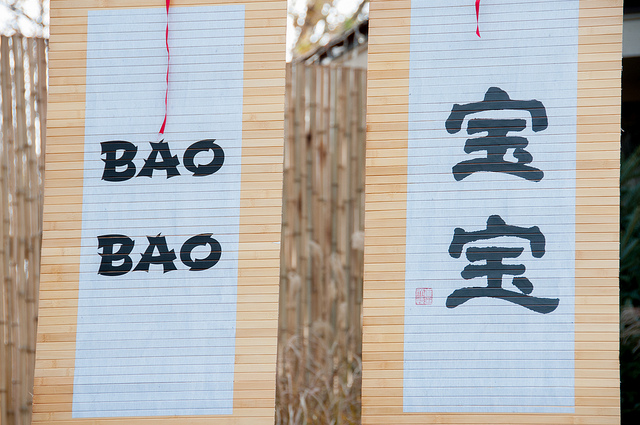
The National Zoo is preparing panda cub Bao Bao (bow-bow) for her public debut this month.

Bao Bao had a tryout Monday in front of the media. She spent the morning climbing on rocks and following her mother, Mei Xiang (may-shong), around the indoor exhibit.

Curators say Bao Bao has turned out to be a calm and relaxed panda cub, more subdued than older brother Tai Shan (ty-shawn).

Bao Bao goes on display Jan. 18. Curators say she may be visible inside or outside, depending on the day. Zoo members will have an early preview starting Saturday.


Bao Bao is receiving the best medical care anywhere in the world, according to handlers at the Smithsonian's National Zoo in Washington, DC after being born at the facility in August last year.

The panda cub was weighed on Tuesday morning, tipping the scales at just over 1st 2oz (17 pounds).

Panda handlers are currently giving Bao Bao human contact and some tactile stimulation in order for her to get used to encounters with humans.

"Her personality is really laid back. As you can see she doesn't seem to mind the interaction with us," explained biologist Laurie Thompson, from the Giant Panda Programme.

Bao Bao will make her public debut on January 18.


Wednesday, January 08, 2014

Zoo doctors unsure about panda birth

Veterinarians started to have doubts yesterday about whether Chiang Mai Zoo will welcome a second panda baby after Lin Hui began to appear anxious, had a rise in appetite and others signs that led them to question if she will really give birth. Head veterinarian Boripat Siriaroonrat told a press conference that his team would perform another ultrasound and progesterone test to confirm her pregnancy later yesterday, while also checking her stress hormone level.

'Acting differently'

Since Lin Hui was acting differently than the team had expected, they could not be positive that she would give birth to a cub.

In cases abroad, sometimes a giant panda whose ultrasound test showed an embryo might not give birth and sometimes a giant panda with twin embryos might only have one cub.

There were many variations in Lin Hui's case, so her behaviour pattern didn't indicate a pregnancy failure. She was still lactating. "There is a 50:50 chance Lin Hui will give birth," he said.

The zoo last month reported that Lin Hui was expecting after undergoing a series of artificial inseminations in September and that a new media 'darling' was due this week, so the zoo put the mother on a close watch and prepared a delivery room and cub-care room.

Sunday, January 05, 2014

Giant panda cub Yuan Zai unveiled in Taiwan’s Taipei zoo


Six-month-old Yuan Zai, the island's first giant panda cub, was unveiled to the media on Saturday and then to the public on Monday.

She climbed around her cage before retiring for a nap with her mother, much to the delight of visitors.

Her parents Tuan Tuan and Yuan Yuan, whose names together mean "reunion" in Chinese, were given to Taiwan by China in December 2008.

Taipei zoo expects 19,000 visitors daily to see its newest attraction.

The BBC's Cindy Sui says many visitors took time off from school and work to see the panda cub, which currently sleeps for about 20 hours each day.

Director of Taipei Zoo Jin Shih-chien said Yuan Zai was generally active for about 20 minutes at a time, and advised visitors to be patient if they found her asleep.

Taipei zoo staff had to separate tiny Yuan Zai from her mother a few days after her birth in July.

She was raised in an incubator after a slight injury in her leg.

The pandas have become star attractions at Taipei zoo, as well as a symbol of warming ties between China and Taiwan, and panda mania has swept the island since Yuan Zai was born.

Sunday, November 10, 2013

Cry of the Tiger


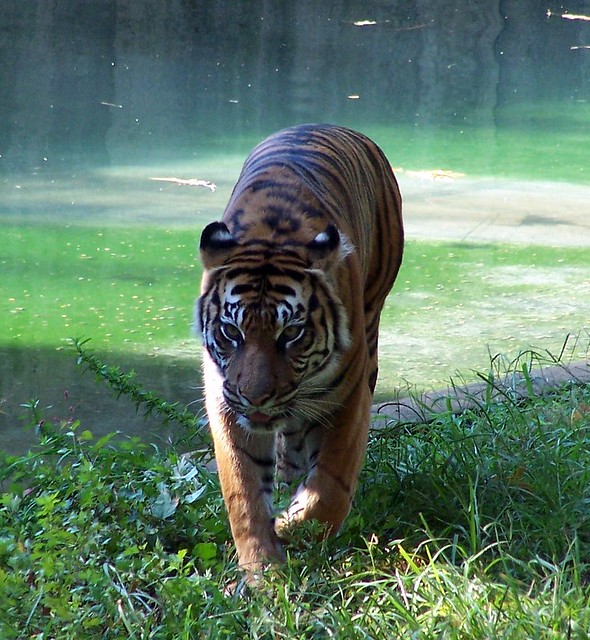
Just skin and bones, Melani the Sumatran Tigress teeters towards death and then somehow stumbles back to life. She’s become a tragic and disturbing example of what can happen to a majestic animal in the supposed care of humans.

Melani should have been safe. Unlike tigers in a jungle habitat trying to survive the threats of poachers, development and environmental destruction, she was in a zoo. But the Surabaya Zoo has proved to be no sanctuary.

A few years ago Melani and three other Sumatran Tigers were fed meat tainted with formaldehyde. Only Melani survived – and then only just. Her organs were so damaged she was unable to absorb requisite nutrients from her food and couldn’t maintain necessary condition. Until recently this skeletal creature was doomed to crawl around a small dark enclosure critics say resembled a dungeon.

Now, finally, she’s getting expert care elsewhere, it’s still no sure bet she’ll survive. If she doesn’t then you can scratch another Sumatran Tiger off the estimated population of between just 300 and 400.

“She’s a creature that’s been neglected and abused inside a zoo that is deemed to care for her. To see an animal struggle through this sort of thing you know she wants to live. It’s her will that’s keeping her alive.” SYBELLE FOXCROFT Conservationist, Cee4Life

The Surabaya Zoo still drags in plenty of visitors, but it doesn’t appear that much of the money generated by ticket sales and other zoo enterprises goes to caring for animals. Local families who come here for an affordable day out appear oblivious to the startling poor condition of many of the animals and their enclosures.

Those who do know about animal welfare say Surabaya Zoo is a disgrace and grow frustrated and increasingly angry that the City Government responsible for it is not working to solve the problem.

Indonesia Correspondent George Roberts investigates how a facility once thought to be among South East Asia’s finest zoos has become a squalid hell-hole for its inhabitants. Beyond Surabaya he explores why Indonesia appears to put such a low priority on its majestic and important creatures that are being pressed ever closer toward extinction.

Foreign Correspondent on how a facility once thought to be among Southeast Asia's finest zoos has become a squalid hell-hole for its inhabitants.

In bustling Surabaya on the Indonesian island of Java, this is a hot ticket, particularly at the weekend. It’ll cost you a dollar fifty to step inside the Surabaya Zoo and join the crowd. And every week 10,000 people wander through what was once considered one of the best zoos in South East Asia.

It’s a relatively affordable day out for local families who appear to enjoy themselves but seem oblivious to the condition of the residents and their enclosures. These days Surabaya Zoo is more of a house of horrors than a wildlife wonderland.


TONY SUMAMPAU: “Around Indonesia I think Surabaya Zoo is one of the zoos that never been approved as a zoo because the facility and the condition of the animal is not good at all”.

SYBELLE FOXCROFT: “I reckon right now it should be quarantined. I think it should be closed. They need to step in now and they need to quarantine that place right now. It’s a disease carrying death zoo”.

ROBERTS: Sri Penta has the unenviable task of trying to care for the zoo’s residents as best she can and as this sunny, energetic curator shows us around, it’s clear that the job in front of her is overwhelming.

SRI PENTA: “The animals died suddenly. The cause varies – the number of animals in the cage… too many males within a group… the health factor… the poor environmental conditions in the cages… these are probably some of the factors that caused the death of the animals”.

ROBERTS: Everywhere you look there are stark and confronting examples of animals in squalid, cramped conditions. Australian camels appear sick and emaciated. Australian pelicans are crammed in wing to wing. Some animals appear to be begging to be let out.

SRI PENTA: “Well, we’re close to the animals on a daily basis – and when there are so many deaths within the last 3 months, of course, we felt very disappointed. We feel a sense of loss”.

ROBERTS: About 50 animals have died in just three months including this adult orang-utan on the day we arrived. Beyond these walls Indonesia’s orang-utans in Borneo and Sumatra are endangered. This baby male orang-utan may survive. His parents rejected him so he’s being kept away from the zoo’s other diseased apes. It’s extraordinary that they’ve escaped human threats in the wild, but here in a place they should be safe and healthy, they’re anything but.

TONY SUMAMPAU: “Most of all because of the holding facility they’ve got is very poor. The humidity is very high and they are very dark inside and it’s easily transmit diseases one to the others and the second thing is, the exhibit is very old, mostly left over by Dutch maybe 50 years or 70 years ago”.

ROBERTS: Tony Sumampau is one of Indonesia’s most respected animal experts and he’s particularly concerned about some vitally important residents – Surabaya Zoo’s Sumatran tigers.

TONY SUMAMPAU: “They have no room for exercise, for these three tigers in Surabaya Zoo. They have no sunlight when they are growing so until now they don’t have any facility for them to exercise, to climb the tree, to going up, jump up and jump down and things like that – that makes their muscle becoming weaker and weaker every day and the food is not very good as well”.

ROBERTS: The appalling condition of the zoo’s Sumatran tiger population is perhaps the most difficult to comprehend. These magnificent creatures should be the pride of Indonesia, the dominant predator among the country’s exotic species. But populations have been devastated by development and poaching. Here at the zoo though, the picture is no more positive for this critically endangered animal.

SYBELLE FOXCROFT: [Cec4life, wildlife charity] “In regard to diseases that are inside that Zoo, there’s tuberculosis, there’s hepatitis... and the animals are also dying of pneumonia”.

ROBERTS: There are thought to be only about three to four hundred Sumatran Tigers left in the wild. In here, 15 share their cramped quarters with others like this Bengal Tiger.
Sri Penta has seen the best and worst of this place in her 20 years here. Now though it’s so bad she’s risking her job showing us the conditions the tigers are still kept in.

“Why is it not good for the tigers?”

SRI PENTA: “It is not good because the cage is too small, their resting pen is too small, and humid, as you can see the floor can’t dry, it’s humid and the sun can’t get inside. So health-wise it’s not good, it’s not healthy, and in the future it will have an impact on the health of the animals”.

SYBELLE FOXCROFT: “They’re going to die. I have no doubt that they’ll die. It is absolutely atrocious what they’re doing in this zoo”.

ROBERTS: The dire plight of Surabaya’s tigers has enraged animal conservationists around the world. Australian Sybelle Foxcroft is one who came to Indonesia to try to help, drawn by one awful life and death struggle, the case of tigress Melani.

SYBELLE FOXCROFT: “At Surabaya Zoo she was kept in what I could equate to a dungeon. They did that because the public were horrified but then they didn’t really do anything about her and they left her there for a very long time. So she didn’t get any sunlight, she didn’t get anything”.

ROBERTS: Melani and three other Sumatran tigers were malnourished and kept in cramped conditions. Then in 2008 they were fed meat contaminated with the preservative formaldehyde. Three tigers died. Incredibly Melani lived… but only just. And she’d endure five years of suffering before a public clamour finally brought government intervention, her evacuation from the zoo and proper treatment.

Sybelle Foxcroft was instrumental in getting Melani out of Surabaya.

SYBELLE FOXCROFT: “She’s a creature that has been neglected and abused inside a zoo that is deemed to care for her. She’s just woken up this morning and she’s not wanting to eat freely like she normally does but she’s probably looking at everybody also, being distracted, but her feeding can take up to about two hours and this is kind of normal also, but at the moment she just doesn’t seem that hungry”.

ROBERTS: Melani is recovering at a place called Taman Safari Park outside Bogor, about a two hour drive south of Indonesia’s capital, Jakarta.

SYBELLE FOXCROFT: “Well she’s so very frail from her ordeal with this poison and then starvation. The starvation caused her body to start consuming her own organs so right now she’s struggling to live”.

ROBERTS: Taman Safari is owned and run by Tony Sumampau and it’s dramatically different to Melani’s old home in Surabaya. It spans 150 hectares and looks less like a zoo and more like a faithful recreation of a wild animal’s natural setting. Resident tigers can stretch their legs in relatively wide open spaces and when they need attention or when wild tigers are brought here injured after a run in with a poacher, there are sophisticated facilities at an on site animal hospital.

TONY SUMAMPAU: “Genetically they are very nice. They are a wild tiger in fact so it’s good to keep their young to release them in the wild which is very important”.

ROBERTS: The Safari Park is looking after 28 Sumatran tigers who are under threat.

TONY SUMAMPAU: “Well someone poisoned him when he was quite young, less than 2 years old I think”.

ROBERTS: “So he’s angry with humans since that I suppose”.

TONY SUMAMPAU: “Yeah but I thought he was going to die at that time but hopefully he’s recovered from the poisons and become a real tiger now”.

ROBERTS: “A real man”.

TONY SUMAMPAU: “A real man”.

ROBERTS: The success of Taman Safari leaves Surabaya in the shade with 1.8 million visitors a year, it pulls in tens of millions of dollars on ticket sales alone. There’s restaurants and rides, as well as merchandise and a kind of side show alley area that’s clearly a profit machine. With that the Park employs 750 staff and provides well for its animals. So around about now you might be wondering why Tony Sumampau hasn’t been called in to sort out the mess at Surabaya.

The short answer is he has, or rather had and the experience goes some way to explaining the intractable problems gripping the zoo in Java and imperilling its Sumatran tigers.
It’s a rat’s nest of vested interests, power struggles, nepotism, ineptitude and disinterest.

TONY SUMAMPAU: “I think the Surabaya Zoo is more likely a management conflict between one management team and the other team”.

ROBERTS: “But why are the animals in such poor condition?”

TONY SUMAMPAU: “Well because they don’t understand about the animal welfare issue”.

ROBERTS: Tony Sumampau was enlisted to fix Surabaya Zoo back in 2010. He says he tried to establish programs to better train zoo keepers to care for animals and tried to rebuild or renew animal enclosures but money was scant and so was good will. The zoo is staffed by people with family connections and he says the animal’s interests just don’t rank as a priority.

TONY SUMAMPAU: “They don’t really know how to manage the zoo but they’re just thinking of gaining some money from the visitor for the purpose of their own welfare, not the animal welfare. The things that make the Surabaya Zoo is getting worse and worse”.

MAYOR RISMAHARANI: “It was founded and built using public money from an idea by journalists at the time. And it grew to become one of the biggest zoos in South East Asia”.

ROBERTS: Earlier this year Tony Sumampau was kicked out by this woman – the formidable but very popular Mayor of Surabaya – Tri Rismaharani.
The Surabaya Municipal Council is responsible for running the zoo and owns the land it occupies. The Mayor claims a lifelong interest in the place.

MAYOR RISMAHARANI: “When I was little, my grandpa always me to come along to the zoo, and that’s why during junior high school I joined the Surabaya Zoo Lovers Club. When I came to the zoo, the condition was worse than it was when I was little”.

ROBERTS: Mayor Rismaharani hurled a barrage of accusations at Tony Sumampau, claiming he was secretly planning to develop the zoo into a luxury holiday resort and that he was trafficking animals.

MAYOR RISMAHARANI: “One year ago the team came to me, and said there were not enough funds for the maintenance of the zoo. They wanted to build a hotel… a restaurant. That’s when I got upset – why did I get upset? Because the zoo is the pride of the Surabaya people”.

TONY SUMAMPAU: “This is just silly you know? I’m helping for free not for the... for stealing animals inside the zoo. If I wanted to get the animal I can ask the Minister - I like this animal - then I can get it just for free but I’ve never done that you know. But they keep accusing me like that. I don’t know why”.

ROBERTS: “So you never took a proposal to them about a hotel?”

TONY SUMAMPAU: “No, never. Never. I’ve never seen one too”. [laughing]

ROBERTS: Critics of the mayor in turn claim she has her own development plans for the central city site. They accuse her of interfering for years in its affairs before taking personal control of the zoo, even though she has no expertise in the field.

MAYOR RISHMAHARANI: “I think time will tell if what we do is right or wrong. Conditions were bad back then. I had to deploy 5000 municipal employees… to clean the cages… to scrub the cages… to mend the broken cages… to clean up the water tanks. There were five thousand people”.

ROBERTS: It’s difficult to reconcile the Mayor’s catalogue of activity with what we saw at the zoo. In the sweltering Indonesian heat, animals still swam in and drank from heavily polluted water. The mayor has declined offers of assistance and expert advice from animal welfare groups.

SYBELLE FOXCROFT: “About.. over a year ago I wrote to the mayor and basically asked her to please, you know, implement some humane care in Surabaya Zoo and... you know along those lines, just trying to be supportive as well and offering aid.... and I didn’t get a response from her”.

ROBERTS: “Why do you think the Mayor has refused help?”

SYBELLE FOXCROFT: “I have no idea. I do not know why she’s refusing help. She has been offered help from a lot of organisations around the world and my impression that I’m getting is that she’s done some very good work around but she is not.... she’s got engineering degrees and city planning degrees. She is not an animal skilled person. She is not a zoologist or a wildlife-ologist or any animal ethics qualifications at all. She’s got to leave this one alone and allow the professionals to get in there and fix these animals or else they are going to continue to die”.

ROBERTS: And as claim and counter claim volley from one side of Indonesia to the other, the animals continue to suffer and die. In some ways the strife at Surabaya Zoo is emblematic of the nation’s vexed and sometimes hostile relationship with its wildlife, where humans and development prevail and animals lose.

Out here in the wilds of Sumatra the tiger has roamed for thousands of years but vast swathes of its jungle territory are being turned into farming land. Indonesia’s burgeoning population has pushed ever deeper into the tiger’s natural domain.

TONY SUMAMPAU: “Even in the wild, when we’re helping the tiger conflict, villagers are complaining why do you only think about the wildlife that are taking our livestock? Why not you think about our life, you know?”

ROBERTS: We’re on our way to Sesiro in north western Sumatra. Like many villages it’s carved out of the jungle wilderness and like some, it’s got its own tiger tale to tell.
Sesiro’s home to about 600 people. It’s not the poorest of places in Sumatra - the local rubber industry offers plenty of work. Villagers who run small subsistence farms here worry about losing stock to wild animals. Recently though a tiger claimed a human life.

Adi and his friends work the local rubber plantations, but illegally harvesting Sandalwood from deep in the national park is a tempting sideline that can earn a year’s salary in quick time. On a trip into the jungle hoping to strike it lucky, they came under attack from a group of Sumatran tigers.

ADI: “One of our friends got separated from us and we saw the tiger get hold of him. We saw that tiger. And we looked to the other side. There was another tiger coming at us, so we hurriedly climbed up the trees”.

ROBERTS: From that vantage point they saw their friend mauled to death.

ADI: “I’ve been working a long time in the jungle and this was the first time I saw that”.

ROBERTS: The fatal attack horrified the men and traumatised the village, but the experience made them respect the tiger and its territory in a way they’d never thought of before.
They’re not the only ones thinking about the tiger. Slowly the country’s tigers are getting attention.

MINISTER ZULKIFLI HASAN: “In the past, for decades, in Indonesian culture, people used to feel so proud having tiger’s skin in their house. They were proud owning elephant tusk. People were also proud to be able to hunt tigers. And those habits aren’t easy to let go”.

ROBERTS: Indonesia’s Forestry Minister, Zulkifli Hasan, has come to check the conservation efforts at Taman Safari Park. His ministry makes the rules and regulations for zoos but even a powerful national politician has found it difficult to solve the Surabaya mess.

MINISTER ZULKIFLI HASAN: “To revitalise it, to improve the way to manage the zoo, renovating the cages, would take an immense amount of funds. And the entrance tickets alone won’t cover it. The local government’s allocated budget of 4 billion rupees isn’t enough either. So we need time”.

ROBERTS: “And as if financial and management problems weren’t enough, now nature is throwing in more problems – evidence is emerging of a disease developing in already scant wild tiger populations that attacks the nervous system and eventually kills the animal. It’s just one reason why so much is depending on the success of a special breeding program at Taman Safari Park.

When Foreign Correspondent was visiting the park, vets performed the first artificial insemination of a Sumatran tiger in Indonesia. Semen from a sedated wild male has been injected into a wild female. If the operation is a success, the program could help keep the wild Sumatran tiger population alive.

TONY SUMAMPAU: “I would think now the tiger’s number is really at around 300... 350, nothing more than that. If we can’t save the habitat of the tigers we might lose the tiger in another 30-40 years. They will disappear in the wild, except in the zoo”.

ROBERTS: A great deal rests on the survival of Melani, the tigress as well. If she can survive the ordeal she suffered at Surabaya Zoo it will inspire and encourage all those who’ve worked so hard to save her.

SYBELLE FOXCROFT: “She’s a critically endangered Sumatra Tiger. She has the ability to show affection to the very species that hurt her so - and to see an animal struggle through this sort of thing you know she wants to live. It’s her will that’s keeping her alive. She’s a survivor and her nature is so very gentle and beautiful”.

http://www.abc.net.au/foreign/content/2013/s3894606.htm

Wednesday, March 20, 2013

Musical ZOO


Yogyakarta experimental rock band ZOO kick off their regional tour in Singapore with their singular blend of math rock, noise, tribal and reconfigured traditional music. Their live performances are intense, charismatic and wild. This is a band to be experienced in the flesh.
with AWK WAH (Shark Fung)
and CACTUS (Jordan & Marina)

21 Mar 2013 (Thu)
Night & Day, 139 Selegie Road
8pm
$15 (includes 1 drink)

Presented by Ujikaji and the Independent Archive & Resource Center

Venue hosted by Night & Day

ZOO:
The band was formed in 2005 after a year of building the concept. In the first EP Kebun Binatang (2007), Zoo was still playing fast, mathematic, and noisy music as often seen in Boredoms, Ruins, Melt Banana, or Hella. But in their first full album, Trilogi Peradaban (2009), elements of ethnic music was introduced, and then in their latest release, Prasasti (2012), Zoo’s music has now progressed toward significant direction; ethnic and tribal elements are no longer elements but has becoming an integral part of Zoo as a band and therefore creating a new undefined music. All these contrast crossovers of many different influences are there in order to align the music with theme that they try to put forward.

The theme behind every lyrics are all about modern civilization, human ambition of immortality, deterioration of cultural roots and some theme that encourage optimism.

PERSONNEL

RULLY SHABARA– VOKAL, DJEMBE, REBANA, SYNTH
BHAKTI PRASETYO– BASS
RAMBERTO AGOZALIE– DRUMS
DIMAS BUDI SATYA– DRUMS, CUSTOM PERCUSSION

CACTUS:

Cactus is the brainchild of producer-composer and multi-instrumentalist Jordan Johari Rais (b. 1978) and his wife, vocalist and bass and percussion player Marina Abu Hassan (b. 1982).

Cactus was born on the slopes of tea plantation in Cameron Highlands, Malaysia in April 2011 when the duo decided to interpret the colours, sights and sounds of the nature and life around them then into a creative product they can call their own.

They play an eclectic mix of analog and digital sounds wrapped in traditional harmonies and percussive beats, this time accompanied by two other musicians Matt Raham on drums and Maggot Isa on bass. Also joining them in full spirit and physical prowess inspiration yada yada, “Django”, the unborn child to mother Marina and Jordan.

AWK WAH:

Shark from Engineered Beautiful Blood, Amino Acid Orchestra and I\D started this solo project which resulted in the cult favourite Opera Box (2010), blowing our minds with its rhythmic noise and harsh miasmic darkness. When he reappeared at the inaugural Earthbound gig in 2012 unveiling a new set up of drums, effects, synth and sampler and creating a schizo mix of dirty noise and hypnotic beats, practically inventing a new genre that we like to call “distraught techno”. Awk Wah releases his second album on LP and download with Ujikaji in the middle of the year.

Saturday, March 09, 2013

Singapore Zoo turns 40

Singapore Zoo celebrates its 40th birthday this year with a series of events. The zoo is looking for people who were born on the day the zoo began operations on 27 June 1973.

These people will be invited for a special Singapore Zoo Birthday Bash and be taken on an exclusive tour with a zoo pioneer.

The zoo is also giving a 40 per cent discount on its admission ticket prices for Singaporeans and permanent residents who turn 40 this year. But these individuals must visit with four other friends during the birthday month. The discount is valid from now till the end of the year.

The zoo is also organizing a 40th Birthday Bash Zoo Hunt on 16 and 17 March.

Singapore Zoo 40th Birthday Promotion

Celebrate with us! Enjoy 40% off admission ticket prices when you celebrate your 40th with us. From 1 March until 31 December 2013, Singaporeans and Permanent Residents born in 1973 can enjoy 40% off admission ticket prices for themselves and four other friends when they visit during their birthday month.

Terms & Conditions

    Promotion is valid from 1 Mar – 31 Dec 2013.
    Present original IC or passport to enjoy offer.
    Maximum purchase of 5 discounted tickets per identity card/passport, per transaction.
    Promotion is only valid for Singaporeans and Permanent Residents.
    Promotion is only valid for tickets bought over the ticketing counters at Singapore Zoo.
    Offer applies to admission on day of ticket purchase.
    Offer is not valid with any other promotions, discounts or online ticket purchase.
    Admission ticket purchased is not refundable or exchangeable for cash or kind.
    No claims will be entertained for any lost, torn, defaced or expired ticket.

Saturday, January 26, 2013

Zoo Poems

http://www.scrapbook.com/poems/cat/110.html

Zoo is fun
Author: Khushi

I went to the zoo with a map,to have some clue about the zoo.
It was fun at the zoo to see the animals and birds too.
First I saw a tall neck giraffe,
Bleat,
Bleat,
Bleat.
I thought it wants to
eat,
eat ,
eat.
Next I saw a monkey hanging on tree,
scratch ,
scratch ,
scratch,
as if it had patch on its back.
It was fun at the zoo to see the animals and birds too.
In the end I saw a grey elephant ,with a bee on its wrinkled knee.
Oh! it was really fun,
fun,
fun at the zoo.

Wednesday, January 09, 2013

Blackbucks' death in Kota zoo due to contaminated fodder

The death of 16 blackbucks at Kota zoo on the night of December 19 could be due to contaminated fodder given to them. The test reports received from Bareilly-based Indian Veterinary Research Institute suggest that the fodder provided by the zoo authorities to these protected animals had excessive quantity of nitrates and nitrites. This excessive quantity could be due to uncontrolled use of chemicals in its farming.

According to forest officials, similar deaths of blackbucks were reported in various zoos in Agra, Lucknow and Kanpur and the reason too could be the same.

Friday, December 21, 2012

Safari Zoo Run 2013


Date: 17 February 2013
Venue: Singapore Zoo & Night Safari
Time: 7.00am - 12.00pm

http://www.safarizoorun.com.sg/

Tuesday, November 20, 2012

19-Year-Old Tiger Dies at the National Zoo

y

The National Zoo put down 19-year-old Sumatran tiger Soyono this morning, after the tiger fought a month-long battle with spinal degeneration. While much of the zoo's announcement is a nice remembrance of the tiger, one part, about Soyono's contribution to her struggling species, stands out:

Because her mother was wild-caught, Soy’s genes were not well-represented in the North American population, making her a valuable breeder...Soy birthed three litters of cubs and with her mate, Rokan, produced seven offspring altogether.

Left unspoken: Soyono's record stands in sharp contrast to certain other "clueless breeders" the zoo could mention.

The zoo still has two Sumatran tigers on display.

Sunday, December 13, 2009

Zoo Deaths

The Calgary Zoo has announced it will commission what it is calling an "independent review" of all of its animal care practices and policies.

The statement comes just days after CTV News broke the story of the death of an animal at the zoo.

That animal, a South American capybara, died December 5th in what is described as an unfortunate incident involving human error.

After an investigation, an employee of the zoo was reassigned and suspended for two days.

The death is the latest in a number of animal deaths at the zoo over the past few years, including dozens of stingrays and a baby elephant.

Critics have demanded a review.

On Saturday afternoon, the zoo's president, Dr. Clement Lanthier, issued the following statement:


"Good afternoon, thank you for joining us today. While we always love to see people at the Zoo on a weekend, we normally would have waited for a weekday to invite you here. But what I have to tell you today is, I believe, a matter of urgency and importance to both the Calgary Zoo and the citizens of our community.

For the past two years, the Zoo has been the target of a great deal of criticism, some of it deserved but much of it not, for the quality of our operation. As President and CEO, I have always subscribed to the notion that even a world-class organization can become better if it is prepared to accept and act upon constructive criticism. We are no exception to that rule. Sadly, however, much of what I have seen and heard over the past two years has been far from constructive.

As gratifying as it is to know that we enjoy tremendous support from our community, I worry that some of our critics do not want to see this Zoo improved--they want to see it closed. That is not what Calgary wants, nor, of course, what our 200 employees, 600 volunteers, 80,000 members and 1.2 million visitors every year want. No matter how unsubstantiated or unfair, criticism can raise doubt in people's minds, particularly if there is no objective, independent way to verify the accuracy of that criticism.

It is for this reason that I am announcing today my immediate intention to commission a comprehensive, independent review of all of our animal care practices and policies. On Monday morning I will be contacting the Presidents of the Association of Zoos and Aquariums, in Washington, D.C., and of the Canadian Association of Zoos and Aquariums in Ottawa. For those of you who are not familiar with these organizations, they are the accrediting bodies that set the standards of care for zoos and aquariums in Canada, the United States and other Western Hemisphere countries. The AZA also provides leadership, guidance and training to professionals in more than 200 institutions that include the largest and most highly regarded facilities on this continent, such as the San Diego Zoo, Bronx Zoo and Disney's Animal Kingdom.

I will be asking the two organizations to appoint a joint panel of highly qualified individuals--completely independent of the Calgary Zoo--to conduct a thorough review of all aspects of animal care at our institution, including staff experience, training, veterinary care, policy and procedure and any other facet of our animal care operation they believe to be relevant to their enquiry.


My objectives in this process are threefold:

To commission an expert assessment of the quality of our animal care that will provide an authoritative, unbiased and knowledgeable perspective on the standards we have in place and whether any improvements can be made.
To maintain the strong support we have enjoyed from our community and to reassure Calgarians that they can continue to have confidence in the institution they hold dear.
To recognize the incredible work done by so many of our staff and volunteers which has been the target of much unfair criticism.

When this review is complete, a summary of its findings and all of the recommendations arising from it will be made available to Calgarians. We have never taken the support of our community for granted and do not intend to now. The animal deaths we have witnessed over the past couple of years--most recently the unfortunate incident involving one of our capybara--have been cited by our critics as examples of something being "wrong" at the Zoo. To continue their support for this institution, our community needs answers--not more accusations, allegations and irresponsible criticism, but documented facts that will give them good reason to maintain their confidence in us. The review I am announcing today will provide those facts.

Let me conclude by saying that as President and CEO, I am not prepared to stand by and watch self-proclaimed experts undermine the treasured relationship we have with the literally millions of people who have visited, contributed to, volunteered for, worked on behalf of and developed a strong and enduring affection for a Zoo that is one of this community's most valuable assets. By linking together a series of unrelated incidents in an effort to establish some kind of pattern, many of these critics have attempted to further their own agenda of manipulating public opinion and diverting attention away from the vitally important work that zoos, including the Calgary Zoo, do to protect animals and their habitats-- something for which these critics can claim absolutely no credit.

This institution has stood as a point of pride in our city and our country, gaining national and international stature for its work in conservation, research and education. As its President and CEO, I have a duty to uphold its values, implement change where change is warranted and, above all, ensure that it continues to play an important part in the lives of people who truly love, enjoy and respect life on earth."

Tuesday, October 20, 2009

Endangered bongo antelope dies at Zoo Atlanta


The oldest known eastern bongo antelope living in captivity has died at Zoo Atlanta.

Zoo President and CEO Dennis Kelly said Tuesday that the 19-year-old animal named Mzima was euthanized after her health declined because of age. The bongo came to the zoo in 2004 from the Gladys Porter Zoo in Brownsville, Texas.

She was born at the Texas zoo in 1989.

Mzima was the oldest bongo living in an accredited U.S. zoo, and the second-oldest eastern bongo in captivity worldwide. Bongos are among the most endangered animals at the zoo, with just 500 believed to remain in the wild.

The animals are striped with long horns and are native to Africa. The zoo's Web site says the entire wild eastern bongo population now lives in two parks in Kenya.

Thursday, September 10, 2009

Zoo's Baby Boom


A spectacled owl mother and baby...


One of the three new baby Bush Dogs born recently at Chester Zoo


A lion tailed macaque mom and child snuggle up


Bella, Chester Zoo's latest giraffe arrival, is seen here just yesterday with a doting Mom...

Thursday, August 06, 2009

'National Zoo's mortality rate among the lowest'

MALAYSIA: The majority of deaths that occur at Zoo Negara are short-living birds and rodents as well as sick and injured animals received from the public.

Malaysian Zoological Society (MZS), which manages the zoo, said despite this, the zoo's animal mortality rate at four per cent is among the lowest compared to other zoos in the country.

MZS president Datuk Ismail Hutson said large animals such as elephants, tigers, giraffes, hippopotamus were outliving their counterparts in the jungles.

"In fact, the true indication of animal health is their fertility rate and we're faced with a birth boom, especially among the Nile hippopotamus.

"Our resident milky and painted storks which were once close to extinction have been successfully bred to a healthy population of about 70 and 361 respectively."

He said the milky storks with a worldwide population of 5,550 in 2002, were being distributed from breeding grounds in the zoo, to sanctuaries all over the country.

Ismail was responding to allegations by sources in the New Sunday Times that large numbers of rare animals and birds at the zoo had died due to unsuitable living conditions and failure to upgrade amenities.

"These sources who are bringing up this issue and trying to smear our good name are former council members and MZS life members.

"They should bring up whatever issues they have with us and not try to make an issue of the whole thing."

Ismail also criticised former zoo assistant director and veterinary division head Dr S. Vellayan, who was quoted saying the cause of animal deaths was due to water contamination.

"We should note that during Dr Vellayan's time, the animal mortality rate was 9.5 per cent and after he left the figure has dropped to about four per cent over the last three years."

Ismail said one of the zoo's founding members, Mohd Khan Momin Khan, who suggested the authorities regularly check on the welfare of animals there, had received 17 Sambar deer from the zoo for his farm in 2001.

"If he felt Zoo Negara was not taking good care of its animals why was he interested in getting animals from us?" he asked.

Ismail confirmed the Malaysian Anti Corruption Council was investigating allegations of corruption and mismanagement of funds at the zoo involving a RM8.1 million (S$3.3 million) government allocation under the Eighth Malaysia Plan.

"We'll wait for the MACC to complete its investigations."

Ismail said at present, the zoo's gate collection, sponsorship and other income were sufficient to cover the RM9 million (S$3.7 million) cost in maintaining its 5,437 animal exhibits.

He said it was hoping to get government allocation of about RM2 million (S$820, 000) a year for development works.

Tuesday, June 02, 2009

Anteaters caught (human) H1N1 flu in zoo outbreak

Humans, horses, dogs, whales, seals, birds, cats, ferrets and even raccoons are known to be susceptible to the tiny eight-gene viruses. Researchers in Tennessee have now added giant anteaters to that list.

"Who would have thunk it?" senior author Dr. Melissa Kennedy says with a laugh. "We were pretty amazed."

The February 2007 outbreak, involving 11 adult giant anteaters at Tennessee's Nashville zoo, is reported in an article that will be published in the July issue of the journal Emerging Infectious Diseases. All the anteaters survived the illness.

Branswell's story makes it clear that the anteaters caught the "old" human form of H1N1, not the current strain.

Friday, May 29, 2009

Porcupine, python strut catwalk for Russian zoo

Leggy models shared the catwalk with a porcupine, a python and a yak on Sunday at a fashion show to raise public awareness of animal welfare and Saint Petersburg's zoo.

About a dozen animals in all -- some on leashes, others in the models' arms -- strutted their stuff for the zoo, one of the oldest in Europe but hard-pressed for funds.

"Casting the models was not easy," Tatiana Fedorishenko, the zoo's deputy director, told AFP, referring to the human kind. "The animals in the show are tame, but the models have to be without fear, and comfortable with them."

"It was hard," confided one of the models, Natasha. "My fox was always trying to run away. I had trouble finishing my walk."

The show was the idea of fashion designers in Russia's second city, in solidarity with the 410 species and 2,000 animals at the zoo in Alexander Park that was founded in 1865.

"I'm taking part because of my compassion for animals," said designer Vladislav Aksyonov. "I am flatly opposed to the use of natural fur and I also want to help our zoo." - AFP

Thursday, May 28, 2009

Bears 'celebrate' Jewish holiday

Bears at an Israeli zoo are given a festive meal of cheese as part of the celebrations of the Jewish holiday of Shavuot.

Normally accustomed to fruit, the bears are instead enjoying blocks of
cheese.

In modern Jewish Israeli custom families gather to eat a dairy-based meal.
And the keepers at the zoo thought the bears should be able to join in with
the celebrations.

SHAI DAVID, ZOO KEEPER, SAYING:
"This is a special breakfast, specially made for Shavuot, the
Jewish holiday. It's basically made of cheese, cream cheese, and fruits as a
custom - just like we do it on this holiday."

Shavuot celebrates the giving of the Torah by God to the Jewish people on
Mount Sinai, seven weeks after their exodus from slavery in Egypt.

Traditionally, Jewish residents of Israel visit the Western Wall in
Jerusalem's Old City - one of Judaism's holiest sites.

And while it's unlikely the bears will be making any such pilgrimage, they
certainly got into the spirit of the holiday where the food was concerned.

Thursday, April 09, 2009

The theme park's "cage of death" that drops tourists into a crocodile's lair


Without the cage you wouldn' t stand a chance swimming with a massive saltwater crocodile.

Thursday, March 26, 2009

RARE orange-haired monkey


A rare orange-haired monkey has made her debut at a zoo – after being rejected by her mum.

Elka, a Francois Langur monkey, is being hand-raised by staff who showed her off at Taronga Zoo in Sydney.

Elka's birth five days ago was a surprise to zoo keepers who weren't sure mum, Saigon, was even pregnant.

Staff will now look for a new temporary home for the orange-haired leaf-eating monkey because she's all alone.

Elka's parents have black fur but it is thought the infant's orange colour helps parents to spot them in the wild.

Senior primate keeper Mandy Mclellan said: "Primates are quite an intelligent group of animals, a lot of their social development depends on learning.

"Often first time mums might not have have enough exposure to other females giving birth so they haven't learned social skills and haven't learned what they need to do with these little babies."

Keepers will raise Elka, feeding her baby formula every three hours, and prepare her for eventual reintroduction to her parents.

Her species is very rare in the wild and under great pressure from loss of habitat and poachers.

It is thought there could be as few as 1,000 left in Vietnam and China.

Taronga's life sciences general manager, Cameron Kerr, said: "Taronga's keepers were prepared and are managing the difficult process of hand-raising the langur...as the species faces real risk of extinction in the wild."

Saturday, March 21, 2009

Zoo doubles its rare reptiles

A zoo in Indonesia is welcoming the arrival of 32 newborn Komodo dragons.

Agus Pangkat, of Surabaya Zoo, said the endangered lizards – thought to number less than 4,000 in the wild – hatched in the last two weeks. Fourteen eggs were still under observation.

The giant reptiles have been kept at the zoo since the early 1980s, but the new arrivals have swelled the population from 34 to 66. It has been their most successful breeding year there.

Komodo dragons can grow up to t10ft long and weigh up to 37 stones. Their bite can be deadly.