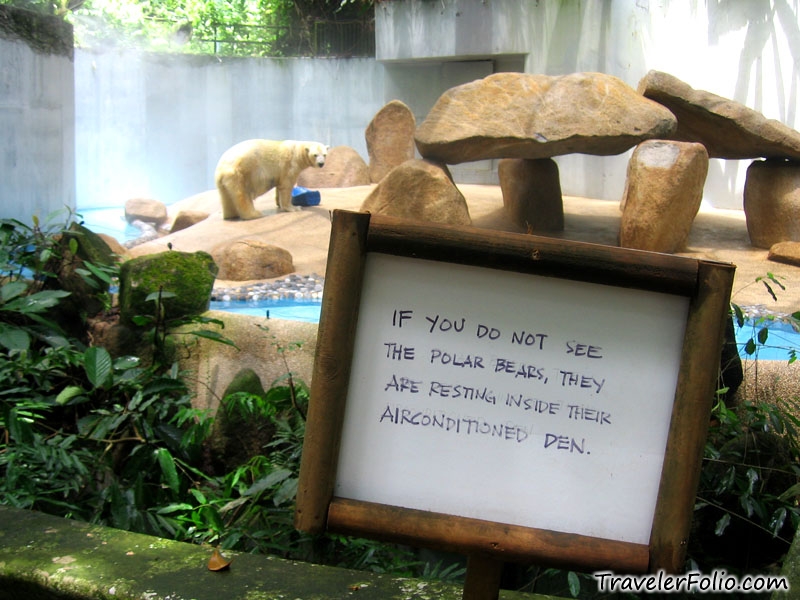
I have been Friends of the Singapore Zoo for many years, if you want it to continue giving us the fun and joy of animals, please visit the Singapore Zoo. Singapore Zoo, 80 Mandai Lake Road (Bus 138 from Ang Mo Kio MRT or 171 from City). Opening hours are 8.30am-6.00pm daily and adult admission is S$28, children is $18. *Park Hooper packages are more worth it. Check them out first before you purchase those tickets. Zoo, Night Safari, Jurong Bird Park or River Safari.
Monday, November 12, 2012
Pandas' Bamboo Food May Be Lost to Climate Change
Though they are one of the most beloved animal species on Earth, pandas aren't safe from the devastating effects of climate change.
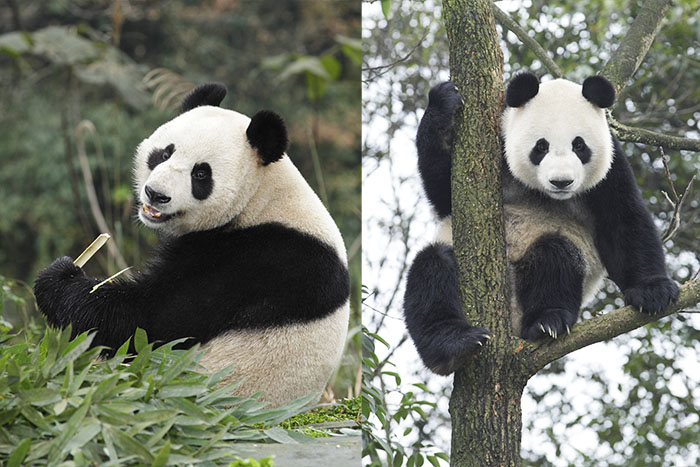
According to a new study, projected temperature increases in China over the next century will likely seriously hinder bamboo, almost the sole source of food for endangered pandas. Only if bamboo can move to new habitats at higher elevations will pandas stand a chance, the researchers said.
However, if conservation programs wait too long, human inhabitants and activities could claim all of the new habitats capable of supporting bamboo in a warming world.
"It is tough, but I think there's still hope, if we take action now," said research team member Jianguo Liu, a sustainability scientist at Michigan State University. "If we wait, then we could be too late."
The researchers used various climate-change models to project the future for three bamboo species relied on by pandas in the Qinling Mountain region of China, which represents about a quarter of the total remaining panda habitat. These models varied in their specific predictions, but each forecasted some level of temperature rise within the coming century.
The results suggest that if the bamboo is restricted to its current distribution area, between 80 and 100 percent of it will disappear by the end of the 21st century, because it won't be able to grow under the increased temperatures.
If, however, bamboo can move into new, cooler areas (which will reach the same temperatures as current bamboo habitats due to warming), then there is hope. However, that all still depends on the extent to which humans can curtail climate change by limiting greenhouse-gas emissions in the future.
"All the models are quite consistent — the general trend is the same," Liu told LiveScience. "The difference is the degree of the changes. Even with very hopeful scenarios, where we allow bamboo to go anywhere it wants, there are still very severe consequences. Of course, if the bamboo has nowhere to go, then the panda habitat will be lost more quickly."
Many pandas in the wild currently live in nature reserves protected from human encroachment. However, almost all of the land encompassed by those reserves will be unsuitable for the bamboo if the temperatures rise as predicted.
But if conservationists plan ahead now to move those reserves in line with changing bamboo habitats, then it may be possible to preserve the land the pandas will need.
And climate change is not the only challenge facing giant pandas, one of the most endangered species in the world, researchers say. Human activities have already severely limited the animals' habitats, and their dependence on a single source of food, one that's not that nutrient- or energy-rich, doesn't help.
In addition to their native habitats in China, pandas live around the world in zoos and breeding centers. But Liu doesn't predict a bright future for the bears if they lose their wild habitats.
"To really protect pandas, you cannot just stick [them] into a breeding center or a zoo," he said, noting that the animals' genetic diversity would suffer, among other issues. "That's not a long-term solution."
Saturday, November 10, 2012
Baby elephant’s sticky situation
A rescue crew lends a helping hand to free a baby elephant who stumbled into a pool of mud near Victoria Falls, Zimbabwe.
A baby elephant was rescued with just minutes to spare after spending over 12 hours stuck in a mudpool.
The young bull was spotted with mud up to its neck by a group of tourists on safari along the Zambezi River in Africa.
When the rescue team arrived it became apparent that they needed to act quickly as the baby pachyderm struggled to free its trunk and was close to drowning.
Mr White said it was likely the elephant had become trapped the evening before and after surviving for more than 12 hours wouldn't have lasted much longer.
He said: 'Elephants are particularly drawn to these areas and when moving towards the luscious vegetation they become stuck and sink deep into the mud, causing them to dehydrate and loose blood circulation to their legs.'
'The only safe place to put the rope is around his neck. Elephants have a very strong neck that can take a lot of strain. If we had tried to pull him out by any part of his legs which eventually become exposed, we risked breaking them.
'When he was finally free and lay on the solid ground we had to act fast and get him to his feet, to allow the blood to circulate.
'Towing straps were placed under his belly and with our team off staff we heaved him to his feet manually.
'So far the baby is doing well and although he is very young he is able to look after himself.
'We are keeping an eye on him though to make sure he doesn't get into any more sticky situations.'
A baby elephant was rescued with just minutes to spare after spending over 12 hours stuck in a mudpool.
The young bull was spotted with mud up to its neck by a group of tourists on safari along the Zambezi River in Africa.
When the rescue team arrived it became apparent that they needed to act quickly as the baby pachyderm struggled to free its trunk and was close to drowning.
Mr White said it was likely the elephant had become trapped the evening before and after surviving for more than 12 hours wouldn't have lasted much longer.
He said: 'Elephants are particularly drawn to these areas and when moving towards the luscious vegetation they become stuck and sink deep into the mud, causing them to dehydrate and loose blood circulation to their legs.'
'The only safe place to put the rope is around his neck. Elephants have a very strong neck that can take a lot of strain. If we had tried to pull him out by any part of his legs which eventually become exposed, we risked breaking them.
'When he was finally free and lay on the solid ground we had to act fast and get him to his feet, to allow the blood to circulate.
'Towing straps were placed under his belly and with our team off staff we heaved him to his feet manually.
'So far the baby is doing well and although he is very young he is able to look after himself.
'We are keeping an eye on him though to make sure he doesn't get into any more sticky situations.'
Monday, November 05, 2012
Wild Dogs killed boy in Zoo
Toddler Killed by Wild Dogs At Pittsburgh Zoo Exhibit Should Make Us Question Zoos
A toddler boy visiting the Pittsburgh zoo somehow managed to fall into the wild dog exhibit and be ripped to shreds while his helpless mother watched from above. The horrific tragedy happened on Sunday and within minutes the story was everywhere with many questioning exactly how the little boy fell into the exhibit in the first place.
It's a good question. Wild "painted" African dogs are about the size of Labrador retrievers, weight about 37 to 80 pounds and are most dangerous in a pack. In this case, 11 dogs attacked the boy, though it is unclear whether he died from the fall or from the attack as yet.
One thing is clear: None of this should have been possible. A woman trying to "give her child a better view" should not have been able to drop him into the exhibit.
Of course, there are questions. Why did the mother not jump in after him? Understandably it happened in a matter of a seconds and the dogs were on him immediately. But imagining myself in that scenario, I can't imagine I would not make the (probably stupid) choice to jump right in and beat off the dogs.
Or maybe not.
Obviously, I can't judge the mom. I don't have any understanding of what that must have been like for her. What I can judge, though, is the zoo. For many reasons.
First of all, zoos are generally just controversial. The last dog -- a species considered endangered -- was shot because of this incident. It's not really the dog's fault. He was not a domesticated dog. He was a wild African beast who should probably be roaming in his native land, not on display for a toddler to be eaten.
Even more to the point, why was a mother able to drop her child into the exhibit? I have been to a thousand zoos from San Diego to Cincinnati and around the world and never once do I remember seeing an exhibit where it was possible to "accidentally" fall into a cage. Sure, someone who WANTED to scale a fence could do so. Stupid people do that regularly. But on "accident"? That just seems wrong.
Maybe we was wiggling. Maybe the mom was holding him in a bad way. Maybe she should not have been holding him in the way she was at all. But really, he should not have been able to fall into the exhibit. Until it is clear how this happened, I will place blame on the zoo.
The poor grieving mom, who screamed for help so loudly she was heard all over the park, is not the first person I would blame. This story is everything that is wrong with zoos.
Painted dogs are not an "exhibit." They are wild animals capable of great destruction. As parents, we trust the zoos to know that and keep us safe. How did this happen? It is unimaginable and my heart breaks for that poor mom.
A toddler boy visiting the Pittsburgh zoo somehow managed to fall into the wild dog exhibit and be ripped to shreds while his helpless mother watched from above. The horrific tragedy happened on Sunday and within minutes the story was everywhere with many questioning exactly how the little boy fell into the exhibit in the first place.
It's a good question. Wild "painted" African dogs are about the size of Labrador retrievers, weight about 37 to 80 pounds and are most dangerous in a pack. In this case, 11 dogs attacked the boy, though it is unclear whether he died from the fall or from the attack as yet.
One thing is clear: None of this should have been possible. A woman trying to "give her child a better view" should not have been able to drop him into the exhibit.
Of course, there are questions. Why did the mother not jump in after him? Understandably it happened in a matter of a seconds and the dogs were on him immediately. But imagining myself in that scenario, I can't imagine I would not make the (probably stupid) choice to jump right in and beat off the dogs.
Or maybe not.
Obviously, I can't judge the mom. I don't have any understanding of what that must have been like for her. What I can judge, though, is the zoo. For many reasons.
First of all, zoos are generally just controversial. The last dog -- a species considered endangered -- was shot because of this incident. It's not really the dog's fault. He was not a domesticated dog. He was a wild African beast who should probably be roaming in his native land, not on display for a toddler to be eaten.
Even more to the point, why was a mother able to drop her child into the exhibit? I have been to a thousand zoos from San Diego to Cincinnati and around the world and never once do I remember seeing an exhibit where it was possible to "accidentally" fall into a cage. Sure, someone who WANTED to scale a fence could do so. Stupid people do that regularly. But on "accident"? That just seems wrong.
Maybe we was wiggling. Maybe the mom was holding him in a bad way. Maybe she should not have been holding him in the way she was at all. But really, he should not have been able to fall into the exhibit. Until it is clear how this happened, I will place blame on the zoo.
The poor grieving mom, who screamed for help so loudly she was heard all over the park, is not the first person I would blame. This story is everything that is wrong with zoos.
Painted dogs are not an "exhibit." They are wild animals capable of great destruction. As parents, we trust the zoos to know that and keep us safe. How did this happen? It is unimaginable and my heart breaks for that poor mom.
Wednesday, October 31, 2012
S'pore's giant pandas to go on show from Nov 29
River Safari's giant panda exhibit, the Giant Panda Forest, will open to the public for a special preview from Nov 29 in time for the year-end school holiday season.
The Giant Panda Forest is part of the upcoming River Safari, which is located in between Night Safari and Singapore Zoo. It is scheduled to open in the first quarter of 2013.
A media statement by Wildlife Rerves Singapore said the panda exhibit will be opened to the public ahead of the park's official launch for visitors to enjoy a special preview of the pandas.
Visitors will be able to enter the Giant Panda Forest from a specially-created access point in Singapore Zoo.
Those planning to meet Kai Kai and Jia Jia at the Giant Panda Forest will need to purchase a Singapore Zoo admission ticket and a top-up fee of $5 per adult or $3 per child (3 to 12 years old).
Chairman of WRS Claire Chiang said they are pleased that the giant pandas have settled into their new home and look forward to welcoming visitors who are excited to see Kai Kai and Jia Jia.
"By bringing visitors up close to these endangered bears, we aim to educate Singaporeans and tourists alike on the importance of conservation," she said.
Tickets to the giant panda exhibit will be on sale daily from 8.30am from Nov 29 onwards.
These tickets can be purchased at Singapore Zoo's ticketing counters and are valid only on the day of purchase.
Tickets are on a first-come-first-served basis to accommodate an optimum number of visitors in the Giant Panda Forest at any one time.
The Giant Panda Forest will also have other wildlife exhibits from China, such as the golden pheasant and the red panda.
The two pandas are here for 10 years as part of a joint collaboration between China Wildlife Conservation Association and WRS to raise public awareness on wildlife conservation and develop a breeding programme for these endangered animals.
Tickets
Current admission fees to the Singapore Zoo are at S$20 per adult and S$13 for children under 12 years, and top-up prices to the Panda exhibit are $5.00 per adult or $3.00 per child (3 to 12 years old). Tickets to the preview can be purchased at the ticketing booths in the Singapore Zoo.
Saturday, October 27, 2012
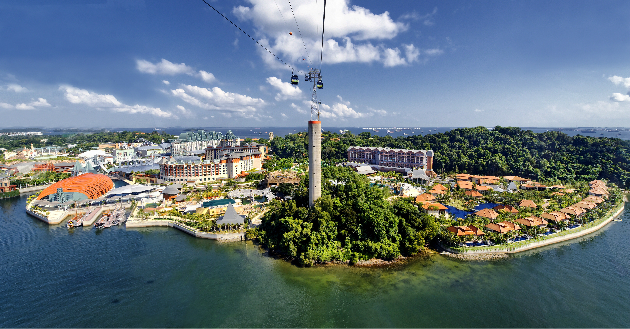
Singapore to open world's largest oceanarium Dec 7
Marine Life Park finally has an official opening date. Here's a preview of the country's latest, biggest, wettest attraction
The world's largest oceanarium is set to open at Resorts World Sentosa in Singapore on December 7.
Officials say Marine Life Park will have more than 100,000 marine animals of over 800 species in more than 60 million liters of water.
Among these are manta rays, hammerhead sharks and controversial Indo-Pacific bottlenose dolphins. According to Singapore's Straits Times newspaper, animal rights activists have long been lobbying for the resort management to release the 25 wild dolphins captured for the resort.
Park officials defend the wild dolphins' inclusion.
"We hold the belief that zoological organizations have a role to play in wildlife conservation and that to avert species crises, controlled wildlife collections can occur for quality zoological facilities to increase our understanding of the species and for breeding purposes," says the resort in a series of unusually detailed responses to critics on its website's FAQ page.
More on CNNGo: Malaysia and Singapore: The Orlando of Southeast Asia?
Southeast Asia's first hydro-magnetic coaster
Marine Life Park will have two ticketed attractions that allow for wet or dry fun -- Adventure Cove Waterpark and the Southeast Asia Aquarium. Prices have not yet been announced.
Adventure Cove Waterpark will feature Southeast Asia’s first hydromagnetic coaster, Riptide Rocket, a slide that propels riders up and down inclines and around sharp curves.
Visitors can also snorkel with fish in the Rainbow Reef.
The S.E.A. Aquarium will feature the world’s largest aquarium viewing panel.
Marine Life Park is the last of 12 major launches planned for the S$7 billion integrated resort since it opened in January of 2010, joining Universal Studios, a casino, the Maritime Experiential Museum and several luxury hotels and restaurants helmed by celebrity chefs.
The world's largest oceanarium is set to open at Resorts World Sentosa in Singapore on December 7.
Officials say Marine Life Park will have more than 100,000 marine animals of over 800 species in more than 60 million liters of water.
Among these are manta rays, hammerhead sharks and controversial Indo-Pacific bottlenose dolphins. According to Singapore's Straits Times newspaper, animal rights activists have long been lobbying for the resort management to release the 25 wild dolphins captured for the resort.
Park officials defend the wild dolphins' inclusion.
"We hold the belief that zoological organizations have a role to play in wildlife conservation and that to avert species crises, controlled wildlife collections can occur for quality zoological facilities to increase our understanding of the species and for breeding purposes," says the resort in a series of unusually detailed responses to critics on its website's FAQ page.
More on CNNGo: Malaysia and Singapore: The Orlando of Southeast Asia?
Southeast Asia's first hydro-magnetic coaster
Marine Life Park will have two ticketed attractions that allow for wet or dry fun -- Adventure Cove Waterpark and the Southeast Asia Aquarium. Prices have not yet been announced.
Adventure Cove Waterpark will feature Southeast Asia’s first hydromagnetic coaster, Riptide Rocket, a slide that propels riders up and down inclines and around sharp curves.
Visitors can also snorkel with fish in the Rainbow Reef.
The S.E.A. Aquarium will feature the world’s largest aquarium viewing panel.
Marine Life Park is the last of 12 major launches planned for the S$7 billion integrated resort since it opened in January of 2010, joining Universal Studios, a casino, the Maritime Experiential Museum and several luxury hotels and restaurants helmed by celebrity chefs.
Friday, October 19, 2012
Attempt to stop dolphins re-export to Singapore fails
Dolphins coming to Singapore.
A Philippine court yesterday denied an application by environmental and animal rights groups to extend a temporary court order, which it had granted last week to prevent the export of 25 dolphins to the Marine Life Park at Singapore's Resorts World Sentosa (RWS).
The court's decision clears the way for RWS to bring the dolphins here, amid protests by animal rights groups. An RWS spokesperson welcomed the decision and criticised the parties which initiated the court action for "perpetuating the same falsehoods that we had repeatedly made numerous clarifications and corrections to in the past". The groups intend to file an appeal later this week.
The mammals, which were caught in waters off the Solomon Islands, are being kept and trained at Subic Bay, Philippines. Last Friday, the court had issued a 72-hour "temporary environmental protection order" on the grounds that the exportation will "result in grave and irreparable damage to the population of the dolphins from the Solomon Islands".
Slated to lapse yesterday, the order was granted after 13 Philippines-based groups - including Earth Island Institute Philippines (EII-Phils) and the Philippine Animal Welfare Society - had banded together to file a civil suit against the Philippines' Bureau of Fisheries and Aquatic Resources, the Department of Agriculture, and RWS.
Yesterday, Quezon City court judge Evangeline Castillo-Marigomen rejected the application for an extension of the order, "as the petitioners have not proved any violation of law committed by the concerned government agencies", according to a media release that EII-Phils put up on its website.
EII-Phils Regional Director for Asia-Pacific Trixie Concepcion said that scientific studies were produced in court during the hearing yesterday, arguing that the survival rates of the dolphins would be threatened after their capture. "(But) the judge did not consider this as evidence," she said.
Ms Concepcion said the petitioners also took umbrage at comments by the judge when she likened the dolphins to "pets". Ms Concepcion said: "This is a very, very sad day for conservation, for all animals in general, because this may set a precedent where animals from unsustainable sources can be traded by the Philippines."
In response to media queries, the RWS spokesperson said: "We are pleased that the court has decided to lift the temporary environment protection order. Our dolphins are doing well under the care of our team of experienced experts, and we look forward to welcoming them to Singapore".
She added: "We regret that the group which initiated this court action had gone on various public platforms with inaccurate statements pertaining to our dolphins, perpetuating the same falsehoods that we had repeatedly made numerous clarifications and corrections to in the past."
The spokesperson reiterated that the acquisition of the dolphins adheres to regulations governed by the United Nations Environment Programme under the Convention on International Trade in Endangered Species of Wild Fauna and Flora. The Marine Life Park is also preparing for accreditation with international accreditation bodies on its standards of animal husbandry, veterinary care and facility, she added.
In Singapore, the Animal Concerns Research and Education Society (ACRES) has been campaigning against RWS' move to keep the dolphins in captivity. ACRES Chief Executive Louis Ng was disappointed at the Philippine court's latest decision. He said that the "fight is far from over" and that ACRES will soon launch the next phase of its campaign to "increase the pressure on RWS to respond positively to public concerns about the plight of the dolphins".
Marine Life Park, scheduled to open by December, will house more than 100,000 marine animals. Dates to bring over the 25 dolphins have not been confirmed but according to the RWS spokesperson, the "dolphin interaction programmes" would begin next year.
A Philippine court yesterday denied an application by environmental and animal rights groups to extend a temporary court order, which it had granted last week to prevent the export of 25 dolphins to the Marine Life Park at Singapore's Resorts World Sentosa (RWS).
The court's decision clears the way for RWS to bring the dolphins here, amid protests by animal rights groups. An RWS spokesperson welcomed the decision and criticised the parties which initiated the court action for "perpetuating the same falsehoods that we had repeatedly made numerous clarifications and corrections to in the past". The groups intend to file an appeal later this week.
The mammals, which were caught in waters off the Solomon Islands, are being kept and trained at Subic Bay, Philippines. Last Friday, the court had issued a 72-hour "temporary environmental protection order" on the grounds that the exportation will "result in grave and irreparable damage to the population of the dolphins from the Solomon Islands".
Slated to lapse yesterday, the order was granted after 13 Philippines-based groups - including Earth Island Institute Philippines (EII-Phils) and the Philippine Animal Welfare Society - had banded together to file a civil suit against the Philippines' Bureau of Fisheries and Aquatic Resources, the Department of Agriculture, and RWS.
Yesterday, Quezon City court judge Evangeline Castillo-Marigomen rejected the application for an extension of the order, "as the petitioners have not proved any violation of law committed by the concerned government agencies", according to a media release that EII-Phils put up on its website.
EII-Phils Regional Director for Asia-Pacific Trixie Concepcion said that scientific studies were produced in court during the hearing yesterday, arguing that the survival rates of the dolphins would be threatened after their capture. "(But) the judge did not consider this as evidence," she said.
Ms Concepcion said the petitioners also took umbrage at comments by the judge when she likened the dolphins to "pets". Ms Concepcion said: "This is a very, very sad day for conservation, for all animals in general, because this may set a precedent where animals from unsustainable sources can be traded by the Philippines."
In response to media queries, the RWS spokesperson said: "We are pleased that the court has decided to lift the temporary environment protection order. Our dolphins are doing well under the care of our team of experienced experts, and we look forward to welcoming them to Singapore".
She added: "We regret that the group which initiated this court action had gone on various public platforms with inaccurate statements pertaining to our dolphins, perpetuating the same falsehoods that we had repeatedly made numerous clarifications and corrections to in the past."
The spokesperson reiterated that the acquisition of the dolphins adheres to regulations governed by the United Nations Environment Programme under the Convention on International Trade in Endangered Species of Wild Fauna and Flora. The Marine Life Park is also preparing for accreditation with international accreditation bodies on its standards of animal husbandry, veterinary care and facility, she added.
In Singapore, the Animal Concerns Research and Education Society (ACRES) has been campaigning against RWS' move to keep the dolphins in captivity. ACRES Chief Executive Louis Ng was disappointed at the Philippine court's latest decision. He said that the "fight is far from over" and that ACRES will soon launch the next phase of its campaign to "increase the pressure on RWS to respond positively to public concerns about the plight of the dolphins".
Marine Life Park, scheduled to open by December, will house more than 100,000 marine animals. Dates to bring over the 25 dolphins have not been confirmed but according to the RWS spokesperson, the "dolphin interaction programmes" would begin next year.
Wednesday, October 17, 2012
Lonely elephant in Philippine Zoo
Mali, who is 38, spends her days in Manila picking peanuts from children's hands and being squirted with water in a concrete-floored enclosure that animal rights groups say is far too small for any elephant to enjoy living in.
They also say that, after being shipped from Sri Lanka when she was three years old, Mali is suffering profound loneliness after living her entire adult life without another elephant.
"She is definitely unwell. As much as her physical suffering... there is also psychological suffering," said Rochelle Rigodon, campaign manager for Manila-based People for the Ethical Treatment of Animals.
PETA began campaigning for Mali to be removed from the zoo seven years ago, and its efforts to have the elephant spend the rest of her life at a sanctuary in Thailand have brought together a strikingly diverse group of people.
British pop star Morrissey, 2003 Nobel laureate in literature J.M. Coetzee and famous animal welfare campaigner Jane Goodall have all written letters to the Philippine government asking for Mali to be transferred.
"Mali is cruelly denied stimulation, room to explore... (and) is in danger of going insane," Morrissey wrote in a letter to President Benigno Aquino when he performed in Manila in May.
Archbishop Jose Palma, president of the influential Catholic Bishops Conference of the Philippines, has also written a letter calling for Mali to be shifted to Thailand.
He has formed an unlikely union with local fashion models and actresses, such as Isabel Roces and Chin-Chin Gutierrez, who have posted messages expressing concern about Mali's plight to their masses of Twitter followers.
Their campaign has had some success, with Mr Aquino ordering the Bureau of Animal Industry in May to evaluate if Mali should be transferred to Thailand. So far, no decision has been announced.
Animal rights activists say the problems at the zoo are not limited to Mali.
Gone were the days
The zoo, owned by the City of Manila and built in 1959, is a far cry from its glory days in the early 1960s, when it boasted a huge menagerie of lions, tigers, bears, leopards, giraffes, chimpanzees and bison.
Many of these animals have succumbed to old age, and there are not enough funds to replace them.
Many of the animals that do remain reside in half-century-old cages made of wire and bars, with the zoo operating on a budget of $1.4 million a year, small for its size. It holds 717 animals from 102 species.
Anna Cabrera, executive-director of the Philippine Animal Welfare Society accused the zoo's veterinarians and administrators of "gross incompetence".
"It (the zoo) stinks... they don't have the expertise for the animals in the zoo," she said.
However chief veterinarian Donald Manalastas insisted Mali and the other animals were treated well.
"We could do better but their (the animals') care is never compromised," Mr Manalastas said.
He pointed to the advanced ages of Mali and another 38-year-old star of the zoo, Berta the hippopotamus, as proof the animals were being looked after.
"If we were not giving them the right food, the proper care, they would not survive. We must be doing something right," he said.
Mr Manalastas also talked enthusiastically about the zoo's success in breeding the Philippine freshwater crocodile, or Crocodylus Mindorensis, which is critically endangered.
From an original four, these reptiles reproduced rapidly until there were 20 last year, according to Manalastas. He said they were able to trade eight to another zoo overseas for a camel that will hopefully arrive next year.
And the zoo undoubtedly remains a popular attraction, with 950,000 visitors a year, many of whom come from poor communities in and around Manila.
The Philippines has a dire poverty problem, with roughly one quarter of the population of 100 million people living on a dollar a day or less.
The entrance fee for the zoo is set deliberately low at 40 pesos (95 cents) for adults and 20 pesos for children to give the poorer citizens of Manila the opportunity to see wildlife and have a fun day out.
"This place is a social service, not a profit-oriented organisation," said Manila City's parks and recreations chief, Deogracias Manimbo.
"It's an alternative place for less-privileged people. It is designed for the poor of Manila."
Amid the uproar over Mali, Manila Mayor Alfredo Lim has rejected calls to relocate the elephant, and his stance is popular among the visitors.
"Manila Zoo would not be complete without an elephant," office worker Rowena Castro said as she pointed to her four-year-old son watching the enormous animal being hosed down by a keeper.
"That is the main reason he came: to see the elephant."
They also say that, after being shipped from Sri Lanka when she was three years old, Mali is suffering profound loneliness after living her entire adult life without another elephant.
"She is definitely unwell. As much as her physical suffering... there is also psychological suffering," said Rochelle Rigodon, campaign manager for Manila-based People for the Ethical Treatment of Animals.
PETA began campaigning for Mali to be removed from the zoo seven years ago, and its efforts to have the elephant spend the rest of her life at a sanctuary in Thailand have brought together a strikingly diverse group of people.
British pop star Morrissey, 2003 Nobel laureate in literature J.M. Coetzee and famous animal welfare campaigner Jane Goodall have all written letters to the Philippine government asking for Mali to be transferred.
"Mali is cruelly denied stimulation, room to explore... (and) is in danger of going insane," Morrissey wrote in a letter to President Benigno Aquino when he performed in Manila in May.
Archbishop Jose Palma, president of the influential Catholic Bishops Conference of the Philippines, has also written a letter calling for Mali to be shifted to Thailand.
He has formed an unlikely union with local fashion models and actresses, such as Isabel Roces and Chin-Chin Gutierrez, who have posted messages expressing concern about Mali's plight to their masses of Twitter followers.
Their campaign has had some success, with Mr Aquino ordering the Bureau of Animal Industry in May to evaluate if Mali should be transferred to Thailand. So far, no decision has been announced.
Animal rights activists say the problems at the zoo are not limited to Mali.
Gone were the days
The zoo, owned by the City of Manila and built in 1959, is a far cry from its glory days in the early 1960s, when it boasted a huge menagerie of lions, tigers, bears, leopards, giraffes, chimpanzees and bison.
Many of these animals have succumbed to old age, and there are not enough funds to replace them.
Many of the animals that do remain reside in half-century-old cages made of wire and bars, with the zoo operating on a budget of $1.4 million a year, small for its size. It holds 717 animals from 102 species.
Anna Cabrera, executive-director of the Philippine Animal Welfare Society accused the zoo's veterinarians and administrators of "gross incompetence".
"It (the zoo) stinks... they don't have the expertise for the animals in the zoo," she said.
However chief veterinarian Donald Manalastas insisted Mali and the other animals were treated well.
"We could do better but their (the animals') care is never compromised," Mr Manalastas said.
He pointed to the advanced ages of Mali and another 38-year-old star of the zoo, Berta the hippopotamus, as proof the animals were being looked after.
"If we were not giving them the right food, the proper care, they would not survive. We must be doing something right," he said.
Mr Manalastas also talked enthusiastically about the zoo's success in breeding the Philippine freshwater crocodile, or Crocodylus Mindorensis, which is critically endangered.
From an original four, these reptiles reproduced rapidly until there were 20 last year, according to Manalastas. He said they were able to trade eight to another zoo overseas for a camel that will hopefully arrive next year.
And the zoo undoubtedly remains a popular attraction, with 950,000 visitors a year, many of whom come from poor communities in and around Manila.
The Philippines has a dire poverty problem, with roughly one quarter of the population of 100 million people living on a dollar a day or less.
The entrance fee for the zoo is set deliberately low at 40 pesos (95 cents) for adults and 20 pesos for children to give the poorer citizens of Manila the opportunity to see wildlife and have a fun day out.
"This place is a social service, not a profit-oriented organisation," said Manila City's parks and recreations chief, Deogracias Manimbo.
"It's an alternative place for less-privileged people. It is designed for the poor of Manila."
Amid the uproar over Mali, Manila Mayor Alfredo Lim has rejected calls to relocate the elephant, and his stance is popular among the visitors.
"Manila Zoo would not be complete without an elephant," office worker Rowena Castro said as she pointed to her four-year-old son watching the enormous animal being hosed down by a keeper.
"That is the main reason he came: to see the elephant."
Monday, October 15, 2012
Pandas are eaten in prehistoric times
Are they delicious?
They are large, cuddly and the most gentle of creatures - but in prehistoric times, Giant Pandas were just another source of food to primitive man.
A Chinese scientist has claimed humans once included panda meat in their diet after uncovering fossils that show the animals died from wounds caused by hunters.
Wei Guangbiao said an examination of excavated fossils in the southwest Chinese city of Chongqing showed pandas had been "slashed to death by man".
He said prehistoric man would not have killed animals that would have been of use to them in the daily battle for survival.
Pandas, then in plentiful numbers, would have been a ready source of food and a good complement to a diet that consisted mostly of berries and anything else they could trap or catch.
Given their shy nature, and slow, lumbering walk, the bears would have been easy prey for hunters armed with sticks and stones, and later spears and knives.
The distinctive white and black fur of the panda would also have been used by primitive man to provide warmth.
Guiangbiao, head of the Institute of Three Gorges Paleoanthropology at a Chongqing museum, said the pandas who lived 10,000 to one million years ago were much smaller than those seen in captivity and the wild today.
He told the Chongqing Morning Post newspaper the pandas would have been found in the city’s high mountains. Here they flourished in their natural habitat of cool, wet and cloudy mountain forest land, which is rich in bamboo.
Historians believe panda meat was once a delicacy eaten by the rulers of Ancient China.
Today, the Giant Panda has been on the endangered species list for more than 50 years and is called a “National Treasure” in China, where there are breeding centres tasked with helping to boost the dwindling population.
Latest figures show there are 239 Pandas living in captivity, while the wild population is said to number under 3,000.
They are large, cuddly and the most gentle of creatures - but in prehistoric times, Giant Pandas were just another source of food to primitive man.
A Chinese scientist has claimed humans once included panda meat in their diet after uncovering fossils that show the animals died from wounds caused by hunters.
Wei Guangbiao said an examination of excavated fossils in the southwest Chinese city of Chongqing showed pandas had been "slashed to death by man".
He said prehistoric man would not have killed animals that would have been of use to them in the daily battle for survival.
Pandas, then in plentiful numbers, would have been a ready source of food and a good complement to a diet that consisted mostly of berries and anything else they could trap or catch.
Given their shy nature, and slow, lumbering walk, the bears would have been easy prey for hunters armed with sticks and stones, and later spears and knives.
The distinctive white and black fur of the panda would also have been used by primitive man to provide warmth.
Guiangbiao, head of the Institute of Three Gorges Paleoanthropology at a Chongqing museum, said the pandas who lived 10,000 to one million years ago were much smaller than those seen in captivity and the wild today.
He told the Chongqing Morning Post newspaper the pandas would have been found in the city’s high mountains. Here they flourished in their natural habitat of cool, wet and cloudy mountain forest land, which is rich in bamboo.
Historians believe panda meat was once a delicacy eaten by the rulers of Ancient China.
Today, the Giant Panda has been on the endangered species list for more than 50 years and is called a “National Treasure” in China, where there are breeding centres tasked with helping to boost the dwindling population.
Latest figures show there are 239 Pandas living in captivity, while the wild population is said to number under 3,000.
Friday, October 12, 2012
Jia Jia & Kai Kai moves into their new Home
Giant pandas Kai Kai and Jia Jia are being introduced to their new home at the River Safari after completing their month-long quarantine, Wildlife Reserves Singapore (WRS) announced on Thursday.
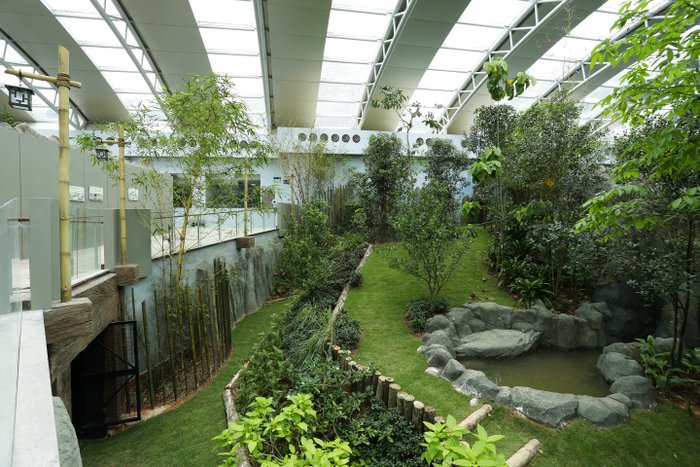
The River Safari's zoology team is helping them settle into the Giant Panda Forest, which simulates the bears' natural habitat.
To encourage the pandas to explore their new surroundings, keepers will be placing their favorite food, bamboo, in various locations around the exhibit.
The pandas currently live in dens linked to the Forest, which they are visiting daily. They first entered their new home on Monday and spent two hours there before returning to their dens. The duration will be progressively increased as they familiarise themselves with the area.
The River Safari's zoology team is helping them settle into the Giant Panda Forest, which simulates the bears' natural habitat.
To encourage the pandas to explore their new surroundings, keepers will be placing their favorite food, bamboo, in various locations around the exhibit.
The pandas currently live in dens linked to the Forest, which they are visiting daily. They first entered their new home on Monday and spent two hours there before returning to their dens. The duration will be progressively increased as they familiarise themselves with the area.
Friday, October 05, 2012
Precious Animals should be left in the Wild or placed in Captivity for security?
Do they really helps to prevent extinction of the species or accelerate the process as more attempts to capture their priced animal...
CAPTIVITY IS CRUEL
Dolphins, elephants, gorillas, chimpanzees and orangutans are all mammals that have a very high cognitive potential. Their life expectancy is important and all benefit from an extremely prolonged childhood, during which their parents charge themselves with their education and transmitting their proper savior-fare.
They are thus "cultural beings", living in the "third world" (Popper & Eccles, 1989) that interweave their rules of relationships, social identity, language, aesthetic emotion, filial attachments or friendly and moral values such as altruism, encouragement of talent or the sense of the common well being (F. De Waal, 1995).
In the context where the regard of another builds and reinforces the sensation of existence, isolation is felt as a serious punishment.
For man, life imprisonment often replaces the death penalty. When this isolation becomes total - for example, in solitary confinement - hallucinations happen very quickly, then complete dementia and death by suicide.
Simple clinical observation teaches us that chimpanzees and dolphins demonstrate exactly the same reactions as we do under the same circumstances. For them also, it is inconceivable to live far from others, far from the world with which they are familiar.
A chimpanzee is only a TRUE chimpanzee when it is in the forest, surrounded by its group, of behaviors and that it earns in this manner its proper identity. However, for these highly encephalitic cetaceans beings, no form of captivity, no cage, no special facilities, no pool, even Olympic-sized, will ever replace the simple pleasure of living free in the wild.
In no way could the captivity imposed on dolphins replace the fantastic sensory and social diversity that they know in the natural environment.
Enclosure is for them, particularly, a treatment of extreme cruelty that comes to reinforce the measures of discipline imposed on stubborn dolphins (rationing and isolation). We remember to finish that these "combats to death" don't exist in the ocean, even if certain conflicts are sometimes resolved in a violent manner.
For commercial gains
Singapore Sentosa Underwater World's dolphin captive breeding programe has been struck a third blow in the space of six months - a miscarriage, the death of a newborn and now, the death of an adult female.
There are five pink dolphins left at the Underwater World after the death of Namtam, an adult female. She succumbed to a stomach inflammation. .
Namtam, a pink dolphin about 20 years old, miscarried last September and nearly died then. She succumbed on March 5 to acute gastritis, or inflammation to the stomach. A dolphin born on Feb 18 died within 15 minutes of its birth.
The pink dolphins in Singapore are bought from Thai fishermen who don't have the knowledge and care to handle the animals less cruelly when catching them. Because of this trade, the wild Sousa chinensis in Thai waters have been unsustainable caught, seriously depleting the population.
Wild caught dolphins for Resorts World Sentosa - SPCA says 'NO' to dolphins in captivity
http://www.spca.org.sg/captivedolphins.html
CAPTIVITY IS CRUEL
Dolphins, elephants, gorillas, chimpanzees and orangutans are all mammals that have a very high cognitive potential. Their life expectancy is important and all benefit from an extremely prolonged childhood, during which their parents charge themselves with their education and transmitting their proper savior-fare.
They are thus "cultural beings", living in the "third world" (Popper & Eccles, 1989) that interweave their rules of relationships, social identity, language, aesthetic emotion, filial attachments or friendly and moral values such as altruism, encouragement of talent or the sense of the common well being (F. De Waal, 1995).
In the context where the regard of another builds and reinforces the sensation of existence, isolation is felt as a serious punishment.
For man, life imprisonment often replaces the death penalty. When this isolation becomes total - for example, in solitary confinement - hallucinations happen very quickly, then complete dementia and death by suicide.
Simple clinical observation teaches us that chimpanzees and dolphins demonstrate exactly the same reactions as we do under the same circumstances. For them also, it is inconceivable to live far from others, far from the world with which they are familiar.
A chimpanzee is only a TRUE chimpanzee when it is in the forest, surrounded by its group, of behaviors and that it earns in this manner its proper identity. However, for these highly encephalitic cetaceans beings, no form of captivity, no cage, no special facilities, no pool, even Olympic-sized, will ever replace the simple pleasure of living free in the wild.
In no way could the captivity imposed on dolphins replace the fantastic sensory and social diversity that they know in the natural environment.
Enclosure is for them, particularly, a treatment of extreme cruelty that comes to reinforce the measures of discipline imposed on stubborn dolphins (rationing and isolation). We remember to finish that these "combats to death" don't exist in the ocean, even if certain conflicts are sometimes resolved in a violent manner.
For commercial gains
Singapore Sentosa Underwater World's dolphin captive breeding programe has been struck a third blow in the space of six months - a miscarriage, the death of a newborn and now, the death of an adult female.
There are five pink dolphins left at the Underwater World after the death of Namtam, an adult female. She succumbed to a stomach inflammation. .
Namtam, a pink dolphin about 20 years old, miscarried last September and nearly died then. She succumbed on March 5 to acute gastritis, or inflammation to the stomach. A dolphin born on Feb 18 died within 15 minutes of its birth.
The pink dolphins in Singapore are bought from Thai fishermen who don't have the knowledge and care to handle the animals less cruelly when catching them. Because of this trade, the wild Sousa chinensis in Thai waters have been unsustainable caught, seriously depleting the population.
Wild caught dolphins for Resorts World Sentosa - SPCA says 'NO' to dolphins in captivity
http://www.spca.org.sg/captivedolphins.html
Thursday, September 27, 2012
Panda Diplomacy Isn’t Working for China & Japan
It was supposed to be a goodwill gesture.
After the earthquake and tsunami devastated much of her Japanese city last year, Sendai Mayor Emiko Okuyama asked Beijing if it would loan a pair of giant pandas to the local Yagiyama Zoo to cheer up young kids in the Tohoku region.
In a meeting with Japan’s Prime Minister Yoshihiko Noda, China’s Premier Wen Jiabao said he would strongly consider it.
Yet, a year later, that panda diplomacy has been stalled by an escalating dispute between China and Japan over the uninhabited Senkaku or Diaoyu islands. Michiya Ujiie, who is spearheading Sendai’s efforts, says he has not spoken with his Chinese counterparts in months.
“Neither side has suggested suspending the exchange altogether,” Ujiie said. “But under these circumstances, I don’t expect to get a call at all.”
Sendai residents aren’t so eager now to accept accepting China’s national treasures. Ujiie said the city has received dozens of emails from residents urging officials to halt the panda luring efforts, saying Sendai should not negotiate with a country that holds so much animosity towards Japan.
City officials hoped to firm up plans to bring the pandas to Sendai at an event marking the 40th anniversary of normalization between Japan and China this month, but Beijing cancelled the celebration.
This isn’t the first time the cuddly creatures have been dragged into diplomatic disputes.
In June, nationalist Tokyo Gov. Shintaro Ishihara quipped the newly born panda cub at Tokyo’s Ueno Zoo should be named “Sen-sen” or “Kaku-kaku,” referring to the Japanese name for the disputed islands, Senkaku. China calls the rocks Diaoyu.
The cub died six days later, but its body remains in a freezer on zoo grounds, nearly three months later. China maintains full ownership of the pandas it loans out, but Tokyo officials say they have not received any word from Beijing about what to do with the frozen creature.
China and Japan both claim the tiny, uninhabited archipelago in the East China Sea. Tensions between the two countries have escalated since Tokyo nationalized the islands earlier this month, setting off a wave of anti-Japanese protests throughout China.
Wednesday, September 26, 2012
India tiger killed by poachers inside Itanagar zoo
Police in India's north-eastern state of Arunachal Pradesh are looking for a gang of poachers who entered a high-security zoo in the capital, Itanagar, and hacked a tiger to death.
Officials have ordered an investigation into the incident, which happened on Monday night.
The arrival of security guards prevented the poachers from carrying away the mutilated animal.
The poaching and smuggling of tiger body parts is common across India.
The animals are prized throughout East Asia in general and China in particular for the supposed medicinal value of their body parts.
Tiger numbers have shrunk alarmingly in India in recent decades.
A 2011 census counted about 1,700 tigers in the wild. A century ago there were estimated to be 100,000 tigers in India.
The poachers tranquilised the six-year-old tigress before entering its enclosure and cutting it into six pieces, officials at the zoo say. A post-mortem of the animal has now been carried out.
Zoo chief Zoram Dopum said that the poachers fled when three security guards who had gone for dinner returned to the area.
There have been attempts at poaching animals in the zoo before, officials say.
In February 2006, three tigers and a leopard were poisoned by unknown people. One tiger died, while the other two other animals survived.
In June 2006, 30kg (66lb) of tiger parts - mainly bones and nails - were seized from a vehicle belonging to a police officer in Assam state.
Tuesday, September 25, 2012
Marine Life Park set to open in S’pore in December
Resorts World Sentosa (RWS) said it targets to bring in 16 million visitors next year.
The integrated resort also announced that its second anchor attraction -
the Marine Life Park - will open days ahead of RWS' official opening on
December 7.
The exact date of the park's opening was not given to the media.
The Marine Life Park will be the world's largest oceanarium and will house more than 100,000 marine animals.
These include 25 dolphins, which will be part of the park's interactive programme that starts next year.
The dolphins were the subject of controversy last year, with some animal welfare groups calling for them to be freed.
In response to critics, Mr Biswajit Guha, director of Education and Conservation at the Marine Life Park, said: "The dolphins are doing very well, 25 of them (are) in the Philippines. I don't have any firmed up dates yet to share with you at this stage about when they'll be arriving.
"Essentially, all of the standards meet and in fact exceed the guidelines set by the American Zoos and Aquariums Association, as well as the Alliance for Marine Mammals Parks and Aquariums. In that respect, we're fully confident that the dolphins will receive the best care possible."
Mr Guha added the Marine Life Park is open to continue working with non-government organisations (NGOs) and other agencies that focus on marine education and conservation.
He said they welcome the opportunity to collaborate on such issues.
RWS first opened to the public in 2010 and has attracted some 30 million visitors since then.
It is hoped the new attraction will also encourage more to extend their stay at the resort.
Mr Greg Allan, vice president, Rooms and F&B, Resorts World Sentosa, said: "We hope they'll stay an additional night. We feel that the Marine Life Park will add significantly to the options available to families visiting. We are very much a family resort, and this is an experience that all age groups can come and enjoy together."
Visitors can also expect a weekend of festivities during the grand opening.
The highlights of the grand opening include public performances and a 12-minute public fireworks display at the RWS waterfront promenade.
Marine Life Park director to make dolphins 'ambassadors'The exact date of the park's opening was not given to the media.
The Marine Life Park will be the world's largest oceanarium and will house more than 100,000 marine animals.
These include 25 dolphins, which will be part of the park's interactive programme that starts next year.
The dolphins were the subject of controversy last year, with some animal welfare groups calling for them to be freed.
In response to critics, Mr Biswajit Guha, director of Education and Conservation at the Marine Life Park, said: "The dolphins are doing very well, 25 of them (are) in the Philippines. I don't have any firmed up dates yet to share with you at this stage about when they'll be arriving.
"Essentially, all of the standards meet and in fact exceed the guidelines set by the American Zoos and Aquariums Association, as well as the Alliance for Marine Mammals Parks and Aquariums. In that respect, we're fully confident that the dolphins will receive the best care possible."
Mr Guha added the Marine Life Park is open to continue working with non-government organisations (NGOs) and other agencies that focus on marine education and conservation.
He said they welcome the opportunity to collaborate on such issues.
RWS first opened to the public in 2010 and has attracted some 30 million visitors since then.
It is hoped the new attraction will also encourage more to extend their stay at the resort.
Mr Greg Allan, vice president, Rooms and F&B, Resorts World Sentosa, said: "We hope they'll stay an additional night. We feel that the Marine Life Park will add significantly to the options available to families visiting. We are very much a family resort, and this is an experience that all age groups can come and enjoy together."
Visitors can also expect a weekend of festivities during the grand opening.
The highlights of the grand opening include public performances and a 12-minute public fireworks display at the RWS waterfront promenade.
Ex-zoo GM moves from land to marine life with ease
Tan Dawn Wei Straits Times 11 Jul 12;
FOR 18 years, Singapore Zoo stalwart Biswajit Guha tended to land creatures, but he has since moved on to taking care of sea animals.
The former general manager of the zoo quietly joined the new Marine Life Park of Resorts World Sentosa (RWS) in March as its director of education and conservation.
He had quit the zoo last December under a cloud of controversy, when its parent company Wildlife Reserves Singapore (WRS) appointed its board member Isabella Loh as its group chief executive.
Sunday, September 23, 2012
Why is it so hard to raise a baby panda?
A baby giant panda born just one week ago at the National Zoo in the US capital died on Sunday of still to be determined causes.
Panda keepers and volunteers "heard a distress vocalization from the mother, Mei Xiang, at 9:17 am and notified the veterinarian staff immediately," zoo officials said.
"The staff were able to safely retrieve the cub for an evaluation at 10:22 am. Veterinarians immediately performed CPR and other life-saving measures but the cub did not respond," the statement said.
At a first observation, veterinarians said there was no outward sign of trauma, no outward sign of infection, and the cub was "in good body condition" weighing just under 100 grams.
"The National Zoo community mourns the loss of the giant panda cub," the statement read, adding that mother panda Mei Xiang "is under close observation."
Zoo officials immediately turned off the "panda cam," the internet-accessible 24-hour camera trained on the animals.
Mei Xiang, on loan to the Smithsonian-run zoo from China, gave birth to the cub on September 16.
Zookeepers had chosen to keep a physical distance from Mei Xiang, in order to let her raise the cub naturally.
Giant pandas are rare and endangered, with as few of 1,600 surviving in the mountain forests of central China. More than 300 others live in zoos and breeding centers, mostly in China.
The main reason why giant panda is near extinction: The giant panda is very slow to reproduce, it has only a few babies during its life, thus contributes to its vulnerability.
Just like true-breed Singaporeans, low birth rates, difficulties and stress of raising children, eventually Singaporean will be extinct too.
Take time, lots of care and sacrifices!
Friday, September 21, 2012
Kai Kai and Jia Jia are in Pink of Health
I wonder do they have health insurance?
Singapore's resident pandas, Jia Jia and Kai Kai underwent their first routine medical examination today, said Wildlife Reserves Singapore (WSR).
The medical tests included a full dental and body check, blood sample withdrawal, an X-ray and ultrasound scan, and a Tuberculin test.
Each examination took approximately one hour and checks show that both pandas are well.
WSR said the examination is usually carried out after the new animals have settled in their quarantine dens.
On Sep 8, it was reported that the pair are adjusting well in their homes. Easy-going Kai Kai apparently did not take long to settle in his 15 sq m air-conditioned den, while Jia Jia took about five hours to get used the new environment.
The pandas will stay in their dens for one month in quarantine to prevent any diseases from spreading to other animals in the zoo.
After they are given the all-clear, they will be released into their 1,225 sq m exhibit at the River Safar in Mandai, which is situated between the zoo and the Night Safari.
The medical tests included a full dental and body check, blood sample withdrawal, an X-ray and ultrasound scan, and a Tuberculin test.
Each examination took approximately one hour and checks show that both pandas are well.
WSR said the examination is usually carried out after the new animals have settled in their quarantine dens.
On Sep 8, it was reported that the pair are adjusting well in their homes. Easy-going Kai Kai apparently did not take long to settle in his 15 sq m air-conditioned den, while Jia Jia took about five hours to get used the new environment.
The pandas will stay in their dens for one month in quarantine to prevent any diseases from spreading to other animals in the zoo.
After they are given the all-clear, they will be released into their 1,225 sq m exhibit at the River Safar in Mandai, which is situated between the zoo and the Night Safari.
Saturday, September 15, 2012
Kai Kai Happy 5th birthday
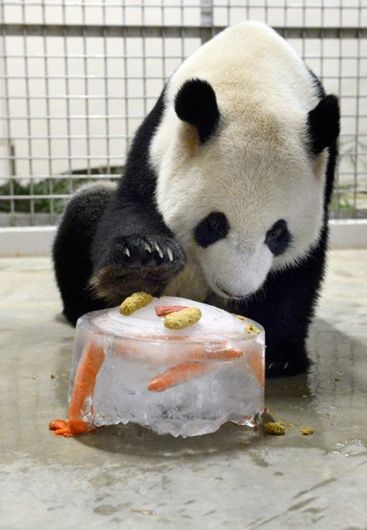
Giant panda Kai Kai turned five on Friday. And unlike his arrival in Singapore a week ago, his birthday celebrations were a quiet affair treating him with an "ice" birthday cake filled with carrots and panda biscuits.
The five-year-old is in quarantine, just like his female counterpart, Jia Jia.
And both have started munching on locally grown bamboo.
The pandas are in Singapore on a 10-year loan from the Chinese government to mark two decades of strong ties between China and Singapore.
Thursday, September 13, 2012
Zoo staff well-being
No mosquito bites please!
No glue No drill No nails Magnetic anti-insect screen
Supply & installation of magnetic insect screen for Singapore Zoo Staff Quarter
No glue No drill No nails Magnetic anti-insect screen
Supply & installation of magnetic insect screen for Singapore Zoo Staff Quarter
Thursday, September 06, 2012
VVIPs welcome China's loaned Pandas (Kai Kai & Jia Jia)
欢迎,欢迎,çƒåˆ—欢迎!
Singapore on Thursday gave a VIP welcome to a pair of giant pandas loaned by China for 10 years to mark two decades of close diplomatic relations.
The bears – five-year-old male Kai Kai (“victorious’) and four-year-old Jia Jia (“beauty’) – will be the stars in a new section of the Singapore Zoo and will make their public debut in December after a quarantine period.
Singapore hopes they will have babies during their stay in the city-state and has devoted millions of dollars to a climate-controlled enclosure designed to promote breeding in the island’s humid tropical climate.
“It is indeed our privilege to be entrusted with two of China’s national treasures,” a Singapore government representative, Teo Ser Luck, said at Changi airport after the pandas arrived.
Dai Bing, charge d’affaires of the Chinese embassy in Singapore, called the animals “the friendship ambassadors of China and Singapore.”
The pandas were delivered in a chartered Singapore Airlines Boeing 747 cargo jet that stopped at an exclusive terminal normally reserved for foreign dignitaries, celebrities and wealthy flyers.
Singapore is the ninth country to receive the bears from China since the loan scheme began in 1994, and the fourth Asia-Pacific nation to be given the honour after Thailand, Japan and Australia.
Other places such as Hong Kong received pandas under a different scheme. The two pandas will be housed in a custom-built 1,500 square metre (16,145 square foot) enclosure costing $8.6 million within the zoo’s new attraction called the River Safari.
The accommodation will be cooled to between 18 and 22 degrees Celsius (64-72 degrees Fahrenheit). In Singapore the temperature usually ranges from 25 to 32 degrees.
Humidity will be set at 50 to 60 percent to simulate the pandas’ natural habitat in southwest China’s Szechuan province. Live plants, boulders and waterfalls have also been installed.
State-linked Wildlife Reserves Singapore (WRS) operates the zoo, which welcomed 1.6 million visitors in 2010.
The River Safari, which is scheduled to open fully next year, expects to attract at least 850,000 visitors annually, WRS said.
WRS director of exhibit design and development Cham Tud Yinn said he had visited panda enclosures all over the world to look at their designs, and learnt most from Hong Kong’s Ocean Park.
“We went there and actually we learnt a lot from them, the mistakes that they made especially with the technical aspect of cooling a building,” he told AFP.
Should the pandas wish to sample Singapore’s tropical temperatures, the enclosure has an outdoor segment where they can laze around.
WRS hopes to use temperature and lighting conditions to stimulate the bears to produce babies.
“In the wild, their breeding behaviour is very much triggered by the change in seasons,” Cham said.
A dedicated den and nursery for baby pandas were constructed in advance.
Tuesday, September 04, 2012
China summon PM Lee to China to oversee the safe transfer of their precious Pandas
Meeting President Hu Jintao in Beijing on Tuesday, Singaporean Prime Minister Lee Hsien Loong said his nation is looking forward to the arrival of the panda pair Kai Kai & Jia Jia .
The pair left the Bifengxia Base of China Conservation and Research Center for the Giant Panda in Ya'an, Sichuan province, on Wednesday afternoon, for Chengdu, capital of Sichuan.
"They will be flown from Chengdu in the wee hours of Thursday on board a Singapore Airlines Cargo Boeing 747 and are expected to touch down at Changi Airport in Singapore at 8:20 am," said Heng Yi, an information officer at the center.
To prepare for the pair's trip to Singapore, the base put them in quarantine on Aug 1. On the morning of Aug 28, experts from the base and Singapore gave them a thorough physical examination.
"The examination showed that Wujie and Hubao are very healthy," said Tang Chunxiang, a veterinarian and assistant to the director of the center.
The center prepared a week's worth of food for the duo, including bamboo, buns and fruits.
"Pandas can adapt quickly. While receiving food from Bifengxia, keepers will feed them Singaporean bamboo, too. After a week in Singapore, they can adapt to bamboo there," he said.
Wujie, a male panda who will be renamed Kaikai in Singapore, was born in September 2007; and Hubao, a female who will be renamed Jiajia, was born in September 2008. They will stay in the River Safari Zoo in Singapore for 10 years.
After a monthlong quarantine, they will be released into their exhibit in the River Safari Zoo to familiarize themselves with their new environment before going on public display in December.
Some Singaporean companies are already geared up to jump on the panda bandwagon, according to the Jakarta Post.
They are rolling out souvenirs, such as panda-inspired bags and toys, to coincide with the arrival of the two pandas.
The souvenirs include stamps by Singapore Post and commemorative coins issued by the Monetary Authority of Singapore.
Singapore Airlines will offer limited-edition panda plush toys this weekend to raise funds for children with special needs.
People who donate S$20 ($16) or more can choose a male or female panda plush toy clad in the airliner's signature batik cloth.
Tourism and marketing experts said the pandas will boost tourism receipts, Jakarta Post reported.
Hu signed an agreement loaning a panda pair to Singapore during his visit there in 2009.
However these two are not the first pandas in Singapore. After China and Singapore established diplomatic relations in 1990, two pandas from China, An'an and Xinxing, were on display for more than three months in Singapore, attracting more than 400,000 visitors. It was the first exhibition of pandas in Southeast Asia.
China started implementing panda diplomacy in the 1950s.
From 1957 to 1982, it presented 23 pandas as gifts to nine countries as a form of goodwill. It set up a loan system in 1984 under which foreign zoos can house pairs of pandas in the captive breeding program.
China usually gets $1 million annually in fees for each loaned panda. The State Forestry Administration promises to use 60 percent of the funds received for wild panda protection and 40 percent for research on pandas raised in captivity.
The pair left the Bifengxia Base of China Conservation and Research Center for the Giant Panda in Ya'an, Sichuan province, on Wednesday afternoon, for Chengdu, capital of Sichuan.
"They will be flown from Chengdu in the wee hours of Thursday on board a Singapore Airlines Cargo Boeing 747 and are expected to touch down at Changi Airport in Singapore at 8:20 am," said Heng Yi, an information officer at the center.
To prepare for the pair's trip to Singapore, the base put them in quarantine on Aug 1. On the morning of Aug 28, experts from the base and Singapore gave them a thorough physical examination.
"The examination showed that Wujie and Hubao are very healthy," said Tang Chunxiang, a veterinarian and assistant to the director of the center.
The center prepared a week's worth of food for the duo, including bamboo, buns and fruits.
"Pandas can adapt quickly. While receiving food from Bifengxia, keepers will feed them Singaporean bamboo, too. After a week in Singapore, they can adapt to bamboo there," he said.
Wujie, a male panda who will be renamed Kaikai in Singapore, was born in September 2007; and Hubao, a female who will be renamed Jiajia, was born in September 2008. They will stay in the River Safari Zoo in Singapore for 10 years.
After a monthlong quarantine, they will be released into their exhibit in the River Safari Zoo to familiarize themselves with their new environment before going on public display in December.
Some Singaporean companies are already geared up to jump on the panda bandwagon, according to the Jakarta Post.
They are rolling out souvenirs, such as panda-inspired bags and toys, to coincide with the arrival of the two pandas.
The souvenirs include stamps by Singapore Post and commemorative coins issued by the Monetary Authority of Singapore.
Singapore Airlines will offer limited-edition panda plush toys this weekend to raise funds for children with special needs.
People who donate S$20 ($16) or more can choose a male or female panda plush toy clad in the airliner's signature batik cloth.
Tourism and marketing experts said the pandas will boost tourism receipts, Jakarta Post reported.
Hu signed an agreement loaning a panda pair to Singapore during his visit there in 2009.
However these two are not the first pandas in Singapore. After China and Singapore established diplomatic relations in 1990, two pandas from China, An'an and Xinxing, were on display for more than three months in Singapore, attracting more than 400,000 visitors. It was the first exhibition of pandas in Southeast Asia.
China started implementing panda diplomacy in the 1950s.
From 1957 to 1982, it presented 23 pandas as gifts to nine countries as a form of goodwill. It set up a loan system in 1984 under which foreign zoos can house pairs of pandas in the captive breeding program.
China usually gets $1 million annually in fees for each loaned panda. The State Forestry Administration promises to use 60 percent of the funds received for wild panda protection and 40 percent for research on pandas raised in captivity.
Tuesday, August 28, 2012
Who say Koalas are lazy?
Swimming koala surprises canoeists
http://www.youtube.com/watch?v=PXC7vCP1GLIWho knew Koalas could swim? This video shows a group canoeing through a river when a fuzzy marsupial decides to swim over and join them
.
The video posted on YouTube five days ago has already been viewed more than 5300 times.
Julie Elliot, who filmed the unusual scene in Queensland's Gold Coast, told Australia's Channel 9: "It took a sip of water and then saw us and obviously decided to come straight over. Then it started clawing at the boat and we didn't know what to do.
"We were thinking it was going to drown so my mate behind me just grabbed him and put him straight in the boat.
"I've been paddling along that particular creek for the best part of 10 years and never seen anything like a swimming koala before."
Sunday, August 19, 2012
Walk the Cat
I happened to witness my neighbour walking her cat. It just look weird!
A least cat buries their poop.
Wednesday, August 15, 2012
A piece of Australia in Singapore Night Safari
See a slice of Australasia at new Night Safari Wallaby trail
A new walking trail with an Australasian theme will open on Friday at the Night Safari.
The Wallaby Trail, covering almost 5,000 sq m, has 13 indoor and outdoor exhibits featuring creatures from Australia, New Guinea and New Zealand. These include an Australian native bird called the tawny frogmouth and the white-lipped python from Papua New Guinea.
A walk-through exhibit enables visitors to get close to marsupials such as the parma wallaby and bennett's wallaby.
A prominent feature of the trail, formerly the Forest Giants trail, is the Naracoorte Cave, a reconstruction of the Naracoorte Caves National Park, a World Heritage site in South Australia.
A new walking trail with an Australasian theme will open on Friday at the Night Safari.
The Wallaby Trail, covering almost 5,000 sq m, has 13 indoor and outdoor exhibits featuring creatures from Australia, New Guinea and New Zealand. These include an Australian native bird called the tawny frogmouth and the white-lipped python from Papua New Guinea.
A walk-through exhibit enables visitors to get close to marsupials such as the parma wallaby and bennett's wallaby.
A prominent feature of the trail, formerly the Forest Giants trail, is the Naracoorte Cave, a reconstruction of the Naracoorte Caves National Park, a World Heritage site in South Australia.
Loaned Panda to arrive in Singapore on 6th Sep 2012
Pandas Jia Jia and Kai Kai bound for Singapore will arrive on Sept 6, Wildlife Reserves Singapore (WRS) announced on Wednesday.
In the announcement, WRS also said that the public can expect to visit the panda pair in December after they have completed a month-long quarantine in Singapore and have been well-familiarised with their new home at the River Safari.
Earlier, ST had reported that the opening was expected to be in November.
The pandas, which are on a 10-year loan from the China Wildlife Conservation Association (CWCA) to Singapore, were initially meant to arrive in March but their arrival was delayed because more changes had to be made to their $8.5 million enclosure.
Director of CWCA, Mr Zhong Yi, told members of the media on Tuesday that representatives made a visit of the 1,225 sq m panda enclosure in June and found everything in order.
Mr Zhong said they are currently being quarantined in Ya'an sanctuary in Sichuan province, China. This phase began early this month.
The pandas will travel on a charter flight sponsored by Singapore Airlines and are expected to touch down at Changi Airport at 8.20am on Sept 6.
To ensure that the giant pandas are comfortable during their five-hour flight, the aircraft’s temperature will be set to the bears’ natural habitat conditions and ‘in-flight meals’ will also be provided in the form of bamboo, fruit and water, WRS said in a media statement. They will also be accompanied by a team of Chinese zookeepers and veterinarians.
After landing, the giant pandas will receive a celebratory welcome at the airport and will then be moved into a temperature-controlled truck for their journey to River Safari. There, the pandas will be moved into their den block to begin their quarantine for one month.
After the quarantine process, they will be released into their exhibit to explore and familiarise themselves with their new surroundings before going on public display.
The pandas will be housed at the Yangtze River zone of the upcoming River Safari, along with other endangered wildlife from China such as the giant salamander and the red panda, said WRS.
"After many months of careful planning and preparation, we are happy to welcome the giant pandas to Singapore and to their new home at River Safari. The arrival of Kai Kai and Jia Jia marks the start of an exciting panda research and development opportunity and we look forward to working closely with the Chinese experts to enhance overall understanding on giant panda conservation," said Ms Claire Chiang, Chairman of WRS.
Singapore will be the ninth country to receive giant pandas from China since 1994.
The pandas are sponsored by CapitaLand.
Saturday, August 11, 2012
Game for a piece of game?
Victory! African lion meat is off Wichita’s “Taste and See” exotic dinner menu ichita chef pulls lion from menu
A Wichita Chef says after all of the concern raised about an upcoming exotic meat event, he's pulling African lion from the menu.
Eyewitness News first told you about the issue Thursday. Taste and See Chef Jason Febres says after seeing all of the concern from the public, he'll no longer make lion.
"After careful consideration, we have decided to remove the Lion from our Ultimate Dining Experience. We wish to note that the small percentage of people who genuinely and intelligently plead their case was what persuaded us to reconsider, and we are not submitting to the threats, vulgarities, pressure or blatant disregard for our rights through the expression of yours, but rather to the few voices of reason. As to the supporters for our restaurant, this event, and our position on the matter, we whole heartedly appreciate the continued backing and hope you respect our decision." Ownership Team - Taste & See
Febres still continue with what he calls an ultimate dining experience next week. He'll serve seven exotic meats including crocodile, alpaca, kangaroo and foie gras.
"It's a special dining experience for people," Febres explained. "For people to just try something else that they haven't had a chance to eat."
Originally the menu included lion which prompted dozens of people to post negative comments on the Taste and See Facebook page and Twitter. They wanted the chef to cancel the event.
"If I knew that was going to happen, I definitely would have not done it, I don't think," Febres said.
Eyewitness News received several calls to the newsroom concerned about the dinner. And organizations including Change.org and Born Free USA have asked their followers to protest the event.
"We don't know where these animals are coming from, they could be from the wild, they could be from captive situations in the U.S." said Adam Roberts of the animal rights group, Born Free U.S.A.
None of the animals on the menu, including lion, are on the Endangered Species List. Febres says the lion meat would have come from a farm in the United States.
Many of the concerned citizens say either way, serving lion meat sets a bad example since lion numbers are declining.
"Serving up species already threatened by everything man can throw at them? You can't be that delusional. I absolutely adore adventurous and unique culinary experiences, but not this way," Alexandra Bowens Mason posted on Facebook.
All posts on Facebook pertaining to lion being served have been removed from Taste and See's Facebook page because of the controversy. Febres says the event will not be canceled, and he's planning an all vegan event sometime in the future.
Lion Meat Controversy.
A Wichita Chef says after all of the concern raised about an upcoming exotic meat event, he's pulling African lion from the menu.
Eyewitness News first told you about the issue Thursday. Taste and See Chef Jason Febres says after seeing all of the concern from the public, he'll no longer make lion.
"After careful consideration, we have decided to remove the Lion from our Ultimate Dining Experience. We wish to note that the small percentage of people who genuinely and intelligently plead their case was what persuaded us to reconsider, and we are not submitting to the threats, vulgarities, pressure or blatant disregard for our rights through the expression of yours, but rather to the few voices of reason. As to the supporters for our restaurant, this event, and our position on the matter, we whole heartedly appreciate the continued backing and hope you respect our decision." Ownership Team - Taste & See
Febres still continue with what he calls an ultimate dining experience next week. He'll serve seven exotic meats including crocodile, alpaca, kangaroo and foie gras.
"It's a special dining experience for people," Febres explained. "For people to just try something else that they haven't had a chance to eat."
Originally the menu included lion which prompted dozens of people to post negative comments on the Taste and See Facebook page and Twitter. They wanted the chef to cancel the event.
"If I knew that was going to happen, I definitely would have not done it, I don't think," Febres said.
Eyewitness News received several calls to the newsroom concerned about the dinner. And organizations including Change.org and Born Free USA have asked their followers to protest the event.
"We don't know where these animals are coming from, they could be from the wild, they could be from captive situations in the U.S." said Adam Roberts of the animal rights group, Born Free U.S.A.
None of the animals on the menu, including lion, are on the Endangered Species List. Febres says the lion meat would have come from a farm in the United States.
Many of the concerned citizens say either way, serving lion meat sets a bad example since lion numbers are declining.
"Serving up species already threatened by everything man can throw at them? You can't be that delusional. I absolutely adore adventurous and unique culinary experiences, but not this way," Alexandra Bowens Mason posted on Facebook.
All posts on Facebook pertaining to lion being served have been removed from Taste and See's Facebook page because of the controversy. Febres says the event will not be canceled, and he's planning an all vegan event sometime in the future.
Lion Meat Controversy.
Wednesday, August 01, 2012
Prague zoo expects new gorilla offspring in wake of Tatu's death
The gap in the Prague zoo's gorilla group after last week's death of Tatu, a young male, may be filled soon as the experienced gorilla mother Kijivu is pregnant again, the zoo director Miroslav Bobek has told CTK.
Kijivu is the mother of Kiburi, 2, the only young gorilla that lives with the Prague group now after his older sister Moja, 7, was transported to Spain and his brother Tatu died by unlucky coincidence on Friday at the age of five.
"The 19-year-old Kijivu is pregnant again. We expect her to give birth to her offspring at the end of the year," Bobek said.
Tatu, the most agile of the three offspring of Kijivu and male Richard, hanged himself accidentally while playing with ropes and twisting one of them around his neck.
The gorilla group has been very popular with the zoo visitors and fans, who are mourning Tatu's death on websites and social networks.
Tatu is to be stuffed and become a part of the National Museum's collections.
Besides Richard, Kijivu and Kiburi, the Prague group also includes another three females, Kamba, Shinda and Bikira.
Kijivu is the mother of Kiburi, 2, the only young gorilla that lives with the Prague group now after his older sister Moja, 7, was transported to Spain and his brother Tatu died by unlucky coincidence on Friday at the age of five.
"The 19-year-old Kijivu is pregnant again. We expect her to give birth to her offspring at the end of the year," Bobek said.
Tatu, the most agile of the three offspring of Kijivu and male Richard, hanged himself accidentally while playing with ropes and twisting one of them around his neck.
The gorilla group has been very popular with the zoo visitors and fans, who are mourning Tatu's death on websites and social networks.
Tatu is to be stuffed and become a part of the National Museum's collections.
Besides Richard, Kijivu and Kiburi, the Prague group also includes another three females, Kamba, Shinda and Bikira.
Monday, July 30, 2012
Boater arrested for feeding Croc that bit off his hand
An Everglades airboat operator has been charged with illegally feeding an alligator that bit off his right hand, according to news reports.
Wallace Weatherholt, 63, was arrested Friday on the misdemeanor charge, according to our Gannett colleagues at the Fort Myers News-Press. He's scheduled to be in court Aug. 22.
Weatherholt, who works for Captain Doug's Small Airport Tours in Everglades City, was dangling a fish at the water's surface during a June 12 tour, an Indiana family told the Associated Press. A 9-foot-long alligator then lunged and bit off Weatherholt's right hand at the wrist.
State wildlife officers tracked and killed the gator. Weatherholt's hand was found in the reptile's stomach, but doctors could not reattach it.
The law against feeding alligators is intended to protect the creatures and humans, said Florida Fish and Wildlife Conservation Commission officer Jorge Pino. Over time, alligators lose their natural fear of humans when they are fed, and then pose a danger to humans.
"It's a very sad situation for Mr. Weatherholt, and we wish this never happened to him," Pino told ABC News. "But there are laws on the books to protect people from this exact incident."
"As soon as you say there's an alligator that's not afraid of humans, that's like signing a death warrant for that alligator," he added. "The more people abide by the rules on the books, the safer the gators will be, and more importantly, the safer the humans will be."
Feeding an alligator is a second-degree misdemeanor punishable by a fine up to $500 and possible jail.
Three weeks ago, an alligator bit off the lower right arm of a teenager swimming in the Caloosahatchee River in southwestern Florida.
Wallace Weatherholt, 63, was arrested Friday on the misdemeanor charge, according to our Gannett colleagues at the Fort Myers News-Press. He's scheduled to be in court Aug. 22.
Weatherholt, who works for Captain Doug's Small Airport Tours in Everglades City, was dangling a fish at the water's surface during a June 12 tour, an Indiana family told the Associated Press. A 9-foot-long alligator then lunged and bit off Weatherholt's right hand at the wrist.
State wildlife officers tracked and killed the gator. Weatherholt's hand was found in the reptile's stomach, but doctors could not reattach it.
The law against feeding alligators is intended to protect the creatures and humans, said Florida Fish and Wildlife Conservation Commission officer Jorge Pino. Over time, alligators lose their natural fear of humans when they are fed, and then pose a danger to humans.
"It's a very sad situation for Mr. Weatherholt, and we wish this never happened to him," Pino told ABC News. "But there are laws on the books to protect people from this exact incident."
"As soon as you say there's an alligator that's not afraid of humans, that's like signing a death warrant for that alligator," he added. "The more people abide by the rules on the books, the safer the gators will be, and more importantly, the safer the humans will be."
Feeding an alligator is a second-degree misdemeanor punishable by a fine up to $500 and possible jail.
Three weeks ago, an alligator bit off the lower right arm of a teenager swimming in the Caloosahatchee River in southwestern Florida.
Friday, July 27, 2012
Taming the Wild
Killer whale tries to drown trainer
http://www.youtube.com/watch?v=MK3MNN_rsNk
SeaWorld park in San Diego California, a killer whale suddenly tried drowning its trainer.
http://www.youtube.com/watch?v=MK3MNN_rsNk
SeaWorld park in San Diego California, a killer whale suddenly tried drowning its trainer.
Thursday, July 12, 2012
Baby giant panda's death in Tokyo sparks grief
The death of a baby panda in Japan stopped regular television programming and brought a Tokyo zoo director to tears on Wednesday, a week after its birth sent ripples of excitement across the nation.
Newscasts had dedicated a nightly segment to the male cub's daily activities since his birth on July 5, with retailers unveiling a host of panda-themed products in celebration.
The unnamed cub was initially hailed as a rare success for Japan's captive breeding programme as it was the zoo's first panda born in 24 years and the only one conceived from natural sexual intercourse.
But the enthusiasm turned to grief on Wednesday after Ueno zoo in the Japanese capital said the tiny, 144-gram male infant had died of pneumonia, bringing zoo director Toshimitsu Doi to tears. "We are very disappointed," Doi said as he wiped his eyes.
Newscasters interrupted regular programming to report the death of the cub, whose birth had been embraced as happy news for a country still struggling to recover from last year's quake-tsunami disaster.
Prime Minister Yoshihiko Noda described the death as "very disappointing".
"We were all looking forward" to the cub's development, he told reporters in Tokyo.
Matsuzakaya, a major Japanese department store, had planned a "Happy Panda Week" celebration, offering special discounts following the birth, but the event was canceled on Wednesday.
The zoo said keepers found the baby lying on its back against its mother Shin Shin's stomach.
"They administered a cardiac massage and other treatment, but unfortunately they confirmed its death at 8:30 am (2330 GMT Tuesday)," the zoo said.
Shin Shin and her mate Ri Ri were leased from China last year at an annual cost of about one million dollars to the zoo operated by the Tokyo Metropolitan government.
The baby was hailed in China, which has sometimes hostile relations with neighbouring Japan.
"We lament the loss of the cub and believe that the Japanese people, who have been looking forward to seeing the cub, will also lament this loss," said foreign ministry spokesman Liu Weimin in a statement Wednesday.
Last week Beijing expressed hope "people-to-people sentiment and overall relations between China and Japan" could be promoted by the cub's birth.
China is famed for its "panda diplomacy", using the bears as diplomatic gifts to other countries. About 1,600 remain in the wild in China, with some 300 others in captivity worldwide -- mostly in China.
As many as 16 giant pandas have been born in Japan, according to reports.
So Sad! Panda cub dies at Ueno Zoo
Giant panda Shin Shin holding the baby giant panda in her right arm at the Ueno Zoological Park in Tokyo.
The first panda cub born at Tokyo's Ueno Zoo in 24 years died of pneumonia Wednesday, the Tokyo metropolitan government said. The baby panda was born on Thursday at the zoo in Taito Ward to 7-year-old female giant panda Shin Shin and 6-year-old male Ri Ri. It was the first panda born through natural breeding at the zoo. The zoo had been monitoring the cub after reuniting it with Shin Shin in a maternity room around 3:30 p.m. Tuesday. The zoo said it confirmed the cub's cries at around 6:45 a.m. Wednesday. However, at around 7:30 a.m., a zoo attendant picked the cub up from where it was lying on its back on Shin Shin's belly and found it was in cardiac arrest. The cub was moved to an incubator and given cardiac massage, but was confirmed dead at around 8:30 a.m. Ueno Zoo Director Toshimitsu Doi had stressed that panda cubs need to be carefully watched for at least a week since it takes that long to determine whether a baby panda will be able to thrive. This is because there have been many cases in which baby pandas, blind and covered only with downy hair, die several days after birth. Shin Shin nursed the cub after giving birth Thursday. Shin Shin, however, stopped taking care of the cub around midnight Friday, and the cries of the baby, left on the concrete floor of the maternity room, became weaker. A zoo attendant warmed the baby using a hot water bottle and moved it to an incubator after wrapping it in a towel. While feeding Shin Shin an apple Saturday morning, zoo staff used a pump to collect her milk to feed the cub. The cub regained its strength when it was given the breast milk through a bottle. Its weight, which was 133 grams Friday, increased to 144 grams Tuesday. It sometime happens that a giant panda will stop taking care of its baby. There are also cases in which the tiny baby dies under the large body of a mother panda. In June 1985, Chu Chu, the first panda born in Japan, died at the zoo at the age of just 43 hours.
Wednesday, July 11, 2012
Copenhagen Zoo Siberian tigers fatally maul man
Tigers fatally mauled a man inside an enclosure at the Copenhagen Zoo, officials said Wednesday.
It was unclear how or why the 21-year-old Afghan-born man had entered the Siberian tiger den, but investigators could not exclude suicide as a motive, police spokesman Lars Borg said.
The man sustained multiple bite wounds to the throat, face, chest and a thigh. "We don't know why he went in and why he ended up in the enclosure," Borg told The Associated Press. The man was granted Danish citizenship last month and his family has identified him, Borg said.
Police declined to release his name. His body was found surrounded by the zoo's three Siberian tigers by a zookeeper early Wednesday.
Borg said the man appeared to have entered the tiger area late Tuesday from a low wall surrounding the den and then ended up in the moat inside the enclosure. "He has been in the water and the animals must have seen that and attacked him," Borg said.
"He was killed in the water." Police were trying to piece together the man's movements inside the zoo, but haven't had any luck with security cameras. There were no surveillance cameras at the tiger enclosure. The man only had his old residence permit and keys to his Copenhagen apartment on him, Borg said. Copenhagen Zoo manager Steffen Straede said it was the first time in the zoo's 152-year history that such an incident has occurred, and there were no plans to reassess its security or to put the tigers down.
"If a person really wants to get in (there), we cannot prevent it from happening," he said.
**** Recalled: A cleaner at Singapore Zoo has died after being mauled by three tigers Nov 2008, Nordin Bin Montong was attacked by the white Bengal tigers after crossing a moat surrounding their enclosure. He was reportedly acting erratically.
It was unclear how or why the 21-year-old Afghan-born man had entered the Siberian tiger den, but investigators could not exclude suicide as a motive, police spokesman Lars Borg said.
The man sustained multiple bite wounds to the throat, face, chest and a thigh. "We don't know why he went in and why he ended up in the enclosure," Borg told The Associated Press. The man was granted Danish citizenship last month and his family has identified him, Borg said.
Police declined to release his name. His body was found surrounded by the zoo's three Siberian tigers by a zookeeper early Wednesday.
Borg said the man appeared to have entered the tiger area late Tuesday from a low wall surrounding the den and then ended up in the moat inside the enclosure. "He has been in the water and the animals must have seen that and attacked him," Borg said.
"He was killed in the water." Police were trying to piece together the man's movements inside the zoo, but haven't had any luck with security cameras. There were no surveillance cameras at the tiger enclosure. The man only had his old residence permit and keys to his Copenhagen apartment on him, Borg said. Copenhagen Zoo manager Steffen Straede said it was the first time in the zoo's 152-year history that such an incident has occurred, and there were no plans to reassess its security or to put the tigers down.
"If a person really wants to get in (there), we cannot prevent it from happening," he said.
**** Recalled: A cleaner at Singapore Zoo has died after being mauled by three tigers Nov 2008, Nordin Bin Montong was attacked by the white Bengal tigers after crossing a moat surrounding their enclosure. He was reportedly acting erratically.
Singapore Zoo welcomes new baby white rhino
The Singapore Zoo recently celebrated the birth of its 13th white rhino named Jumaane.
Jumaane, which means "born on Tuesday", arrived on April 10 this year, which of course, was a Tuesday.
He was undoubtedly one of the biggest bundles of joy Singapore Zoo has welcomed to date, weighing in at approximately 70kg at birth.
Baby Jumaane can be seen rolling around in the mud in his exhibit at the Wild Africa region of the Zoo.
His mother, Shova is always close by though, keeping a watchful eye on her baby.
White rhinos are considered near threatened in the wild on the International Union for the Conservation of Nature Red List of Threatened species.
They are hunted for their horns, which some believe as having medicinal properties.
However, there has been no scientific evidence to suggest that their horns are a cure for anything as they are actually made of keratin, the same type of protein that makes up hair and fingernails.
Singapore Zoo boasts the most number of white rhinos bred in a single zoo in Southeast Asia, with eight of these majestic creatures in its collection.
Of the 13 babies born here, some have been sent to Indonesia, Australia, Thailand and Korea as part of the Zoo's ex-situ conservation efforts through its worldwide exchange programme.
Jumaane, which means "born on Tuesday", arrived on April 10 this year, which of course, was a Tuesday.
He was undoubtedly one of the biggest bundles of joy Singapore Zoo has welcomed to date, weighing in at approximately 70kg at birth.
Baby Jumaane can be seen rolling around in the mud in his exhibit at the Wild Africa region of the Zoo.
His mother, Shova is always close by though, keeping a watchful eye on her baby.
White rhinos are considered near threatened in the wild on the International Union for the Conservation of Nature Red List of Threatened species.
They are hunted for their horns, which some believe as having medicinal properties.
However, there has been no scientific evidence to suggest that their horns are a cure for anything as they are actually made of keratin, the same type of protein that makes up hair and fingernails.
Singapore Zoo boasts the most number of white rhinos bred in a single zoo in Southeast Asia, with eight of these majestic creatures in its collection.
Of the 13 babies born here, some have been sent to Indonesia, Australia, Thailand and Korea as part of the Zoo's ex-situ conservation efforts through its worldwide exchange programme.
Friday, July 06, 2012
Giant panda Shin Shin gives birth at Ueno Zoo
Giant panda Shin Shin has given birth to a cub,
officials at Ueno Zoo in Tokyo said Thursday. It is the first to be born
at the nation's oldest zoo in 24 years, and the first there to be
conceived naturally.
| Eating for two: Female giant panda Shin Shin feeds on bamboo at Ueno Zoo in Tokyo last month. |
The cub, whose sex has yet to be determined, was
born at 12:27 p.m. and both the mother and baby are in good health, an
official at the Tokyo Metropolitan Government said. The baby's father is
Ri Ri.
"Shin Shin has been holding the cub to her
chest" and showing signs of feeding the baby, the official said. Zoo
staff have been monitoring the pandas by camera. Neither the weight nor
size of the cub are yet known.
Because a second cub is sometimes born as long as
a day after the first, Shin Shin will continue to be monitored closely,
the official said.
Shin Shin and Ri Ri are on a 10-year loan
from China that started in February 2011. Under the terms of the
agreement, the cub is owned by China and will be sent there in two
years, according to the metropolitan government.
Shin Shin and Ri Ri were placed in the same cage on March 25, and it was confirmed they had mated a day later.
The zoo removed Shin Shin from public view on
June 30, when it appeared she was pregnant. However, the zoo was unable
to confirm her condition because changes in hormonal level can mimic
signs of pregnancy.
The gestation period is usually 80 to 200 days. Shin Shin gave birth 102 days after first mating with Ri Ri.
The cub is the fourth born at the zoo. The last, Yu Yu, was born in 1988.
Information from Kyodo added
Thursday, June 28, 2012
Adult chimpanzee kills baby chimp in front of shocked Los Angeles Zoo visitors
Los Angeles Zoo visitors were scared and shocked to witness a 3-month-old chimpanzee mauled to death by an adult male chimp.
Witnesses told CBS Los Angeles that about 100 or so people saw the tragedy, some so horrified they had to leave the zoo. Others were so enthralled that they captured parts of the incident on their cell phone cameras.
"Chimpanzee behavior can sometimes be aggressive and violent and the zoo is sorry that visitors had to be exposed to this," the facility said in a statement.
The unnamed infant chimpanzee, born March 6, was the daughter of a chimp named Gracie.
Zoo officials told CBS Los Angeles they aren't sure why this particular male went after the baby and that there had been no aggressive behavior against the chimp since its birth. Male adult chimpanzees, however, have been known to kill young offspring when they fancy an adult female. They are also known to fight and try to kill existing partners of the desired female and direct their anger at baby chimps.
Los Angeles residents and tourists became alarmed as soon as they heard wild animal screeches.
"A bunch of screaming -- like the monkeys getting crazy," said one zoo visitor, Sylvia De Leon. "We did get scared because we were around that area."
One witness said the male chimp held the baby away from the rest of the troop and repeatedly hit its head.
Another family said they only heard the commotion, but the loud noises scared them enough to leave.
"All I heard was screaming," said Alex Sanchez, one of the family's sons. "They stopped for a while, but then they started going again."
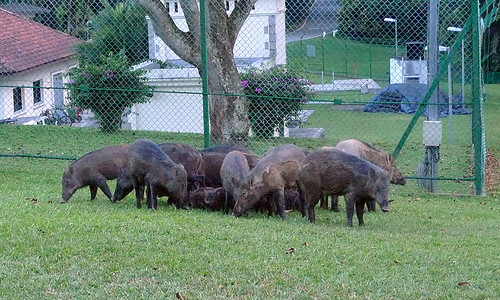
Officials said that zoo staff was not allowed to immediately enter the exhibit for their own safety. Gracie, the mother, was allowed to keep the infant's body overnight to allow her the opportunity to grieve.
"This is a heartbreaking a tragic loss for the zoo and especially for the Great Ape Team who have worked diligently to care for the infant and its mother since its birth," the zoo said in a statement.
The chimpanzee troop at the Los Angeles exhibit is one of the largest in a North American zoo.
Witnesses told CBS Los Angeles that about 100 or so people saw the tragedy, some so horrified they had to leave the zoo. Others were so enthralled that they captured parts of the incident on their cell phone cameras.
"Chimpanzee behavior can sometimes be aggressive and violent and the zoo is sorry that visitors had to be exposed to this," the facility said in a statement.
The unnamed infant chimpanzee, born March 6, was the daughter of a chimp named Gracie.
Zoo officials told CBS Los Angeles they aren't sure why this particular male went after the baby and that there had been no aggressive behavior against the chimp since its birth. Male adult chimpanzees, however, have been known to kill young offspring when they fancy an adult female. They are also known to fight and try to kill existing partners of the desired female and direct their anger at baby chimps.
Los Angeles residents and tourists became alarmed as soon as they heard wild animal screeches.
"A bunch of screaming -- like the monkeys getting crazy," said one zoo visitor, Sylvia De Leon. "We did get scared because we were around that area."
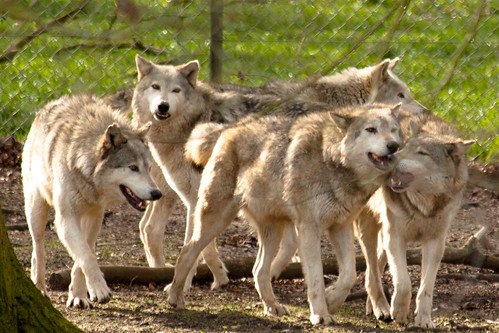
One witness said the male chimp held the baby away from the rest of the troop and repeatedly hit its head.
Another family said they only heard the commotion, but the loud noises scared them enough to leave.
"All I heard was screaming," said Alex Sanchez, one of the family's sons. "They stopped for a while, but then they started going again."
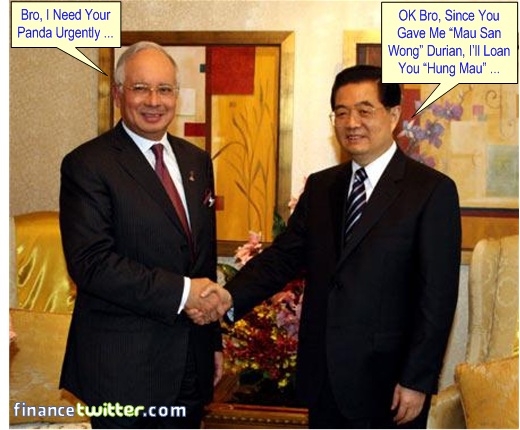
Officials said that zoo staff was not allowed to immediately enter the exhibit for their own safety. Gracie, the mother, was allowed to keep the infant's body overnight to allow her the opportunity to grieve.
"This is a heartbreaking a tragic loss for the zoo and especially for the Great Ape Team who have worked diligently to care for the infant and its mother since its birth," the zoo said in a statement.
The chimpanzee troop at the Los Angeles exhibit is one of the largest in a North American zoo.
Sunday, June 24, 2012
Singapore Wildlife conservation on Wild boar
News that a wild boar wandered out of the forest around Lower Peirce Reservoir and charged at a security guard and a five-year-old boy at Bishan-Ang Mo Kio Park last Friday may have raised concerns in some quarters.
But now a wild life researcher says wild boars moving out of the woods does not necessarily mean that there is an overpopulation of them.
Mr Ong Say Lin, Research Student, Department of Biological Sciences at the National University of Singapore, said: "This may not just be a sign that their numbers are increasing too quickly. We don't know that for sure yet, and I can't deny that as well. They are coming out and they are spreading to bigger areas. And they can't tell the difference between a natural area and a housing estate that has planted fruit trees. To them it's really all the same, and it's just their normal foraging behaviour."
And observing wild boars' foraging behaviour has become a new past-time for some of the residents at Upper Thomson.
They say wild boars foraging for food by the roadside is now almost a daily occurrence, which attracted many drivers to take snapshots of them.
One resident even turned his home-grown jackfruit tree into an 'observation post', where he spends up to two hours watching the wild boars from a safe distance.
To better understand wild boars, Mr Ong has put in place more than 30 camera traps to track the animals.
He has also set up a webpage and Facebook page where he published his research findings, to be shared with the public.
The public can share their sightings or knowledge of wild boars on the Facebook page to help others learn more about the habits and behaviour of the animals.
But now a wild life researcher says wild boars moving out of the woods does not necessarily mean that there is an overpopulation of them.
Mr Ong Say Lin, Research Student, Department of Biological Sciences at the National University of Singapore, said: "This may not just be a sign that their numbers are increasing too quickly. We don't know that for sure yet, and I can't deny that as well. They are coming out and they are spreading to bigger areas. And they can't tell the difference between a natural area and a housing estate that has planted fruit trees. To them it's really all the same, and it's just their normal foraging behaviour."
And observing wild boars' foraging behaviour has become a new past-time for some of the residents at Upper Thomson.
They say wild boars foraging for food by the roadside is now almost a daily occurrence, which attracted many drivers to take snapshots of them.
One resident even turned his home-grown jackfruit tree into an 'observation post', where he spends up to two hours watching the wild boars from a safe distance.
To better understand wild boars, Mr Ong has put in place more than 30 camera traps to track the animals.
He has also set up a webpage and Facebook page where he published his research findings, to be shared with the public.
The public can share their sightings or knowledge of wild boars on the Facebook page to help others learn more about the habits and behaviour of the animals.
Wednesday, June 20, 2012
This pack of wolves tasted human
Pack of eight wolves maul woman keeper to death at Sweden's most popular zoo
A crisis group assembled to provide support for Kolmarden park’s employees, and the woman's relatives have been notified, reported news agency TT.
The incident occurred just after 11am on Sunday morning. According to eye-witness reports, the woman went into the enclosure, was surrounded and then attacked, wrote the Aftonbladet newspaper.
Emergency services were alerted at 11.11am, and were initially unable to approach the woman.
“You can’t just go in to a pack of wolves. Police and ambulance staff couldn’t get close to the victim until later,” said Norrköping’s emergency services coordinator Jan Tengeborg to the newspaper.
According to Aftonbladet, emergency services are currently attempting to sedate the other wolves nearby.
“It’s very unusual for something like this to happen, but it has happened before," Olof Liberg, wolf expert at Sweden’s University of Agricultural Sciences (Sveriges lantbruksuniversitet, SLU) said to TT.
“Zoo animals aren’t afraid of humans and accidents can happen,” he continued.
Liberg has yet to familiarize himself with this specific case, but said that accidents like this one often occur because of a breach in routine, and notes that wolves are especially dangerous when a zookeeper goes in alone.
A crisis group assembled to provide support for Kolmarden park’s employees, and the woman's relatives have been notified, reported news agency TT.
The incident occurred just after 11am on Sunday morning. According to eye-witness reports, the woman went into the enclosure, was surrounded and then attacked, wrote the Aftonbladet newspaper.
Emergency services were alerted at 11.11am, and were initially unable to approach the woman.
“You can’t just go in to a pack of wolves. Police and ambulance staff couldn’t get close to the victim until later,” said Norrköping’s emergency services coordinator Jan Tengeborg to the newspaper.
According to Aftonbladet, emergency services are currently attempting to sedate the other wolves nearby.
“It’s very unusual for something like this to happen, but it has happened before," Olof Liberg, wolf expert at Sweden’s University of Agricultural Sciences (Sveriges lantbruksuniversitet, SLU) said to TT.
“Zoo animals aren’t afraid of humans and accidents can happen,” he continued.
Liberg has yet to familiarize himself with this specific case, but said that accidents like this one often occur because of a breach in routine, and notes that wolves are especially dangerous when a zookeeper goes in alone.
Sunday, June 17, 2012
Precious Panda
Giant Pandas were used as diplomatic gifts for as long as history can remember, dating at least as far back as the 7th century Tang Dynasty, when Empress Wu Zetian sent a pair to the Japanese Mikado Emperor. Just when the pandas thought they won’t get “exported again”, their country did it again in what was known as “Panda Diplomacy” era in the 1950s, thanks largely to Cold War. From 1958 to 1982 alone, China gave 23 precious pandas to 9 different countries.
Of course, the panda diplomacy hit its peak when Chairman Mao gave Hsing-Hsing and Ling-Ling to US President Richard Nixon in 1972 after their meeting, ending 25 years of isolation between China and United States. US reciprocate with a pair of musk oxen, though one dies immediately while the other loses all of its fur. Poor oxen, I supposed they are more sensitive than panda after they learnt about being exported. Hence the relatively peaceful period when the Americans busy admiring pandas and Bruce Lee.
Proven to be successful as a diplomatic tool, China presented two of the cute animals (Ching-Ching and Chia-Chia) to United Kingdom 2 years later. It was such a successful tool that French throw a tantrum, insulted because the US got their pandas before them, and China had to give Yen-Yen and Li-Li to the French in 1973 to prevent them from resurrect their mighty Napoleon Bonaparte (*grin*). Even Taiwan, China’s nearest enemy, was given a pair of Tuan-Tuan and Yuan-Yuan in 2008, as a symbol of diplomatic ties being mended between the countries.
However in 1984, the Chinese discovered that there could be a better business model from the panda diplomacy concept. Thanks to capitalism, China found a new formula to profit from the diplomatic tool – now everybody can “Lease a Panda” instead of “Own a Panda”. Here’s the marketing concept – Pandas will be loaned abroad in pairs for cooperative research (*ahem*) with Chinese scientists. The fee – USD1 million per year, payable to China, for a period of 10 years. And if somehow you’re lucky that the loan pair of pandas produce offspring, all the cubs become the property of Peoples Republic of China.
Hoping to use the same panda diplomacy to win local ethnic-Chinese votes as the election-window is getting smaller, the desperate Malaysia PM Najib Razak proudly trumpet that China had decided to loan two endangered baby pandas for a 10-year period. Almost 40-years ago Najib’s father met and shook hands with Mao Zedong in China and thereafter came back home to call a snap election. It brought a landslide victory to the BN. Some said it was a clever plan to win the Chinese votes after the 13 May 1969 racial riots. And now his son PM Najib hopes to reuse the same stunt to his advantage (*grin*).
Conveniently, Najib didn’t tell the public that the cost of loaning the pandas alone would come to a cool USD20 million for the 10-year period, excluding huge cost of building air-conditioned enclosures, maintenance, training and grade-A tender bamboo shoots which need to be imported. The pandas will be placed in a special exhibit in Taman Wetland, Putrajaya. The problem is this wetland is so far away that it would be a miracle if it can attacts large enough number of visitors to offset the cost. But knowing how Najib’s Barisan Nasional previous bailout works, the cost of maintenance and return on investments never cross their minds.
If a pair of white and black bear can swing some Chinese votes, so much the better. Otherwise cronies can still make (guaranteed) profit with Najib Panda Sdn Bhd project which includes infrastructure building, commissioning, maintaining, importing (bamboo shoots) and collecting revenues from the new superstars. The contract probably would be bias with the government guarantee a fix number of visitors else compensation plan kicks in, the same way highway concessionaires make the kill. However you see it, this exclusive “panda concessionaire” will be laughing its way to the bank, pocketing taxpayers money.
Actually, Najib should save the embarrassment with the contest to name the two pandas. If his Ah-Jib-Gor Chinese-language Facebook page is any indicator, the contest doesn’t help but backfires badly with majority of comments ridicule the prime minister with sarcastic names. Names like “Bersih”, “Lynas”, “Altantuya”, “Cincin”, “BagBag”, “Berkin”, “RaRa”, “SuaSuah” and many others were suggested, specifically targeted at PM Najib’s tainted administration from lavish spending to murder allegation. Maybe Najib could attract visitors and prove the critics wrong by naming the pandas “Toto” and “Magnum”. Surely gamblers would not mind paying super expensive ticket price just for a blessing from the animals (*grin*).
Netizens also used the opportunity to tease Najib administration by relating the pandas to NFC’s RM250 million scandal, suggesting that the pandas should stay in multi-million luxury condominium, since cows stay in such environment as well. Obviously majority were skeptical that the pandas would be taken care of, when they can’t even take care of cows in the first place. One wonder if there will be new scandal where the precious pandas be re-leased elsewhere and the money used to buy properties in Singapore.
Critics also slammed Najib administration for wasting taxpayers’ money on pandas when the country’s own tiger, Borneo rhinoceros, orangutan, “pygmy” elephants are equally on the edge of extinction. Many are pessimistic if the pair of pandas can ever graduate from the 10-year period and emerge alive, judging from how the animals were abused and neglected in the local zoos. Of course, Najib administration can always claim that the pandas committed suicide if they were to die while in Putrajaya Wetland. On the fun side, Najib administration should perhaps negotiate secretly (by whisper) with China to lower the pandas leasing cost by reciprocate Malaysia’s delicacies.
Many may not know this but the biggest Goliath frog species in the world came from Malaysia. There’re two very rare species – scientific name Pyxicephalus Ibra-Ali and Pyxicephalus Hee-Apa-Nama. While the fomer is Malaysian former prime minister’s favourite pet, the latter is so special that it can even spray pepper at its enemies (*gulp*). If China pandas are considered an endangered species with only 1600 left in the wild, Malaysia frogs are even more precious considering only a handful known to survive the Mar 2008 election aftermath, with Ibra-Ali and Hee-Apa-Nama the only species alive (*grin*) from the Pyxicephalus family. Heck, US10 million a piece per year for such national treasure is a steal should China accept the exchange.
On a serious note, let’s hope that the pair of pandas shortlisted will not die in vain in Malaysia, a country infamous for its third-world mentality when comes to maintenance. In order to cut cost and make more profit, the cronies shortlisted to manage the welfare of the pandas could just mix local bamboo with other local ingredients such as sambal belacan. Nevertheless, PM Najib will not be here for the next 10-year to ensure the pandas are in one piece to be returned to China so he does not care. What is certain is the taxpayers money to the tune of tens of millions of dollars will be wasted due to desperation of one person’s effort to win Chinese support. And this whole Panda Marketing plan isn’t working at all.
Of course, the panda diplomacy hit its peak when Chairman Mao gave Hsing-Hsing and Ling-Ling to US President Richard Nixon in 1972 after their meeting, ending 25 years of isolation between China and United States. US reciprocate with a pair of musk oxen, though one dies immediately while the other loses all of its fur. Poor oxen, I supposed they are more sensitive than panda after they learnt about being exported. Hence the relatively peaceful period when the Americans busy admiring pandas and Bruce Lee.
Proven to be successful as a diplomatic tool, China presented two of the cute animals (Ching-Ching and Chia-Chia) to United Kingdom 2 years later. It was such a successful tool that French throw a tantrum, insulted because the US got their pandas before them, and China had to give Yen-Yen and Li-Li to the French in 1973 to prevent them from resurrect their mighty Napoleon Bonaparte (*grin*). Even Taiwan, China’s nearest enemy, was given a pair of Tuan-Tuan and Yuan-Yuan in 2008, as a symbol of diplomatic ties being mended between the countries.
However in 1984, the Chinese discovered that there could be a better business model from the panda diplomacy concept. Thanks to capitalism, China found a new formula to profit from the diplomatic tool – now everybody can “Lease a Panda” instead of “Own a Panda”. Here’s the marketing concept – Pandas will be loaned abroad in pairs for cooperative research (*ahem*) with Chinese scientists. The fee – USD1 million per year, payable to China, for a period of 10 years. And if somehow you’re lucky that the loan pair of pandas produce offspring, all the cubs become the property of Peoples Republic of China.
Hoping to use the same panda diplomacy to win local ethnic-Chinese votes as the election-window is getting smaller, the desperate Malaysia PM Najib Razak proudly trumpet that China had decided to loan two endangered baby pandas for a 10-year period. Almost 40-years ago Najib’s father met and shook hands with Mao Zedong in China and thereafter came back home to call a snap election. It brought a landslide victory to the BN. Some said it was a clever plan to win the Chinese votes after the 13 May 1969 racial riots. And now his son PM Najib hopes to reuse the same stunt to his advantage (*grin*).
Conveniently, Najib didn’t tell the public that the cost of loaning the pandas alone would come to a cool USD20 million for the 10-year period, excluding huge cost of building air-conditioned enclosures, maintenance, training and grade-A tender bamboo shoots which need to be imported. The pandas will be placed in a special exhibit in Taman Wetland, Putrajaya. The problem is this wetland is so far away that it would be a miracle if it can attacts large enough number of visitors to offset the cost. But knowing how Najib’s Barisan Nasional previous bailout works, the cost of maintenance and return on investments never cross their minds.
If a pair of white and black bear can swing some Chinese votes, so much the better. Otherwise cronies can still make (guaranteed) profit with Najib Panda Sdn Bhd project which includes infrastructure building, commissioning, maintaining, importing (bamboo shoots) and collecting revenues from the new superstars. The contract probably would be bias with the government guarantee a fix number of visitors else compensation plan kicks in, the same way highway concessionaires make the kill. However you see it, this exclusive “panda concessionaire” will be laughing its way to the bank, pocketing taxpayers money.
Actually, Najib should save the embarrassment with the contest to name the two pandas. If his Ah-Jib-Gor Chinese-language Facebook page is any indicator, the contest doesn’t help but backfires badly with majority of comments ridicule the prime minister with sarcastic names. Names like “Bersih”, “Lynas”, “Altantuya”, “Cincin”, “BagBag”, “Berkin”, “RaRa”, “SuaSuah” and many others were suggested, specifically targeted at PM Najib’s tainted administration from lavish spending to murder allegation. Maybe Najib could attract visitors and prove the critics wrong by naming the pandas “Toto” and “Magnum”. Surely gamblers would not mind paying super expensive ticket price just for a blessing from the animals (*grin*).
Netizens also used the opportunity to tease Najib administration by relating the pandas to NFC’s RM250 million scandal, suggesting that the pandas should stay in multi-million luxury condominium, since cows stay in such environment as well. Obviously majority were skeptical that the pandas would be taken care of, when they can’t even take care of cows in the first place. One wonder if there will be new scandal where the precious pandas be re-leased elsewhere and the money used to buy properties in Singapore.
Critics also slammed Najib administration for wasting taxpayers’ money on pandas when the country’s own tiger, Borneo rhinoceros, orangutan, “pygmy” elephants are equally on the edge of extinction. Many are pessimistic if the pair of pandas can ever graduate from the 10-year period and emerge alive, judging from how the animals were abused and neglected in the local zoos. Of course, Najib administration can always claim that the pandas committed suicide if they were to die while in Putrajaya Wetland. On the fun side, Najib administration should perhaps negotiate secretly (by whisper) with China to lower the pandas leasing cost by reciprocate Malaysia’s delicacies.
Many may not know this but the biggest Goliath frog species in the world came from Malaysia. There’re two very rare species – scientific name Pyxicephalus Ibra-Ali and Pyxicephalus Hee-Apa-Nama. While the fomer is Malaysian former prime minister’s favourite pet, the latter is so special that it can even spray pepper at its enemies (*gulp*). If China pandas are considered an endangered species with only 1600 left in the wild, Malaysia frogs are even more precious considering only a handful known to survive the Mar 2008 election aftermath, with Ibra-Ali and Hee-Apa-Nama the only species alive (*grin*) from the Pyxicephalus family. Heck, US10 million a piece per year for such national treasure is a steal should China accept the exchange.
On a serious note, let’s hope that the pair of pandas shortlisted will not die in vain in Malaysia, a country infamous for its third-world mentality when comes to maintenance. In order to cut cost and make more profit, the cronies shortlisted to manage the welfare of the pandas could just mix local bamboo with other local ingredients such as sambal belacan. Nevertheless, PM Najib will not be here for the next 10-year to ensure the pandas are in one piece to be returned to China so he does not care. What is certain is the taxpayers money to the tune of tens of millions of dollars will be wasted due to desperation of one person’s effort to win Chinese support. And this whole Panda Marketing plan isn’t working at all.
Saturday, May 26, 2012
Pandas' arrival from China set for year-end
Those looking forward to the arrival of two Chinese pandas to Singapore may have to wait a little while longer.
Authorities said Kai Kai and Jia Jia may now only set foot in Singapore at the end of the year.
The two are in good shape and are getting ready for their stint together in Singapore.
Kai Kai and Jia Jia's enclosures have been placed side by side, so they can get used to each other's smell.
But the final details of their migration and their new homes are still being worked out.
Li Desheng, director at Sichuan Wolong Nature Reserve Administration, said: "For instance, (details include) where the surveillance camera is placed, the height of the panda weighing machine. The control of the emergency exit is crucial because the zoo keepers have to enter to clean the enclosure and train the pandas. The pandas may behave violently when they are unhappy."
The duo are on a 10-year loan to foster good ties between China and Singapore.
Claire Chiang, chairwoman of Wildlife Reserves Singapore, said: "There are details that deal with the air conditioning, the lighting, the planting etc. I think we've met all the conditions. What we hope to do is to be sure that the entire precinct around the panda will be in the best state when they come."
And Singapore's Minister of State for Trade and Industry, Teo Ser Luck, who's visiting the pair in Chengdu, said it's important that they're well taken care of.
Mr Teo said: "I think if it takes a longer amount of time to get prepared and to learn their skill sets and the knowledge, I think we should (wait). We should take that time because at the end of the day, this is a national treasure of China and we have to take it very seriously. We have an even heavier responsibility to make sure the pandas are in good hands."
The China Wildlife Conservation Association is planning to make a fourth trip to Singapore sometime in July.
A date will only be set after they have made sure all the modifications are done and everything is in order.
Both Singapore and China are hoping the Giant Pandas can fly to Singapore by the end of the year.
After arriving in Singapore, the pandas need another two months for quarantine and conditioning to the new environment.
Authorities said Kai Kai and Jia Jia may now only set foot in Singapore at the end of the year.
The two are in good shape and are getting ready for their stint together in Singapore.
Kai Kai and Jia Jia's enclosures have been placed side by side, so they can get used to each other's smell.
But the final details of their migration and their new homes are still being worked out.
Li Desheng, director at Sichuan Wolong Nature Reserve Administration, said: "For instance, (details include) where the surveillance camera is placed, the height of the panda weighing machine. The control of the emergency exit is crucial because the zoo keepers have to enter to clean the enclosure and train the pandas. The pandas may behave violently when they are unhappy."
The duo are on a 10-year loan to foster good ties between China and Singapore.
Claire Chiang, chairwoman of Wildlife Reserves Singapore, said: "There are details that deal with the air conditioning, the lighting, the planting etc. I think we've met all the conditions. What we hope to do is to be sure that the entire precinct around the panda will be in the best state when they come."
And Singapore's Minister of State for Trade and Industry, Teo Ser Luck, who's visiting the pair in Chengdu, said it's important that they're well taken care of.
Mr Teo said: "I think if it takes a longer amount of time to get prepared and to learn their skill sets and the knowledge, I think we should (wait). We should take that time because at the end of the day, this is a national treasure of China and we have to take it very seriously. We have an even heavier responsibility to make sure the pandas are in good hands."
The China Wildlife Conservation Association is planning to make a fourth trip to Singapore sometime in July.
A date will only be set after they have made sure all the modifications are done and everything is in order.
Both Singapore and China are hoping the Giant Pandas can fly to Singapore by the end of the year.
After arriving in Singapore, the pandas need another two months for quarantine and conditioning to the new environment.
Sunday, April 01, 2012
Where is our Polar bears?
River Safari, Asia’s first river-themed wildlife park, today released details of the new home of Singapore’s beloved polar bears, Inuka and Sheba. The 1,400 sq metre habitat will be three and a half times the size of the existing one, featuring indoor and outdoor areas from which the public can see the great white carnivores, and pools for the bears to swim in.
The polar bears’ new home will be housed within River Safari’s Frozen Tundra exhibit, which aims to educate visitors on the importance of glaciers and semi-frozen freshwater ecosystems, amongst the most threatened of the world’s biomes.
The polar bear dens and indoor areas will be climate controlled, with temperatures that simulate the Arctic north. Three viewing elevations will be available for visitors, including the hugely popular underwater view, and visitors can admire the animals through windows cut into frozen rocks.
Modelled closely after their natural habitat, Inuka and Sheba’s new home is part of WRS’ commitment in upgrading these bears’ living space. In 2006, the Animal Welfare and Ethics Committee (AWEC) decided that it was in the polar bears’ best interest for them to remain in Singapore. This decision was reached after considering the animal’s ages, their familiarity with their keepers and environment, and the uncertainty of whether other facilities would be able to provide the same high level of care that Inuka and Sheba are used to. It was also at this time that WRS started the conceptualisation of the Frozen Tundra exhibit, to further upgrade the polar bears’ habitat.
Native to the Arctic Circle, polar bears are the world’s largest land carnivore and adult males can weigh up to 650 to 700 kg. Classified as vulnerable by the IUCN, the bear occupies a narrow ecological niche and preys almost exclusively on seals. Polar bears hunt mostly on ice floes in winter months and retreating sea ice due to global warming has resulted in the diminishing of their hunting grounds and food sources. If global temperatures continue to rise, polar bears may become extinct across most of their range within a hundred years.
Some of the innovative features of Frozen Tundra include “ice rocks” where our polar bears can soak in the coolness of “freezed” rocks and also an ice cave where both Sheba and Inuka can retire to, so as to enjoy a polar siesta. The new habitat also incorporates a large freezer unit able to produce huge blocks of ice as enrichment for the bears. Natural substrates, trees, and also pools and streams will be incorporated, to provide the bears with a rich and varied home.
As construction begins on the Frozen Tundra exhibit, the polar bear enclosure at the Singapore Zoo will be closed from 30 August 2010. Inuka and Sheba look forward to seeing everyone again in 2012 with the opening of River Safari.
New habitat for Singapore’s polar bears will be three and a half times bigger and feature innovative climate-controlled features
The polar bears’ new home will be housed within River Safari’s Frozen Tundra exhibit, which aims to educate visitors on the importance of glaciers and semi-frozen freshwater ecosystems, amongst the most threatened of the world’s biomes.
The polar bear dens and indoor areas will be climate controlled, with temperatures that simulate the Arctic north. Three viewing elevations will be available for visitors, including the hugely popular underwater view, and visitors can admire the animals through windows cut into frozen rocks.
Modelled closely after their natural habitat, Inuka and Sheba’s new home is part of WRS’ commitment in upgrading these bears’ living space. In 2006, the Animal Welfare and Ethics Committee (AWEC) decided that it was in the polar bears’ best interest for them to remain in Singapore. This decision was reached after considering the animal’s ages, their familiarity with their keepers and environment, and the uncertainty of whether other facilities would be able to provide the same high level of care that Inuka and Sheba are used to. It was also at this time that WRS started the conceptualisation of the Frozen Tundra exhibit, to further upgrade the polar bears’ habitat.
Native to the Arctic Circle, polar bears are the world’s largest land carnivore and adult males can weigh up to 650 to 700 kg. Classified as vulnerable by the IUCN, the bear occupies a narrow ecological niche and preys almost exclusively on seals. Polar bears hunt mostly on ice floes in winter months and retreating sea ice due to global warming has resulted in the diminishing of their hunting grounds and food sources. If global temperatures continue to rise, polar bears may become extinct across most of their range within a hundred years.
Some of the innovative features of Frozen Tundra include “ice rocks” where our polar bears can soak in the coolness of “freezed” rocks and also an ice cave where both Sheba and Inuka can retire to, so as to enjoy a polar siesta. The new habitat also incorporates a large freezer unit able to produce huge blocks of ice as enrichment for the bears. Natural substrates, trees, and also pools and streams will be incorporated, to provide the bears with a rich and varied home.
As construction begins on the Frozen Tundra exhibit, the polar bear enclosure at the Singapore Zoo will be closed from 30 August 2010. Inuka and Sheba look forward to seeing everyone again in 2012 with the opening of River Safari.
New habitat for Singapore’s polar bears will be three and a half times bigger and feature innovative climate-controlled features
Subscribe to:
Posts (Atom)